A Realm of Submerged Emotion: Exploring Mark Rothko’s Untitled 92
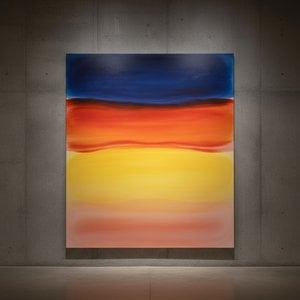
Mark Rothko's Untitled 92 is not simply a painting; it’s an invitation into a deeply personal and profoundly moving emotional landscape. Created sometime between 1949 and 1970 – the peak of his mature style – this work exemplifies Rothko’s revolutionary approach to color field painting, an artistic movement that sought to bypass representational imagery altogether in favor of directly communicating feeling through abstract means. The canvas breathes with a luminous intensity, dominated by variations of pink, subtly interwoven with hints of yellow, orange and red. These aren't colors applied as descriptive elements, but rather as veils, layered upon one another to create an atmosphere of contemplative weight.
The Birth of Color Field: A Post-War Aesthetic
To understand Untitled 92, we must consider the historical context in which it emerged. Following the devastation of World War II, many artists felt that traditional modes of representation were inadequate to express the anxieties and existential questioning of the era. Rothko, a Latvian immigrant who experienced firsthand the displacement and trauma of the early 20th century, sought a new visual language capable of conveying universal human emotions. He moved away from figuration, gradually simplifying his compositions until they reached this iconic state: large rectangular blocks of color floating against softly blurred backgrounds. This wasn’t about depicting *something*; it was about creating an *experience*. The scale of Rothko's canvases is crucial; they are intended to envelop the viewer, immersing them in a field of pure sensation.
Technique and Texture: A Delicate Balance
Rothko’s technique was deceptively simple. He applied thin washes of oil paint onto unprimed canvas, allowing the pigment to soak into the fabric and create a luminous, almost ethereal quality. The edges of his color blocks are not sharply defined but rather softly blurred, creating a sense of vibration and movement. Close examination reveals subtle variations in texture – areas where the paint is thicker, others where it’s nearly transparent. This delicate balance between control and chance contributes to the painting's emotional resonance. He wasn’t interested in demonstrating painterly skill; his goal was to create an atmosphere that would evoke a visceral response in the viewer. The layering of colors isn’t haphazard but carefully considered, with darker tones often placed beneath lighter ones to create depth and luminosity.
Beyond Representation: A Search for the Sublime
Rothko resisted any attempts to interpret his work literally. He believed that the meaning resided not in what the paintings *depicted* but in how they *felt*. He famously stated he wasn’t interested in color or form as ends in themselves, but rather as vehicles for expressing “basic human emotions—tragedy, ecstasy, doom.” Untitled 92 invites us to confront these fundamental aspects of the human condition. The pink hues, while seemingly gentle, carry a weight of melancholy and longing. The painting doesn’t offer answers; it poses questions about existence, mortality, and the search for meaning in a chaotic world. It is this ambiguity, this openness to interpretation, that makes Rothko's work so enduringly powerful. To stand before Untitled 92 is to embark on an inward journey, a silent dialogue with one’s own emotions.
الأسئلة والأجوبة
ما مدى سطوع "Untitled 92" للفنان مارك روثكو؟
تتمتع لوحة "Untitled 92" للفنان مارك روثكو بسطوع ملحوظ يبلغ brilliant، مما يجعلها متناغمة مع الإضاءة في المساحة المخصصة لها.
كيف يتناسب عمل "Untitled 92" مع موضوعات مارك روثكو وأسلوبه الفني؟
ينتمي العمل "Untitled 92" إلى أعمال مارك روثكو ضمن مدرسة Color Field Painting، والتي تشمل موضوعاتها المسجلة postwar aesthetic, existential emotion, color exploration, rothko legacy, meditative experience.
ما هو الطابع العاطفي لـ "Untitled 92" للفنان مارك روثكو؟
إن النبرة العاطفية المسجلة لـ "Untitled 92" للفنان مارك روثكو هي Melancholic، وهي تلخص الشعور الذي يعبّر عنه العمل.



 معاينة الحجم الواقعي
 اطلب نسخة مرسومة يدويًا
 إرسال
إرسال مشاركة
 عرض التفاصيل
 دليل الأعمال الفنية للطلاب

 تحميل
تحميل
 قطع مشابهة
 الأشعة السينية
 عرض شرائح متتابع
 الإحصائيات

 اقرأ المزيد






































 خيار الزجاج متاح فقط للمقاسات التي تقل عن 110 سم