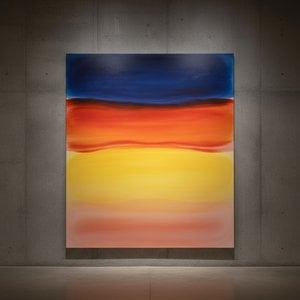
A Moment Frozen in Time: Examining ‘The Pugilist’ by Mark Rothko
Mark Rothko's “The Pugilist,” painted in 1933, stands as a testament to the burgeoning spirit of Abstract Expressionism and its exploration of profound human emotion. More than just a depiction of three men engaged in conversation around a dining table—though that visual element certainly contributes to the scene’s atmosphere—the painting delves into themes of camaraderie, vulnerability, and perhaps even unspoken tension within a carefully constructed space.
- Subject Matter: The artwork centers on a group of men seated at a table, capturing an intimate tableau of human interaction.
- Style: Rothko’s signature Color Field technique dominates the composition. Large rectangular blocks of color—primarily muted reds and oranges—merge seamlessly to create expansive canvases that prioritize tonal harmony over representational detail.
- Technique: Rothko achieved this mesmerizing effect through meticulous layering of thin washes of pigment, allowing for subtle gradations of hue and luminosity. This painstaking process aimed to evoke feelings rather than simply portraying a visual reality.
The historical context surrounding “The Pugilist” is crucial to understanding its significance. Created during the early years of Rothko’s artistic career, it reflects the anxieties and uncertainties prevalent in Europe following the Great Depression. The artist himself described his intention as striving to express "the immensity of human suffering," a sentiment powerfully conveyed through the painting's subdued palette.
Symbolism: While Rothko deliberately avoided explicit symbolism—rejecting any preconceived notions of narrative—the colors themselves carry considerable weight. The reds and oranges evoke warmth, passion, and perhaps even aggression, subtly mirroring the dynamics between the men in the room. Simultaneously, their muted tones convey a sense of melancholy and contemplation, inviting viewers to grapple with existential questions about life’s complexities.
Ultimately, “The Pugist” succeeds in capturing a fleeting moment of human connection against a backdrop of quiet introspection. Rothko's masterful use of Color Field painting elevates the artwork beyond mere visual representation, transforming it into an emotionally resonant experience that continues to captivate audiences today. Its enduring appeal lies in its ability to provoke contemplation and evoke feelings of empathy—a remarkable achievement for an artist committed to conveying universal truths through abstract form.
الأسئلة والأجوبة
كيف يمكنني معاينة نسخة من "The Pugilist" للفنان مارك روثكو؟
تتيح لك صفحة معاينة الخاصة بـ "The Pugilist" معاينة العمل الفني قبل الطلب.
ما هي المشاعر والأحاسيس التي تجتمع في "The Pugilist"؟
في "The Pugilist"، ترافقه أجواء Calm مع إحساس Reflective.
كيف تُوصف لوحة ألوان "The Pugilist" للفنان مارك روثكو؟
تُشكل ألوان "The Pugilist" لوحة ألوان من نوع Earthy. ويصف هذا التصنيف عائلات الألوان المهيمنة.



 معاينة الحجم الواقعي
 اطلب نسخة مرسومة يدويًا
 إرسال
إرسال مشاركة
 عرض التفاصيل
 دليل الأعمال الفنية للطلاب

 تحميل
تحميل
 قطع مشابهة
 الأشعة السينية
 عرض شرائح متتابع
 Q&A
Q&A الإحصائيات
 اقرأ المزيد






































 خيار الزجاج متاح فقط للمقاسات التي تقل عن 110 سم