A Whisper of Tobacco: Marianne North’s “Common Tobacco”
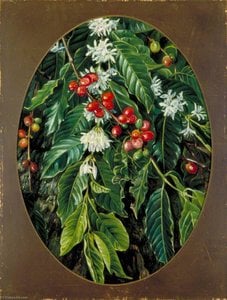
Marianne North's "Common Tobacco," painted in 1870, is more than just a botanical study; it’s a poignant glimpse into the Victorian era’s complex relationship with both nature and industry. This intimate oil painting, measuring a modest 34 x 23 cm, captures a single tobacco plant – a humble specimen of Nicotiana tabacum – yet within its delicate form lies a wealth of narrative and symbolic weight. North, a pioneering explorer and artist who dedicated her life to documenting the world’s flora, wasn't simply recording botanical specimens; she was actively engaging with the cultural significance of these plants, particularly their role in burgeoning global trade.
The painting itself is rendered with remarkable detail, characteristic of North’s meticulous approach. The artist employs a soft, almost hazy palette – muted greens, browns, and subtle pinks – to evoke the plant's natural beauty. Close inspection reveals the intricate veins of the leaves, the delicate texture of the flower petals, and the subtle variations in color that speak to the plant’s vitality. North’s brushwork is loose yet controlled, creating a sense of movement and life within the static image. The composition draws the eye towards the central bloom, highlighting its vibrant pink hue against the verdant backdrop – a deliberate choice that emphasizes both the beauty and the inherent allure of this common crop.
The Victorian Context: Tobacco’s Rise and Symbolism
“Common Tobacco” was created during a period of immense transformation in Britain. The mid-19th century witnessed an explosion in tobacco production, fueled by advancements in agricultural techniques and facilitated by the expansion of global trade networks. Tobacco had transitioned from a luxury item enjoyed primarily by the wealthy to a more accessible commodity consumed across social classes. This shift coincided with increasing anxieties about its addictive properties and potential health consequences – themes subtly explored within Victorian literature and art.
The symbolism surrounding tobacco during this era was layered and complex. On one hand, it represented prosperity, wealth, and sophistication—a staple of gentleman’s clubs and fashionable parlors. On the other, it carried connotations of vice, addiction, and social decline. North's painting, therefore, can be interpreted as a nuanced reflection of these competing narratives. The plant itself becomes a symbol of both abundance and potential harm, inviting contemplation about the ethical implications of industrial growth and its impact on human well-being.
Marianne North: Explorer and Botanical Artist
To fully appreciate “Common Tobacco,” it’s essential to understand Marianne North's extraordinary life. Born in 1830, she defied societal expectations by embarking on a decades-long journey of exploration and artistic creation. Rejecting the conventional role assigned to women of her time, North traveled extensively throughout Africa, Asia, South America, and Australia, documenting thousands of plant species with meticulous detail and vibrant watercolors. Her expeditions were not merely scientific endeavors; they were driven by a deep passion for nature and a desire to share its beauty with the world.
North’s work was initially met with skepticism by the established art community, who viewed her botanical paintings as amateurish and lacking in artistic merit. However, she persevered, establishing her own gallery at Kew Gardens – a remarkable achievement for a woman of her era – where she showcased her extensive collection of watercolors and oil paintings. “Common Tobacco” exemplifies her unique approach: a synthesis of scientific observation, artistic skill, and personal conviction. It’s a testament to her dedication to documenting the natural world and challenging conventional notions of art and femininity.
A Legacy of Observation and Beauty
“Common Tobacco” remains a captivating work of art, offering a window into both the Victorian era and the remarkable life of Marianne North. Its quiet beauty belies its complex symbolism, inviting viewers to consider the intertwined relationship between humanity, nature, and industry. Today, reproductions of this painting continue to inspire appreciation for botanical illustration and the power of art to illuminate our understanding of the world around us. The painting’s enduring appeal lies in its ability to evoke a sense of wonder and contemplation—a reminder that even the most humble subject can hold profound significance.



 معاينة الحجم الحقيقي
 التحويل إلى المطبوعات
 مشاركة
 مشاركة
 التفاصيل

 تحميل الملف
 قطع مشابهة
 الأشعة السينية
 عرض شرائح
 الإحصائيات


 عرض المزيد






































 خيار الزجاج متاح فقط للمقاسات التي تقل عن 110 سم