A Dream of Romance: Exploring Chagall’s *Equestrienne* (1931)
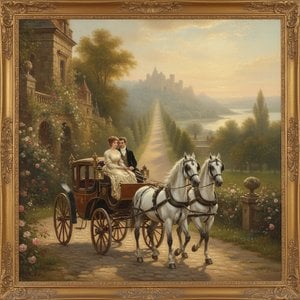
This captivating watercolor painting, *Equestrienne*, created in 1931, offers a glimpse into the poetic and deeply personal world of Marc Chagall. Measuring 100 x 80 cm, this work exemplifies his unique ability to blend reality with fantasy, creating an atmosphere charged with emotion and symbolism. It’s a piece that invites contemplation, sparking narratives within the viewer's own imagination.
Subject & Composition: A Moment Suspended
The artwork centers on a woman gracefully riding a stylized horse. The composition is intimate, drawing the eye directly to these central figures. While the woman occupies a significant portion of the canvas, creating a slight visual imbalance, this serves to emphasize her presence and perhaps suggest a sense of dominance or agency within the dreamscape. The background deliberately fades into an indistinct blur, enhancing the ethereal quality and focusing attention on the relationship between rider and steed. The flattened perspective contributes to the painting’s otherworldly feel, removing it from concrete reality.
Style & Technique: Symbolism Meets Early Surrealism
*Equestrienne* is firmly rooted in the traditions of
Symbolism, a late 19th-century movement that prioritized evocative imagery and emotional resonance over strict representation. However, elements within the work also foreshadow the burgeoning
Surrealist aesthetic. Chagall’s loose brushwork, fluid lines, and amorphous shapes contribute to this dreamlike quality. The watercolor technique itself – with its washes of color and blending effects – lends a softness and transparency that further enhances the painting's delicate atmosphere. It is a testament to Chagall’s mastery of the medium, creating texture and depth through layering and subtle tonal variations.
Historical Context: A Belarusian Artist in France
Born in Belarus (then part of Russia) in 1887, Marc Chagall experienced a life shaped by cultural displacement and artistic innovation. His early exposure to the vibrant traditions of his Jewish community in Vitebsk – often referred to as “the Jerusalem of Lithuania” – profoundly influenced his art. By 1931, he had established himself in France, absorbing influences from Cubism and other avant-garde movements while retaining a distinctly personal style. *Equestrienne* reflects this synthesis, embodying both the folkloric roots of his upbringing and the sophisticated artistic environment of Paris.
Symbolism & Interpretation: Unveiling Hidden Meanings
Chagall’s work is rich in symbolism, inviting multiple interpretations. The horse itself traditionally represents power, freedom, and untamed energy – perhaps suggesting a journey or liberation for the rider. The inclusion of a fan hints at allure, secrecy, or even flirtation, while the musical instrument suggests passion, entertainment, or artistic expression. These elements aren’t literal; rather, they function as evocative symbols that contribute to the painting's overall mood and narrative potential. The muted color palette – dominated by blues, pinks, and greens – further enhances the sense of melancholy and romantic longing.
Emotional Impact & Legacy
*Equestrienne* is more than just a beautiful image; it’s an emotional experience. The painting evokes feelings of romance, fantasy, and perhaps a touch of wistful sadness. It's a work that resonates with the subconscious, tapping into universal themes of love, desire, and the search for meaning. Chagall’s enduring legacy lies in his ability to create art that is both deeply personal and universally accessible – a testament to the power of imagination and the beauty of the human spirit.
This piece would be an exquisite addition to any collection, bringing a touch of poetic magic to its surroundings.
الأسئلة والأجوبة
إلى أي مرحلة من مسيرة مارك شاغال المهنية تنتمي لوحة "Equestrienne"، بالنظر إلى تاريخ إنتاجها؟
تعد لوحة "Equestrienne"، التي أُبدعت في عام 1931، من أعمال حقبة Mature Period في مسيرة مارك شاغال الفنية.
ما هو اتجاه لوحة "Equestrienne" للفنان مارك شاغال؟
تأتي لوحة "Equestrienne" بتنسيق Portrait، وهو أمر مفيد عند التخطيط لمكان وضع النسخة المطبعة.
من هو الفنان وما هو الأسلوب الذي يجسده العمل "Equestrienne"؟
أبدع مارك شاغال لوحة "Equestrienne" بأسلوب Surrealism. ويحدد الفنان والمدرسة الفنية التراث الذي ينتمي إليه هذا العمل.
متى تم إبداع "Equestrienne"، وإلى أي مدرسة فنية تنتمي؟
أُبدعت لوحة "Equestrienne" في عام 1931 كعمل ينتمي إلى حركة Surrealism. ويؤرخ التاريخ والأسلوب الفني مكانة هذا العمل في تاريخ الفن.
أين يمكنني مشاهدة معاينة لـ "Equestrienne"؟
لمعاينة نسخة من "Equestrienne" للفنان مارك شاغال، افتح صفحة معاينة الخاصة بالعمل الفني.
كيف يمكن وصف الحالة المزاجية لـ "Equestrienne" للفنان مارك شاغال؟
تتمثل الحالة المزاجية العامة لـ "Equestrienne" للفنان مارك شاغال في Romantic. وتصف هذه الحالة الأجواء العامة للعمل الفني.
إلى أي تيار فني تنتمي "Equestrienne" للفنان مارك شاغال؟
تنتمي "Equestrienne" للفنان مارك شاغال إلى حركة Surrealism. وتوفر هذه الحركة السياق الأسلوبي للعمل.
أين يمكنني العثور على إحصائيات حول "Equestrienne" للفنان مارك شاغال؟
تتوفر الإحصائيات الخاصة بـ "Equestrienne" للفنان مارك شاغال في صفحة الإحصائيات للعمل الفني: وتشمل الزيارات الشهرية للعمل، وزيارات أعمال الفنان، وتوزيع الزوار الأخيرين حسب الدولة واللغة.



 معاينة الحجم الواقعي
 اطلب نسخة مرسومة يدويًا
 إرسال
إرسال مشاركة
 عرض التفاصيل
 دليل الأعمال الفنية للطلاب

 تحميل
تحميل
 قطع مشابهة
 الأشعة السينية
 عرض شرائح متتابع
 الإحصائيات


 اقرأ المزيد






































 خيار الزجاج متاح فقط للمقاسات التي تقل عن 110 سم