A Portrait of Devotion: Unveiling Lucas Cranach’s “Madonna and Child”
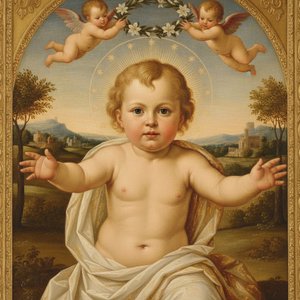
Lucas Cranach the Elder's "Madonna and Child," painted in 1529, is more than just a depiction of Mary and Jesus; it’s a profound meditation on motherhood, faith, and the burgeoning spirit of the Reformation. Crafted during a period of intense religious and political upheaval in Germany, this painting stands as a testament to Cranach's remarkable ability to capture both the idealized beauty of Renaissance art and the deeply personal emotions at its core. The work immediately draws the viewer into a scene of serene intimacy – a mother cradling her child within a softly lit domestic space, yet imbued with an almost otherworldly grace.
Cranach’s Northern Renaissance style is evident in every brushstroke. He eschews the overly polished and idealized forms favored by some of his contemporaries, opting instead for a more naturalistic approach. The figures possess a tangible humanity; Mary isn't presented as an ethereal goddess but as a woman, radiating warmth and tenderness. The subtle modeling of her face, the gentle curve of her hands cradling the infant Jesus – these details speak to Cranach’s meticulous attention to detail and his deep understanding of human anatomy.
A Window into a Changing World
Painted against a backdrop suggestive of a simple interior—a glimpse through an open window revealing a landscape—the scene subtly reflects the shifting social and religious landscape of 16th-century Germany. The Reformation was gaining momentum, challenging established authority and fostering a new emphasis on individual faith. Cranach, a close friend to Martin Luther, skillfully incorporated elements that resonated with this evolving worldview. While rooted in traditional Marian iconography, the painting avoids overt displays of piety, instead focusing on the quiet dignity and profound love between mother and child.
The inclusion of two additional figures – a man on the left and another on the right – adds an intriguing layer of complexity to the composition. These individuals likely represent family members or attendants, suggesting a scene of domestic life within a broader social context. Their presence underscores the importance of familial bonds and community in the lives of ordinary people during this transformative era.
Symbolism Woven into the Canvas
The painting is rich with symbolic meaning. The open window, for instance, can be interpreted as a metaphor for divine grace – a glimpse beyond the earthly realm into the realm of God. Mary’s modest attire and gentle expression convey humility and devotion. Crucially, the positioning of Jesus in her arms—close to her breast—is not merely a depiction of physical closeness but also symbolizes his intimate connection with humanity and his role as the embodiment of divine love. The use of blue pigments, particularly in Mary's robes, further reinforces this symbolism, representing purity, faith, and royalty – attributes traditionally associated with the Virgin Mother.
A Legacy of Beauty and Emotion
“Madonna and Child” by Lucas Cranach the Elder is a masterpiece that continues to captivate viewers centuries after its creation. Its enduring appeal lies in its ability to evoke a powerful sense of empathy, reverence, and hope. Reproductions of this iconic work offer an opportunity to bring this timeless image into your home or office, transforming any space with its serene beauty and profound message. It’s a reminder of the universal themes of love, faith, and family—values that resonate deeply across cultures and generations.



 معاينة الحجم الحقيقي
 اشترِ لوحة مرسومة يدويًا
 مشاركة
 مشاركة
 التفاصيل
 الدليل

 تحميل الملف
 قطع مشابهة
 الأشعة السينية
 عرض شرائح
 الإحصائيات


 عرض المزيد






































 خيار الزجاج متاح فقط للمقاسات التي تقل عن 110 سم