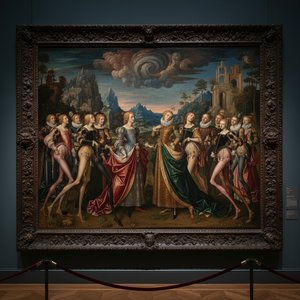
A Study in Suffering and Serenity: Lorenzo Costa’s St. Sebastian
Lorenzo Costa (the Elder)’s 1490 depiction of Saint Sebastian is not merely a religious painting; it's a profound meditation on martyrdom, endurance, and the quiet strength found within suffering. Housed within the hallowed halls of the Galleria degli Uffizi in Florence, this tempera-on-panel masterpiece transcends its historical context to resonate with viewers centuries later, offering a glimpse into the artistic sensibilities and spiritual concerns of the Northern Renaissance.
The painting immediately draws the eye to the central figure – Sebastian himself. He’s rendered not as a screaming victim, but with an almost serene acceptance of his fate. The arrows piercing his torso are not depicted in a violent or dramatic manner; instead, they are subtly integrated into his form, suggesting a slow, inevitable surrender rather than a sudden attack. This deliberate restraint is key to the painting's power – it transforms a scene of brutal death into one of dignified endurance. Notice the pale skin tone, meticulously rendered with layers of tempera, and the carefully observed bruises and marks; these aren’t signs of immediate agony but rather the lingering echoes of pain, testament to Costa’s commitment to realism.
The Northern Renaissance Aesthetic
Costa's style firmly places this work within the burgeoning Northern Renaissance tradition. Unlike the more flamboyant and idealized figures often found in Italian art of the period, Costa favors a grounded approach, prioritizing anatomical accuracy and naturalistic detail. The use of light and shadow is masterful – a chiaroscuro technique that creates a palpable sense of depth and volume, pulling the viewer into the scene. The dark background serves to isolate Sebastian, emphasizing his vulnerability yet simultaneously highlighting his inner fortitude. The minimalist clothing—a suggestion of draped fabric at the bottom—further directs attention to the figure’s physical state and emotional bearing.
Symbolism and Spiritual Resonance
Saint Sebastian's story is deeply rooted in Christian lore, a tale of youthful beauty, divine intervention, and ultimately, martyrdom. Originally a Roman soldier, he was commissioned by Diocletian to hunt down Christians but himself converted to the faith. He was then subjected to torture and ultimately shot with arrows before miraculously recovering from his wounds. The painting’s symbolism is layered: Sebastian represents Christ's suffering and sacrifice, offering a potent visual reminder of Christian ideals. The arrows themselves can be interpreted as symbols of temptation and persecution, while Sebastian’s acceptance embodies the triumph of faith over adversity.
A Legacy in Florence
Beyond its immediate aesthetic qualities, Costa’s St. Sebastian stands as a significant contribution to the artistic landscape of 15th-century Florence. It shares stylistic affinities with other prominent artists of the era, including Hans Memling and Benozzo Gozzoli, both masters of depicting religious subjects with remarkable realism and emotional depth. The painting's presence within the Uffizi Gallery underscores its enduring importance—a testament to Costa’s skill as a painter and his profound understanding of human experience. Further enriching our appreciation is the connection to other notable works from the same period, such as Giotto Di Bondone’s frescoes in the Collegiate Church of San Gimignano, offering a broader context for appreciating the artistic currents of the time.



 معاينة الحجم الحقيقي
 التحويل إلى المطبوعات
 مشاركة
 مشاركة
 التفاصيل

 تحميل الملف
 قطع مشابهة
 الأشعة السينية
 عرض شرائح
 الإحصائيات


 عرض المزيد






































 خيار الزجاج متاح فقط للمقاسات التي تقل عن 110 سم


![Legend Of St Francis - [23] - St Francis Mourned By St Clare — جوتو دي بوندوني, Gothic](/media/artworks/images-thumb/17/1c/171c284c41dc3ef8bca83e51c1e1e531.jpg)