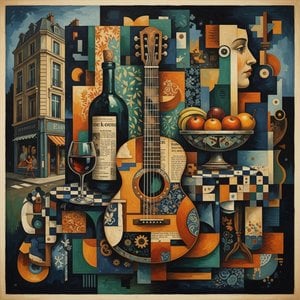
Playing Cards and Siphon (1916) للفنان خوان غريس، نسخة مطبوعة من لوحة زيتية مرسومة يدوياً بواسطة فنان محترف
معاينة الحجم الواقعي معاينة بالواقع المعزز التبديل إلى نسخة مطبوعة الانتقال إلى الصورة الرقمية مشاركة
التفاصيل دليل أضف إلى المفضلة تحميل الملف قطع مشابهة الأشعة السينية عرض شرائح الأسئلة والأجوبة الإحصائيات

Playing Cards and Siphon نسخة مطبوعة من لوحة زيتية مرسومة يدوياً

الأبعاد
73.0 x 116.0 cm

Juan Gris's "Playing Cards and Siphon" (1916) is a vibrant Synthetic Cubist masterpiece, showcasing geometric forms & collage elements. Explore this iconic work’s rich colors & dynamic composition at the Kröller-Müller Museum.

"خوان جريس (1887-1927): فنان إسباني رائد في حركة التكعيبية. اكتشف أسلوبه الهندسي المميز، وأعماله التركيبية الرائدة مثل "Guitar in front of the sea"، وتأثيره الدائم على الفن الحديث."

نسخة زيتية مرسومة يدوياً

لوحة زيتية مرسومة يدوياً على الكانفاس بالمقاس والإطار الذي تفضله، تُنفذ حسب الطلب على أيدي فنانينا. ( التبديل إلى نسخة مطبوعة الانتقال إلى الصورة الرقمية)

Corner sample of the P118B picture frame: بوليسترين مُشكّل, 5 cm wide and 3 cm thick
P118B E£10
Corner sample of the P118H picture frame: بوليسترين مُشكّل, 5 cm wide and 3 cm thick
P118H E£10
Corner sample of the P118W picture frame: بوليسترين مُشكّل, 5 cm wide and 3 cm thick
P118W E£10
Corner sample of the P438Z picture frame: بوليسترين مُشكّل, 5.5 cm wide and 3.5 cm thick
P438Z E£10
Corner sample of the P508JH picture frame: بوليسترين مُشكّل, 7 cm wide and 3.5 cm thick
P508JH E£12
Corner sample of the P508YH picture frame: بوليسترين مُشكّل, 7 cm wide and 3.5 cm thick
P508YH E£12
Corner sample of the P805H picture frame: بوليسترين مُشكّل, 5 cm wide and 3.5 cm thick
P805H E£10
Corner sample of the P805Z picture frame: بوليسترين مُشكّل, 5 cm wide and 3.5 cm thick
P805Z E£10
Corner sample of the P919BZ picture frame: بوليسترين مُشكّل, 7 cm wide and 3.5 cm thick
P919BZ E£10
Corner sample of the P919G picture frame: بوليسترين مُشكّل, 7 cm wide and 3.5 cm thick
P919G E£10
Corner sample of the P919XJ picture frame: بوليسترين مُشكّل, 7 cm wide and 3.5 cm thick
P919XJ E£10
Corner sample of the P959ZH picture frame: بوليسترين مُشكّل, 5 cm wide and 3 cm thick
P959ZH E£10
Corner sample of the P968JZ picture frame: بوليسترين مُشكّل, 6 cm wide and 4 cm thick
P968JZ E£12
Corner sample of the W106C picture frame: خشب طبيعي صلب, 5 cm wide and 3 cm thick
W106C E£8
Corner sample of the W218G picture frame: خشب طبيعي صلب, 5 cm wide and 3 cm thick
W218G E£10
Corner sample of the W218JH picture frame: خشب طبيعي صلب, 5 cm wide and 3 cm thick
W218JH E£8
Corner sample of the W218Y picture frame: خشب طبيعي صلب, 5 cm wide and 3 cm thick
W218Y E£10
Corner sample of the W307PJ picture frame: خشب طبيعي صلب, 6 cm wide and 3 cm thick
W307PJ E£10
Corner sample of the W316G picture frame: خشب طبيعي صلب, 6 cm wide and 3 cm thick
W316G E£10
Corner sample of the W316PJ picture frame: خشب طبيعي صلب, 6 cm wide and 3 cm thick
W316PJ E£8
Corner sample of the W316Y picture frame: خشب طبيعي صلب, 6 cm wide and 3 cm thick
W316Y E£10
Corner sample of the W398PJ picture frame: خشب طبيعي صلب, 5 cm wide and 3 cm thick
W398PJ E£8
Corner sample of the W4111J picture frame: خشب طبيعي صلب, 6.5 cm wide and 3.5 cm thick
W4111J E£10
Corner sample of the W500HY picture frame: خشب طبيعي صلب, 7 cm wide and 5 cm thick
W500HY E£15
Corner sample of the W500JH picture frame: خشب طبيعي صلب, 7 cm wide and 5 cm thick
W500JH E£15
Corner sample of the W692G picture frame: خشب طبيعي صلب, 8 cm wide and 4 cm thick
W692G E£12
Corner sample of the W849H picture frame: خشب طبيعي صلب, 5 cm wide and 3 cm thick
W849H E£8
Corner sample of the W940BG picture frame: خشب طبيعي صلب, 7.5 cm wide and 4.5 cm thick
W940BG E£15
Corner sample of the W953PJ picture frame: خشب طبيعي صلب, 6 cm wide and 3.5 cm thick
W953PJ E£8

قياسي
حسب الطلب
CM
INCH

اختر من بين أحجامنا المُعدّة مسبقاً والتي تتوافق مع النسب الأصلية للعمل الفني.

العرض
الارتفاع

أدخل العرض والارتفاع اللذين تحتاجهما ليتناسب العمل مع إطارك أو جدارك. وبما أن هذه اللوحة مرسومة يدوياً، ففي حال اختيار مقاس بأبعاد مختلفة، يمكن للفنان رسم مساحة إضافية حول الصورة أو تقليصها قليلاً — الخيار لك. سنرسل لك نموذجاً رقمياً تجريبياً لاعتماده قبل البدء في الرسم. علماً بأن الصورة المعروضة في هذه الصفحة لا تعكس النتيجة النهائية الحقيقية، فالنموذج التجريبي هو الوحيد الذي يوضح ذلك بدقة.

أمثلة على التعديلات الممكنة: استبدال الوجه بصورة العميل؛ إضافة حيوان أليف (مثل استبدال قطة بكلب)؛ تضمين رسالة مخفية في الخلفية؛ تغيير المناظر الطبيعية أو العناصر في الخلفية.
بعد إتمام الطلب، سيرسل فريق WahooArt.com بريداً إلكترونياً للعميل لطلب التعليمات وتزويده بمعاينة تجريبية (mockup).

توصيل عالمي إلى خلال 3 إلى 4 أسابيع بدلاً من المدة المعتادة البالغة 5 أسابيع. (3 نوفمبر). جودة لا تهاون فيها.

شحن سريع ومجاني لجميع أنحاء العالم
قماش كتان عالي الجودة
تأمين شامل على الشحن
ضمان استرداد الرسوم الجمركية
ضمان مطابقة الألوان الحقيقية
سياسة الإرجاع خلال 100 يوم (في حالات العيوب فقط)
ضمان استرداد نقدي بنسبة 100%
خصم عند طلب كميات

إجمالي السعر

E£ 14258

Playing Cards and Siphon

خامة النسخة المطبوعة

مقاس النسخة المطبوعة

-

إجمالي السعر النهائي

E£ 14258

معلومات سريعة

  • Dimensions: 73 x 116 cm
  • Movement: Synthetic Cubism
  • Subject or theme: Still life
  • Notable elements: Collage, siphon, cards
  • Location: Kröller-Müller Museum
  • Medium: Oil on panel

اختبار الفنون

لكل سؤال إجابة صحيحة واحدة فقط.

سؤال 1:
What artistic movement is most closely associated with Juan Gris’s ‘Playing Cards and Siphon’?
سؤال 2:
The painting 'Playing Cards and Siphon' primarily utilizes what color palette?
سؤال 3:
In which museum can you currently find ‘Playing Cards and Siphon’?
سؤال 4:
What is the approximate size (in centimeters) of ‘Playing Cards and Siphon’?
سؤال 5:
The painting ‘Playing Cards and Siphon’ exemplifies which key characteristic of Synthetic Cubism?

The Enigmatic Still Life of Juan Gris

Juan Gris’s “Playing Cards and Siphon,” painted in 1916, isn't merely a depiction of objects; it’s an invitation into the fractured, vibrant world of Synthetic Cubism. This oil on panel, currently residing within the hallowed halls of the Kröller-Müller Museum in Otterlo, Netherlands, pulsates with a unique energy – a testament to Gris’s singular vision and his pivotal role in shaping this revolutionary artistic movement. More than just a visual puzzle, it's an exploration of perception, geometry, and the very nature of representation itself.

Playing Cards and Siphon by Juan Gris

(Image: Playing Cards and Siphon by Juan Gris)

A Symphony of Geometric Forms

Gris masterfully dismantled the traditional approach to still life, employing a technique that’s both analytical and synthetic. The composition is dominated by a carefully arranged round table, acting as a stage for an intriguing cast of characters: playing cards scattered across its surface, a gleaming siphon bottle reflecting light, delicate cups, and various tools – each element rendered with a deliberate fragmentation. Unlike the earlier, more monochromatic Analytical Cubism favored by Picasso and Braque, “Playing Cards and Siphon” bursts forth in a carefully considered palette of blues, greens, ochres, and browns. These colors aren’t simply applied; they're strategically layered to create depth and suggest texture, adding a tactile quality to the otherwise abstract forms.

The key lies in Gris’s use of “papier collé,” or collage – incorporating newspaper clippings and other fragments into the painting. This technique, borrowed from the work of Maurice de Vlaminck, introduces an element of chance and spontaneity, disrupting the rigid geometry and adding a layer of visual complexity. The inclusion of the word "JOURNAL" on a fragment of paper subtly hints at themes of communication, documentation, and perhaps even the fleeting nature of time – concepts that resonate deeply within the artwork.

Historical Context: A World in Flux

Created during a period of immense social and political upheaval—the dawn of the 20th century—“Playing Cards and Siphon” reflects the anxieties and uncertainties of its time. The First World War was looming, and Europe was grappling with rapid technological advancements and shifting cultural values. Cubism, as an artistic movement, mirrored this sense of disruption, rejecting traditional notions of perspective and representation in favor of a more fragmented and subjective view of reality. Gris’s work stands as a bold assertion of individual expression within the context of a rapidly changing world.

Symbolic Layers and Emotional Resonance

Beyond its formal qualities, “Playing Cards and Siphon” is rich in symbolic meaning. The playing cards themselves can be interpreted as representations of chance, fate, or even the complexities of human relationships. The siphon, with its intricate mechanism and reflective surface, evokes notions of transformation, flow, and perhaps even the pursuit of knowledge. The overall effect is one of quiet contemplation – a suggestion that beauty and meaning can be found in the most unexpected places.

Gris’s ability to imbue an everyday still life with such profound depth and emotional resonance is what makes “Playing Cards and Siphon” a truly remarkable work of art. It's a painting that rewards repeated viewing, inviting us to lose ourselves in its intricate details and contemplate the mysteries of perception and representation.

Bringing Gris Home: High-Quality Reproductions

For those captivated by the allure of “Playing Cards and Siphon,” reproductions are available through WahooArt.com, offering a beautiful way to bring this iconic artwork into your home or office. Each reproduction is meticulously crafted using archival-quality materials, ensuring that the colors and details of the original painting are faithfully reproduced for generations to come.

الأسئلة والأجوبة

ما مدى سطوع "Playing Cards and Siphon" للفنان خوان غريس؟

من حيث السطوع الملحوظ، يتميز العمل ""Playing Cards and Siphon" للفنان خوان غريس" بـ deep_shadow.

ما هي التقنية المستخدمة في "Playing Cards and Siphon"، ومتى تم إنجازها؟

أُنجزت لوحة "Playing Cards and Siphon" في عام 1916، باستخدام Oil On Canvas.

ما هو شكل وأبعاد "Playing Cards and Siphon"؟

تأتي لوحة "Playing Cards and Siphon" للفنان خوان غريس بتنسيق Panoramic وبمقاس 73 x 116 cm.


السيرة الذاتية للفنان

نشأة خوان جريس وتكوينه الفني

ولد خوسيه فيكتورiano غونزاليس-بيريز في مدريد عام 1887، ليمضي مسيرةً تجعله من أبرز شخصيات فن القرن العشرين. لم يكن طريقه الأوليّ مُوَجَّهًا نحو القماش والفرشاة بشكل مباشر؛ فقد درس الهندسة في مدرسة الفنون والعلوم، مما يدل على عقل تحليلي سيؤثر بعمق في منهجه الفني لاحقًا. حتى خلال هذه السنوات التكوينية، برزت شرارة إبداعية – مساهمته برسوماته في الدوريات المحلية أشارت إلى موهبة بصرية نامية. وفي عام 1905 تبنى الاسم المستعار خوان جريس، وهو اسم يتردد صداه مع شعور جديد بالهوية والهدف عندما بدأ دراسات رسمية تحت إشراف خوسيه مورينو كاربونيرو. كانت هذه نقطة تحول محورية، وضعته على طريق الابتكار الفني.

الصحوة الباريسية واحتضان التكعيبية

شهد عام 1906 انتقالًا جذريًا إلى باريس، وهي مدينة كانت تعج بالطاقة الفنية. انغمس جريس في هذا الجو النابض بالحياة، وصادق شخصيات لامعة مثل هنري ماتيس وجورج براك وفيرناند ليجر. بدأ في البداية في الرسوم التوضيحية الساخرة للمنشورات مثل *L'Assiette au Beurre*، وصقل مهاراته في الملاحظة وطوّر إحساسًا حادًا بالفكاهة البصرية. ومع ذلك، كان جاذبية بابلو بيكاسو مؤثرة بشكل خاص. حوالي عام 1910، بدأ جريس في تكريس نفسه بجدية للرسم، مبتعدًا عن المحاكاة الساخرة نحو لغة التكعيبية الناشئة. لم يكن هذا مجرد تقليد؛ فقد انطلق في مهمة لتقطير جوهر الشكل والفضاء، باحثًا عن نظام بصري جديد. تميزت استكشافاته المبكرة بمغادرة متعمدة للتمثيل التقليدي، واحتضان التجريد كوسيلة لالتقاط البنية الكامنة للواقع.

هندسة الإدراك: الأسلوب والأعمال الرئيسية

يتميز إنتاج خوان جريس الفني بوضوح استثنائي ودقة فكرية. لم يكتفِ بتفكيك الأشياء؛ بل أعاد بنائها بدقة متناهية، مع التركيز على الأشكال الهندسية ولوحة ألوان مدروسة بعناية. أدى هذا النهج إلى ما أصبح يُعرف بـ "الفترة البلورية"، والتي تجسدت في روائع مثل *Still Life Before an Open Window* و *Place Ravignan* (1915). تعرض هذه الأعمال تفاعلًا رائعًا بين المستويات والزوايا، مما يخلق إحساسًا بالعمق والثبات مع تحدي المفاهيم التقليدية للمنظور في الوقت نفسه. بعد عام 1913، تبنى جريس بكل حماس التكعيبية التركيبية، ورائد استخدام *papier collé* – الكولاج – ودمج مواد واقعية مثل قصاصات الصحف والأوراق ذات الملمس في تكوينه. أضافت هذه التقنية طبقة أخرى من التعقيد ولمسة إلى عمله، مما ضباب الحدود بين الرسم والنحت. ومن الأمثلة البارزة *Guitar in front of the sea* (1925)، وهو شهادة على أشكاله المبسطة والالتزام بمبادئ التكعيبية، و *Homage à Pablo Picasso* (1912)، الذي أشار إلى اعترافه المتزايد في عالم الفن الطليعي.

الإرث والتأثير الدائم

يمتد مساهمة خوان جريس في التكعيبية إلى ما هو أبعد من الابتكار الأسلوبي؛ فقد جلب عمقًا فكريًا فريدًا ووضوحًا هيكليًا للحركة. انتقل من المرحلة التحليلية نحو نهج أكثر تنظيمًا وتجميعيًا، مع التركيز على النظام والدقة. كان لعمله تأثير عميق على أسلوب البوريزم الذي دافع عنه أميدي أوزنفانت وتشارلز إدوارد جينيريت (لو كوربوزييه)، ويدعو إلى العودة إلى المبادئ الكلاسيكية للشكل والتكوين. رسخ تركيز جريس على الأشكال الهندسية ولوحات الألوان المتناغمة ودمج الأشياء اليومية في فنه مكانته كشخصية محورية في فن القرن العشرين. لا يزال إرثه يلهم الفنانين حتى يومنا هذا، مما يدل على القوة الدائمة للتكعيبية وبراعة خوان جريس البصرية – سيد إسباني أعاد تشكيل فهمنا للإدراك والتمثيل.
خوان غريس

خوان غريس

1887 - 1927 , إسبانيا

حقائق سريعة

  • أعمال بارزة:
    • غيتار أمام البحر
    • تحية لبابلو بيكاسو
    • الطحان
  • الاسم الكامل: خوسيه فيكتورiano غونزاليس-بيريز
  • الجنسية: إسباني
  • الحركة الفنية: التكعيبية
  • تاريخ الميلاد: 23 مارس 1887
  • تاريخ الوفاة: 11 مايو 1927
  • حركات فنية متأثرة:
    • التجريدية
    • أمديه أوزنفان
  • فنانون مؤثرون:
    • بابلو بيكاسو
    • هنري ماتيس
    • جورج براك
  • مكان الميلاد: مدريد، إسبانيا
استكشف الأعمال الفنية المصنفة حسب الموضوعات والأنماط والخصائص.