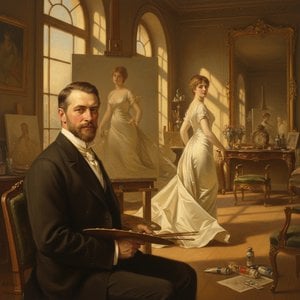
A Portrait Steeped in Alpine Majesty: Exploring John Singer Sargent’s ‘Artist in the Simplon’
The painting “Artist in the Simplon,” created by John Singer Sargent around 1909, transcends mere representation; it embodies the spirit of Impressionism and captures a moment of profound contemplation amidst breathtaking natural beauty. More than just depicting a man on a mountain peak—though that alone is striking—Sargent’s masterpiece delves into themes of artistic observation, solitude, and the sublime experience of confronting grandeur. This essay seeks to illuminate these layers of meaning and analyze Sargent's masterful technique within its historical context.
The Impressionist Vision: Capturing Fleeting Light
Sargent firmly established himself as a leading figure in the Impressionist movement, aligning his artistic sensibilities with luminaries like Monet and Renoir. Unlike academic painting’s meticulous realism—focused on precise detail and idealized forms—Impressionism prioritized capturing the ephemeral qualities of light and atmosphere. Sargent achieved this goal through a deliberate rejection of harsh outlines and blending colors to create soft, luminous surfaces. The watercolor medium itself was ideally suited for conveying these effects, allowing for subtle gradations and washes that mimic the way sunlight dances across snow-capped peaks. Consider how Sargent’s brushstrokes—loose, expressive, and seemingly spontaneous—suggest movement and immediacy, mirroring the artist's own engagement with his surroundings.
A Symbol of Artistic Pursuit: Composition and Detail
The composition of “Artist in the Simplon” is carefully considered to heighten its emotional impact. The central figure stands confidently atop a mountain slope, gazing outwards towards the distant snow-covered mountains—a deliberate gesture mirroring the artist’s own role as an observer and interpreter of nature. His posture exudes composure and thoughtfulness, conveying a sense of quiet contemplation. Notice the inclusion of skis resting on the slope – hinting at both preparation for activity and perhaps a reflection on the challenges inherent in artistic endeavor. Smaller figures populate the landscape, emphasizing the vastness of the mountain environment and reinforcing the feeling of solitude. Sargent’s meticulous attention to detail—the subtle shading of the rocks, the delicate rendering of the snow textures, and even the inclusion of a bird soaring overhead—further enhances the painting's realism while simultaneously serving as conduits for symbolic meaning.
Historical Context: The Aesthetic Turn of Early 20th Century Europe
“Artist in the Simplon” emerged during a period of significant artistic transformation in Europe. Following the Impressionist breakthroughs, artists increasingly sought to express subjective experience and emotion rather than simply documenting objective reality. Sargent’s work reflects this broader aesthetic turn—a move away from traditional conventions toward a more psychologically nuanced approach. The painting aligns with the burgeoning interest in Romantic ideals of sublime beauty—the awe-inspiring grandeur of nature that inspires contemplation and elevates the human spirit. Furthermore, it speaks to the anxieties of modernity—the rapid pace of industrialization and urbanization—as artists attempted to grapple with these changes through artistic exploration.
Emotional Resonance: Beauty and Reflection
Ultimately, “Artist in the Simplon” succeeds in conveying a powerful emotional resonance. The painting’s serene palette—dominated by blues and whites—evokes feelings of tranquility and majesty. Yet, beneath this surface calm lies a deeper current of reflection—a recognition of the artist's own vulnerability within the face of overwhelming beauty. Sargent invites viewers to contemplate their relationship with nature and to consider the transformative potential of artistic observation. It remains a testament to the enduring power of Impressionism’s ability to capture not just what we see, but also what we feel.
- Artist: John Singer Sargent
- Year Created: c.1909
- Style: Impressionism
- Medium: Watercolor
- Dimensions: 40 x 52 cm



 معاينة الحجم الحقيقي
 التحويل إلى المطبوعات
 مشاركة
 مشاركة
 التفاصيل

 تحميل الملف
 قطع مشابهة
 الأشعة السينية
 عرض شرائح
 الإحصائيات


 عرض المزيد






































 خيار الزجاج متاح فقط للمقاسات التي تقل عن 110 سم