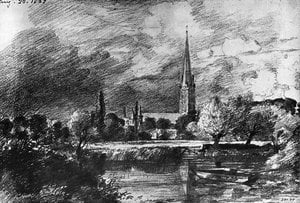
A Glimpse into Constable’s England: The Serenity of “View on the Stour”
John Constable's “View on the Stour” is more than just a landscape; it’s an intimate portrait of a cherished place and a pivotal moment in the evolution of British painting. Executed around 1822, this work encapsulates the artist’s lifelong dedication to capturing the beauty and emotional resonance of the Suffolk countryside – specifically, the area surrounding his home known today as “Constable Country.” The scene unfolds with a gentle tranquility, inviting the viewer into a world where the river Stour meanders through lush meadows, framed by mature trees that stand as silent witnesses to the passage of time. It’s a composition built on observation and affection, a deliberate departure from the grand historical narratives favored by many of his contemporaries.
The Romantic Embrace of Nature
Constable emerged during a period of significant artistic transition, bridging the gap between the Neoclassical tradition and the burgeoning Romantic movement. While he received formal training at the Royal Academy, he found its emphasis on idealized forms and classical compositions restrictive. Instead, he sought inspiration in the works of 17th-century Dutch masters like Jacob van Ruisdael and Claude Lorrain, admiring their ability to convey atmosphere and light with remarkable sensitivity. However, Constable wasn’t simply imitating these artists; he was forging his own path, grounding his landscapes in direct observation and personal experience. “View on the Stour” exemplifies this approach – it's not a picturesque fantasy but a faithful rendering of a specific place, imbued with the artist’s deep emotional connection to the land. The subtle interplay of light and shadow across the water, the delicate rendering of foliage, and the inclusion of everyday figures engaged in simple activities all contribute to a sense of authenticity and immediacy.
Technique and Atmosphere: A Masterclass in Observation
Constable’s technique was revolutionary for its time. He rejected the highly finished, polished surfaces favored by many academic painters, opting instead for a more painterly approach characterized by loose brushwork and visible texture. In “View on the Stour,” this is evident in the way he renders the clouds – not as solid forms but as shifting masses of light and air. This technique wasn’t merely stylistic; it was integral to his goal of capturing the fleeting effects of weather and atmosphere. He often worked on paintings over extended periods, returning to them repeatedly to refine details and capture subtle changes in light. The result is a painting that feels alive, breathing with the same energy as the natural world it depicts. The composition itself is carefully balanced, drawing the eye through the scene along the winding river, while the strategically placed trees create depth and frame the view.
A Legacy of Landscape Painting
“View on the Stour” wasn’t an immediate success upon its exhibition at the Royal Academy in 1822. Critics were initially puzzled by Constable's focus on seemingly mundane subjects, accustomed as they were to more grandiose themes. However, his work gradually gained recognition, influencing a generation of artists both in England and abroad. The painting’s impact extended beyond the art world, contributing to a growing appreciation for the beauty of the English countryside and inspiring a sense of national identity. Today, “View on the Stour” is celebrated as a masterpiece of Romantic landscape painting, a testament to Constable's skill, vision, and unwavering commitment to capturing the essence of nature. A reproduction of this work brings not only a beautiful image into a space but also a piece of art history—a window into a world where tranquility reigns and the beauty of the natural world is celebrated with profound sincerity.
الأسئلة والأجوبة
أين يمكنني العثور على أعمال فنية مشابهة لـ "View on the Stour" للفنان جون كونستابل؟
تُجمع الأعمال الفنية المشابهة لـ "View on the Stour" للفنان جون كونستابل في صفحة أعمال مشابهة الخاصة بالعمل الفني.
ما الذي يفسر الوضع المتعلق بحقوق الطبع والنشر لـ "View on the Stour" للفنان جون كونستابل؟
تعتمد حالة حقوق الطبع والنشر لـ "View on the Stour" - ملك عام - انتهت مدة حماية حقوق الطبع والنشر الخاصة به - على تاريخ وفاة الفنان في 1837.
ما مدى إشراق "View on the Stour" بشكل عام؟
من حيث السطوع الملحوظ، فإن "View on the Stour" للفنان جون كونستابل يتميز بـ bright.
كيف يتجلى التباين والانسجام في "View on the Stour"؟
يُظهر التحليل اللوني لـ "View on the Stour" للفنان جون كونستابل تباينًا Bold وتناغمًا Unified Palette.
هل يمكنني استخدام تقنية الواقع المعزز لرؤية "View on the Stour" للفنان جون كونستابل في غرفتي؟
يمكنك معاينة "View on the Stour" للفنان جون كونستابل على جدارك الخاص عبر صفحة معاينة الواقع المعزز الخاصة بالعمل الفني، وذلك باستخدام تقنية الواقع المعزز على جهاز متوافق.
ما هي الموضوعات التي تظهر في "View on the Stour" للفنان جون كونستابل؟
تتمثل موضوعات "View on the Stour" في landscape, river, nature, england, pastoral, trees, countryside, tranquility.
هل يمكنني مشاهدة "View on the Stour" كعرض شرائح بملء الشاشة؟
يمكن مشاهدة العرض المتتابع لـ "View on the Stour" في صفحة عرض متتابع الخاصة بالعمل الفني.
ما هو اللون الطاغي على تكوين "View on the Stour" للفنان جون كونستابل؟
اللون الأكثر بروزاً في "View on the Stour" هو Phthalo Green (#222418). ويعد اللون السائد مفيداً عند تنسيق العمل الفني مع التصميم الداخلي.



 معاينة الحجم الواقعي
 اطلب نسخة مرسومة يدويًا
 إرسال
إرسال مشاركة
 عرض التفاصيل
 دليل الأعمال الفنية للطلاب

 تحميل
تحميل
 قطع مشابهة
 الأشعة السينية
 عرض شرائح متتابع
 الإحصائيات
 اقرأ المزيد






































 خيار الزجاج متاح فقط للمقاسات التي تقل عن 110 سم