الحياة المبكرة، العائلة والتدريب
وُلد جون كونستابل في عام 1776 في قرية إيست بيرغهولت بمقاطعة سوفولك، وكان الابن الثاني لكل من غولدينغ وآنا (واتس) كونستابل. كان والده تاجرًا مزدهرًا في تجارة الذرة والفحم، وكان يمتلك طاحونة فلاتفورد. هذا الارتباط الوثيق بالنهر والتجارة المحلية جعل من إيقاعات المياه وحركة البضائع جزءًا لا يتجزأ من الحياة اليومية داخل منزله. وفي حوالي عام 1792، بدأ العمل في تجارة العائلة، حيث تعلم الجوانب العملية لتجارة الذرة قبل أن يتغير مسار حياته نحو ريشة الرسم ولوحات القماش.
بدأت رحلته التدريبية بشكل جدي عندما التحق بمدارس الأكاديمية الملكية كمتدرب في عام 1799. أمضى سنواته الأولى في دراسة التشريح ونسخ أعمال كبار الفنانين القدامى لفهم بنية العالم وتفاصيله. وقد وفر له هذا التعليم الرسمي أساسًا متينًا لملاحظاته اللاحقة للمناظر الطبيعية. تنقل كونستابل بين الحياة الهادئة لابن تاجر وبين الدراسة المنضبطة للرسم والتلوين، حتى وجد طريقه في النهاية إلى لندن ليجعل من الفن رسالة وحرفة يكرس لها حياته.
حياة متجذرة في وادي ستور
ظلت مناظر طفولته حاضرة في وجدانه كعنصر لا يتغير؛ فمنذ ولادته في إيست بيرغهولت بالمملكة المتحدة، نشأ في بيئة صاغ فيها النهر إيقاع الحياة اليومي. لم يكن والده، الذي كان يعمل في تجارة الحبوب، مجرد تاجر، بل كان مستأجراً للمطاحن الممتدة على طول نهر ستور ومالكاً للأراضي في وادي ديدام. ولم تكن هذه الصلة بالماء والتربة مجرد مسألة تجارية عابرة، بل كانت ارتباطاً وجدانياً رافقه طوال حياته، حيث حمل في قلبه حنيناً عميقاً لقرى ستافوردشاير، من إيست بيرغهولت وديدام، إلى ستراتفورد سانت ماري ولانغهام. وحتى عندما ابتعد عن دياره، ظل مشهد مرج أو طريقة سقوط الضوء على ضفة معينة من نهر ستور محفوراً في ذاكرته.
ومع مرور الوقت، سحبتته الحياة نحو صخب المدينة، حيث استقر في بلومزبري بلندن، وانتقل إلى شارع كيبيل في عام 1817، ثم إلى شارع شارلوت في عام 1822. كانت تلك الشوارع الحضرية تختلف تماماً عن هدوء ضفاف الأنهار، كما قضى فترات في ستافوردشاير، وديربيشاير، ومنطقة البحيرات، وبرايتون. ورغم كل هذه الرحلات، ظلت التضاريس المألوفة لوادي ستور هي مرجعه الأساسي؛ فقد كان يرى العالم من خلال عدسة الأماكن التي عرفها جيداً، باحثاً عن شعور بالانتماء في التربة الرطبة والسحب المتغيرة التي ميزت منطقته الأم.
الرعاة، المرسم والالتزامات الفنية
غالباً ما يعتمد المسار نحو الاحتراف الفني على العلاقات والتعارف الصحيح؛ وبالنسبة لـ جون كونستابل، تجلى هذا الأمر من خلال جورج بيمونت، ذلك المقتني الذي فتح له آفاقاً جديدة لرؤية العالم بعيون مختلفة. فمن خلال بيمونت، تعرف كونستابل على أعمال كلود لورين، الذي ساهم تأثيره بعمق في تشكيل فهمه لفن المناظر الطبيعية. شكلت هذه الروابط المبكرة حجر الزاوية في رحلته، بينما كان ينتقل من تجارة الذرة التي مارستها عائلته نحو الدراسة الأكاديمية الرسمية للفن. وفي عام 1805، بدأ في تولي التزامات فنية محددة، حيث كُلف برسم لوحة مذبح لكنيسة في برانثام.
ومع مرور العقود، نمت مكانته داخل المجتمع الأكاديمي بشكل مطرد؛ ففي عام 1819، انتُخب عضواً مشاركاً في الأكاديمية الملكية، وهي خطوة جسدت اعتراف أقرانه المتزايد بموهبته. وبحلول عام 1829، وهو في الثانية والخمسين من عمره، وصل إلى مرتبة عضو أكاديمي ملكي. وقد عكس هذا الارتقاء المهني مسيرة فنية بُنيت على الملاحظة الهادئة والمستمرة للعالم من حوله، منتقلاً من مجرد تنفيذ تكليفات محلية إلى احتلال مكانة مرموقة ومعترف بها داخل البنية المؤسسية للفن البريطاني.
التقنية والأسلوب الفني
لم يعتمد جون كونستابل على الاستعراض الدرامي أو المهارة المسرحية لإيصال رؤيته، بل سعى بدلاً من ذلك إلى تقديم تمثيل صادق وعميق للعالم الطبيعي. تطلب هذا التوجه عملية رصد بطيئة ومنهجية؛ فكثيراً ما كان يخرج للعمل في الهواء الطلق، مستخدماً تقنية الرسم في الطبيعة (*plein air*) لاقتناص اللحظات التي يتفاعل فيها الضوء مع تضاريس الأرض. ولصياغة تكويناته الفنية الضخمة، كان يرتكز على قاعدة متينة من المخططات الزيتية، والرسومات الغرافيتية، والدراسات المائية، حيث سمحت له هذه الطبقات التمهيدية باستكشاف تعقيدات المشهد وتفاصيله الدقيقة قبل أن يضع لمساته النهائية على القماش.
تتمتع ضربات فرشاته بثقل ملموس؛ فقد استخدم تقنية الـ *impasto* (الطلاء الكثيف) لبناء نسيج غني، وهي طريقة تمنح سطح اللوحة إحساساً بالحركة والحيوية. هذا النهج الحسي ساعده على تجسيد الطريقة الفريدة التي يتبدل بها الضوء والجو عبر الحقول أو فوق مجاري الأنهار. وقد أطلق على دراسته للتفاعل بين الضوء والظل وصف "الكياروسكورو الطبيعي"، حيث كان يهدف من خلاله إلى تسجيل الظروف الحقيقية والمتغيرة للسماء والمياه، بعيداً عن النسخ المثالية والمجردة للطبيعة.
أعمال أيقونية وروائع خالدة
لطالما كان النهر والسماء هما المحورين اللذين تدور حولهما رؤية جون كونستابل الفنية؛ ففي عام 1821، أبدع لوحة عربة القش (The Hay Wain)، وهي مشهد لنهر ستور تحولت لتصبح العمل الأكثر شهرة وتعرفاً في مسيرته. وكثيراً ما كان يميل إلى استخدام قماش الرسم ذي الأحجام الضخمة ليتمكن من تجسيد حركة الهواء وتدفق المياه ببراعة، مما أثمر عن سلسلة من اللوحات العملاقة، مثل لوحة الحصان القافز (The Leaping Horse) عام 1825، حيث اعتمد على رسومات زيتية تحضيرية بالحجم الكامل لضبط التناغم بين الضوء والتكوين الفني. وقد منحت هذه الأعمال الضخمة الفنان القدرة على صياغة تفاصيل المناظر الطبيعية بدقة متناهية قبل وضع اللمسات النهائية للطلاء.
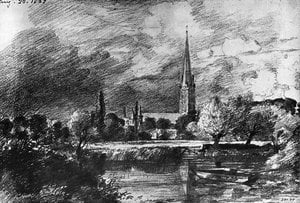
ولم يتوقف شغفه عند حدود الطبيعة المفتوحة، بل امتد ليشمل الضياع والمنشآت المعمارية القابعة في قلبها؛ ففي عام 1816، رسم لوحة منتزه ويفنهو (Wivenhoe Park)، ليجسد من خلالها الانسجام الريفي الساحر في مقاطعة إيسيكس. كما وجه بصره نحو التفاعل الساحر بين الضوء والعمارة، كما يتجلى في لوحة كاتدرائية سالزبوري من أراضي الأسقف التي رسمها عام 1823. وتجلت قدرته الفائقة على نقل الأجواء الخاصة بكل مكان في الطريقة التي كان يعالج بها ثقل السحب وملمس الأرض وتفاصيلها.
لقد حققت بعض لوحاته قيمتها التاريخية والمادية الهائلة بعد مرور زمن طويل على إتمامها؛ حيث بيعت لوحة القفل (The Lock) عام 1824 في دار كريستيز عام 2012 بمبلغ قدره 22,441,250 جنيهاً إسترلينياً. وقد شمل نتاجه الفني الغزير العديد من الدراسات والأعمال المكتملة، منها:
الدوائر الفنية، المنافسون والمؤثرات
تأثرت لمسات فرشاة جون كونستابل في وادي ستور بالحضور الهادئ لعدد من كبار الأساتذة؛ فقد قدمت أعمال كلود لورين و جاكوب فان رويسديل رؤية فنية ابتعدت عن الأسلوب المسرحي المبالغ فيه. كما استلهم من تكوينات توماس غينزبورو وأنسجة لوحات بيتر بول روبنز، مما ساعده على التحرر من القواعد الأكاديمية الصارمة التي فرضتها الأكاديمية الملكية. لقد كان يبحث عن حقيقة فنية تكمن في رطوبة الهواء وفي الطريقة التي يداعب بها الضوء سطح النهر، بدلاً من الانغماس في المشاهد الميثولوجية الضخمة التي كان يفضلها معاصروه.
وغالباً ما تقاطع مساره الفني مع مسار جي إم دبليو تيرنر؛ فكلاهما كان من معاصري العصر، واشتعلت بينهما روح المنافسة خلال المعارض التي تقام في الأكاديمية الملكية. وبينما كان أحدهما يتجه نحو الدراما والسمو، ظل الآخر مرتبطاً بالمناظر الطبيعية المحلية المألوفة التي شهدت طفولته. هذا التركيز على الملاحظة المباشرة للطبيعة تجاوز حدود القناة الإنجليزية، حيث تركت رؤيته للضوء والأجواء بصمة واضحة على مدرسة باربيزون في فرنسا، حيث سعى الرسامون هناك إلى إيجاد صلة مماثلة مع العالم الطبيعي.
ولم تكن الروابط الشخصية بمعزل عن مسيرته، فقد كان مقرباً من جون فيشر، ابن شقيق أسقف سالزبوري، الذي دعاه للإقامة في تلك المنطقة. ولم تكن هذه الصداقات مجرد روابط اجتماعية عابرة، بل كانت نافذة أتاحت له الوصول إلى تلك المناظر الطبيعية الفريدة التي قضى سنوات في دراستها وتصويرها. ومن خلال هؤلاء الأشخاص وتلك الأماكن، تحولت أعماله إلى سجل حي لواقع ملموس ومعاش.
السنوات الأخيرة والرحيل
اتسمت السنوات التي أعقبت زواجه من ماريا بيكنيل في عام 1816 بتحول عميق في إحساسه بالانتماء للمكان؛ فبينما ظلت أعماله الفنية مرتبطة وجدانياً بالنهر وحقول صباه، كانت حياته الواقعية تنجذب نحو صخب المدينة. وبحلول عام 1827، استقر جون كونستابل بشكل دائم في منطقة هامبستيد بلندن، وهي فترة خيمت عليها ظلال معاناة ماريا مع تدهور صحتها، حتى فارقت الحياة بسبب السل في عام 1828، وهو الحدث الذي ترك أثراً غائراً في وجدانه. ورغم هذا الألم، لم يتوقف عن الرسم، بل وجد عزاءه في تتبع الضوء المتغير فوق المناظر الطبيعية التي أفنى عقوداً في دراستها.
قضى أيامه الأخيرة في منطقة بلومزبري بلندن، حيث ظل مخلصاً لممارسته الفنية، صامداً أمام تعقيدات حياته الشخصية والمتطلبات الجسدية المرهقة لعمله الفني. وفي الحادي والثلاثين من مارس عام 1837، رحل جون كونستابل عن عالمنا في بلومزبري، ووُوري جثمانه الثرى في ساحة كنيسة سانت جون في هامبستيد، ذلك المكان الذي أصبح ملاذه وموطنه في سنواته الأخيرة.
الإرث والتأثير
من خلال توجيه نظراته نحو التفاصيل المألوفة في الريف الإنجليزي، أحدث جون كونستابل تحولاً جذرياً في كيفية إدراكنا للمناظر الطبيعية؛ فقد ابتعد عن المشاهد المسرحية والمثالية التي كانت تفضلها الأكاديميات، واختار بدلاً من ذلك أن يمنح الثقل والجمال للأشياء العادية. وهكذا، أصبحت عربة الحطب أو مبنى زراعي بسيط موضوعات تستحق الدراسة المتأنية، وساهم هذا التحول في نقل تركيز فن الرسم من السرديات الميثولوجية الكبرى نحو تمثيل صادق للعالم الطبيعي. لقد أثبت أن المنظر الطبيعي يمكن أن يحمل في طياته شعوراً عميقاً بالعاطفة الشخصية، محولاً مشهداً لنهر أو مرج إلى وسيلة للتعبير عن حالات مزاجية داخلية.
إن عادته في العمل في الهواء الطلق لالتقاط الطريقة التي يداعب بها الضوء السحب والرطوبة في الجو، تركت بصمة لا تُمحى لدى الفنانين الذين جاؤوا من بعده. هذا الالتزام بالملاحظة المباشرة ودراسة التأثيرات الجوية قد استبق الكثير من الاهتمامات التي تبناها رسامو المدرسة الانطباعية لاحقاً. ولم يتوقف تأثيره عند حدود بلاده، بل عبر القناة نحو فرنسا، حيث وجدت رؤيته صدىً واسعاً لدى مدرسة باربيزون؛ إذ تشارك هؤلاء الفنانون اهتمامه بالرسم من الحياة الواقعية ومراقبة الخصائص المتغيرة والمباشرة للطبيعة. ويظل عمله حلقة وصل حيوية لطريقة في الرؤية تضع النسيج الحقيقي للأرض وتقلبات ضوء السماء في مقدمة أولوياتها.
أين يمكن مشاهدة أعماله اليوم
إن تتبع حضور أعمال جون كونستابل عبر المجموعات الفنية المختلفة يكشف عن كيفية تجميع رؤاه الفنية للريف الإنجليزي عبر الزمن. ففي مركز ييل للفن البريطاني في نيو هيفن، توجد 25 من أعماله، بما في ذلك دراسة لمنظر طبيعي بالقرب من ديدام تعود إلى عام 1802 تقريباً. أما في لندن، فيمكن استشعار أثره في عدة مؤسسات عريقة؛ حيث يضم متحف فيكتوريا وألبرت 6 أعمال، مثل مشهد بناء القوارب بالقرب من مطحنة فلاتفورد. كما تحتفظ المعرض الوطني بـ 5 أعمال، من بينها اللوحة الضخمة "الحصاد" (The Hay Wain) من عام 1818. وفي معرض تيت، توجد 4 أعمال، تتضمن تفاصيل لمطحنة فلاتفورد من عام 1817.
ولا يقتصر نطاق تأثيره على الجزر البريطانية فحسب، بل يمتد إلى القارة الأوروبية؛ إذ يضم متحف اللوفر في باريس عملين، من بينهما تصوير لـ هلمنغهام ديل. وتتجلى في هذه القطع الفنية الطرق المتعددة التي استطاع من خلالها التقاط الضوء والأجواء، بدءاً من السحب الكثيفة التي تظلل نهر ستور وصولاً إلى الزوايا الهادئة في إحدى القرى. إن مشاهدة هذه الأعمال في هذه البيئات المتنوعة تتيح للمتأمل نظرة فاحصة على كيفية استخدامه لطبقات الطلاء السميكة لبناء ملمس غني وحيوي على سطح اللوحة.
الحصاد (1821)
كاتدرائية سالزبوري من المروج (1831)
القفل (1824)
ستونهنج عند الغروب (1836)
منتزه ويفنهو، إيسيكس (1816)


 معاينة الحجم الواقعي
 مشاركة
 مشاركة
 التفاصيل
 دليل
دليل

 تحميل الملف
 قطع مشابهة
 الأشعة السينية
 عرض شرائح
 الأسئلة والأجوبة
 الإحصائيات

 عرض المزيد
 التبديل إلى نسخة مطبوعة





































 خيار الزجاج متاح فقط للمقاسات التي تقل عن 110 سم