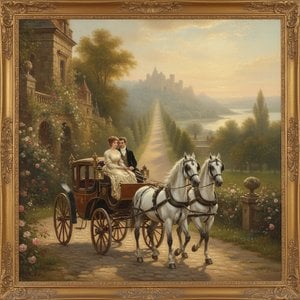
A Dramatic Tableau of Equestrian Might: Géricault’s “The Horse Race”
Jean-Louis André Théodore Géricault's "The Horse Race," painted in 1816, isn’t merely a depiction of a sporting event; it’s a visceral embodiment of Romanticism’s core tenets – passion, drama, and the sublime power of nature. This monumental oil on canvas captures a pivotal moment during a cavalry race, likely inspired by contemporary military displays or perhaps even referencing earlier equestrian competitions, yet transcends simple documentation to become a profound exploration of human emotion and heroic struggle. Géricault, a figure already wrestling with his own turbulent life and artistic ambitions, poured his intense energy into this work, imbuing it with an almost theatrical quality that foreshadows the dramatic intensity of later Romantic painters.
The composition immediately commands attention. The scene is dominated by a dynamic diagonal thrust created by the billowing banner held aloft by a man on horseback – a figure radiating authority and leadership. This central element, charged with movement and color, draws the eye relentlessly forward, while the surrounding figures—a cluster of riders and spectators—are rendered with varying degrees of detail, contributing to the overall sense of controlled chaos. Géricault masterfully employs loose brushstrokes and a vibrant palette dominated by deep blues, browns, and reds, creating an atmosphere thick with energy and excitement. The use of chiaroscuro – dramatic contrasts between light and shadow – further amplifies this effect, highlighting key figures and adding depth to the scene.
The Anatomy of Movement: Technique and Style
Géricault’s technical prowess is evident in his meticulous study of anatomy, particularly the musculature of the horses. He meticulously observed animal movement, translating it onto canvas with remarkable accuracy. The powerful strides of the horses are rendered with a dynamic sense of weight and momentum, while their flowing manes and tails add to the overall impression of raw energy. The artist’s loose brushwork, characteristic of Romanticism, isn't about precise detail but rather capturing the *feeling* of movement—the fleeting moment of exertion, the surge of adrenaline. This technique creates a sense of immediacy and allows the viewer to almost feel the heat of the race.
Furthermore, Géricault’s use of color is remarkably expressive. The bold reds and blues of the banner contrast sharply with the darker tones of the horses and riders, creating a visual focal point that draws the eye. He skillfully employs atmospheric perspective – making distant elements appear paler and less distinct – to create a sense of depth and space. The painting’s overall effect is one of intense dynamism and emotional resonance, achieved through a masterful combination of technique and stylistic choices.
Historical Context: Romanticism and the Napoleonic Era
"The Horse Race" was created during a period of significant social and political upheaval in France – the aftermath of the Napoleonic Wars and the restoration of the monarchy. Romanticism, as an artistic movement, emerged in response to these turbulent times, emphasizing emotion, individualism, and the power of nature. Géricault’s work reflects this spirit perfectly, capturing a moment of heroic action amidst a backdrop of social change. The depiction of military prowess aligns with the era's fascination with national identity and patriotic fervor, while simultaneously exploring themes of human struggle and vulnerability.
Interestingly, the painting also resonates with contemporary events. The subject matter—a cavalry race—was popular entertainment during this period, often associated with displays of military strength and national pride. However, Géricault’s treatment of the scene transcends mere spectacle, imbuing it with a sense of drama and emotional intensity that elevates it to a level of artistic significance.
Symbolism and Emotional Resonance: A Portrait of Heroism
Beyond its technical brilliance, “The Horse Race” is rich in symbolism. The banner held aloft by the central figure represents victory, leadership, and perhaps even the ideals of the nation. The horses themselves embody power, strength, and nobility. Yet, Géricault doesn’t simply celebrate these qualities; he also acknowledges the inherent risks and sacrifices involved in such endeavors. The intense expressions on the faces of the riders—a mixture of determination, excitement, and apprehension—suggest a deeper exploration of human psychology.
Ultimately, “The Horse Race” is a powerful meditation on heroism, ambition, and the complexities of human experience. It’s a painting that continues to captivate viewers with its dramatic intensity, technical mastery, and profound emotional resonance – a testament to Géricault's genius and his enduring legacy as one of the most important artists of the Romantic era.



 معاينة الحجم الحقيقي
 اشترِ لوحة مرسومة يدويًا
 مشاركة
 مشاركة
 التفاصيل
 الدليل

 تحميل الملف
 قطع مشابهة
 الأشعة السينية
 عرض شرائح
 الإحصائيات


 عرض المزيد






































 خيار الزجاج متاح فقط للمقاسات التي تقل عن 110 سم