A World Within a Number: Deconstructing Jasper Johns’ “Figure”
Jasper Johns' "Figure," a painting that immediately commands attention with its central, oversized numeral two, is far more than a simple depiction of quantity. It’s a carefully constructed meditation on perception, representation, and the very nature of visual language – a cornerstone of Johns’ distinctive artistic approach that bridged the gap between Abstract Expressionism and the burgeoning Pop Art movement. Born in 1930, Johns' career was defined by his deliberate subversion of conventional art-making practices, often employing familiar objects—flags, maps, targets—as subjects to challenge our assumptions about what constitutes “art.” "Figure" exemplifies this strategy brilliantly, inviting viewers to consider the inherent ambiguity and layered meanings embedded within seemingly straightforward imagery.
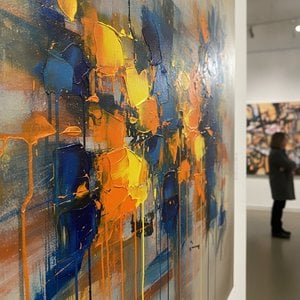
The painting’s palette is deliberately restrained – a muted blend of greys and browns that lends an almost photographic quality to the composition. Thick brushstrokes, applied with a controlled yet energetic hand, create a sense of texture and depth, preventing the image from feeling flat or overly stylized. Notice how Johns doesn't attempt to render the number two realistically; instead, he employs a fragmented, almost geometric approach, suggesting its presence through shape and form rather than direct representation. This technique is characteristic of Johns’ work – he prioritizes the *idea* of an object over a literal depiction, creating a visual puzzle for the viewer to unravel.
The Language of Symbols: Johns and American Iconography
Johns' fascination with symbols—particularly those deeply rooted in American iconography—is central to understanding his work. The number two itself carries significant cultural weight, representing duality, balance, or even a sense of incompleteness. In the context of the painting, it functions as an anchor, drawing the eye and establishing a visual hierarchy. However, Johns deliberately avoids providing any definitive interpretation; he leaves the meaning open to the viewer’s own contemplation. This ambiguity is not accidental—it's a deliberate tactic designed to engage the audience in a dialogue with the artwork.
Furthermore, the painting subtly references the tradition of “figure painting,” a historical movement that emphasized realistic representation of the human form. The title itself – "Figure" – acts as a playful wink at this established artistic lineage, suggesting a connection between the abstract and the representational. The use of numerals echoes the visual language of advertising and signage, further blurring the boundaries between art and everyday life—a key characteristic of Pop Art.
Contextualizing “Figure”: The Post-War Shift in Artistic Vision
“Figure” was created during a period of profound transformation in American art. Following World War II, artists were grappling with questions about identity, representation, and the role of art in society. Abstract Expressionism, with its emphasis on spontaneous gesture and emotional expression, had dominated the artistic landscape for decades. However, by the late 1950s, a new generation of artists—including Johns, Rauschenberg, and Warhol—began to challenge these conventions, exploring alternative approaches to art-making.
Johns’ shift towards using everyday objects as subjects reflected this broader cultural shift. He rejected the introspective focus of Abstract Expressionism in favor of a more outward-looking approach, engaging with the visual culture of American society. “Figure” embodies this transition—it's a painting that looks beyond the purely personal and engages with the collective consciousness.
Emotional Resonance and Artistic Legacy
Despite its seemingly simple composition, "Figure" possesses a remarkable emotional resonance. The muted colors, fragmented forms, and ambiguous symbolism create a sense of quiet contemplation – inviting viewers to slow down and consider the painting’s deeper meanings. Johns' work continues to resonate with audiences today because it speaks to fundamental questions about perception, representation, and the relationship between art and reality.
Reproductions of “Figure” offer a unique opportunity to experience this artwork firsthand, bringing its subtle complexities into your home or office. WahooArt’s hand-painted reproductions capture the essence of Johns' masterful technique and imbue the image with a vibrant, authentic quality that is unmatched by digital prints. Consider how this piece can add a touch of intellectual intrigue and understated elegance to any space – a testament to the enduring power of Jasper Johns’ artistic vision.
الأسئلة والأجوبة
ما هو اتجاه لوحة "Figure" للفنان جاسبر جونز؟
تُعد "Figure" للفنان جاسبر جونز تكويناً Portrait. ويُنصح بمراجعة الأبعاد قبل اختيار حجم الطباعة.
أين يمكنني شراء نسخة مرسومة يدوياً من "Figure" للفنان جاسبر جونز؟
تتوفر النسخ المرسومة يدوياً من "Figure" للفنان جاسبر جونز للبيع عبر هذا الموقع: نسخة زيتية مرسومة يدوياً على قماش الكتان، ويمكن طلبها من خلال هذه الصفحة.
أين يمكنني شراء نسخة مطبوعة من "Figure" للفنان جاسبر جونز؟
للحصول على نسخة مطبوعة من "Figure" للفنان جاسبر جونز، ما عليك سوى طلبها عبر هذه الصفحة: مطبوعة فنية فاخرة على قماش قطني أو ورق كانفاس أرشيفي.
ما هي الاستخدامات المقترحة لـ "Figure" للفنان جاسبر جونز؟
الاستخدام المقترح لـ "Figure" للفنان جاسبر جونز هو Statement، كما يمكن استخدامه لأغراض أخرى أيضاً.
هل يغلب على "Figure" الطابع الفاتح أم الداكن بشكل عام؟
القيم المسجلة لـ "Figure" للفنان جاسبر جونز هي: سطوع بمقدار brilliant، وإضاءة بمقدار Bright Balance.
ما هو الحجم والاتجاه الموصى بهما لطباعة "Figure" للفنان جاسبر جونز؟
يُنصح بطباعة "Figure" للفنان جاسبر جونز بحجم Large وبوضعية Portrait.
إلى أي فنان يُنسب العمل "Figure"؟
يُنسب العمل "Figure" إلى جاسبر جونز.



 معاينة الحجم الواقعي
 التبديل إلى المطبوعات
 إرسال
إرسال مشاركة
 عرض التفاصيل
 دليل الأعمال الفنية للطلاب

 تحميل
تحميل
 قطع مشابهة
 الأشعة السينية
 عرض شرائح متتابع
 الإحصائيات
 اقرأ المزيد






































 خيار الزجاج متاح فقط للمقاسات التي تقل عن 110 سم