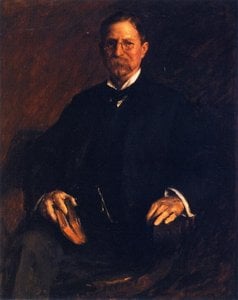
The Visionary of Nagybánya: The Life and Legacy of István Réti
Born in the historic landscape of Baia Mare, within the borders of Austria-Hungary, István Réti emerged as a cornerstone of Central European modernism. His journey was not merely that of a solitary painter, but of a profound theoretician and educator who sought to reshape the very foundations of Hungarian art. From his early, restless days in Budapest to his formative years in the vibrant art capitals of Munich and Paris, Rétim possessed an innate ability to absorb the shifting currents of European aesthetics. His education under Simon Hollósy in Munich provided him with a rebellious spirit, as he favored the freedom of independent classes over the rigid, conservative structures of traditional academies. This thirst for creative liberty would later become the driving force behind his most enduring contribution to art history.
The heart of Réti’s legacy lies in the Nagybánya artists' colony, a movement he helped found and nurture. Alongside contemporaries like János Thorma, Réti was instrumental in transplanting the progressive ideals learned in Munich and Paris back to the fertile soil of Nagybánya. This colony became a sanctuary for light, color, and naturalism, influencing generations of painters across both Hungary and Romania. As a professor and later as the president of the Hungarian University of Fine Arts, Réti did not just paint; he built the infrastructure for artistic excellence, ensuring that the principles of the Nagybánya school would endure long after his tenure.
A Mastery of Light, Emotion, and Narrative
Réti’s oeuvre is a captivating tapestry of intimate interiors, poignant portraits, and monumental religious compositions. His early works often captured the nostalgic, flickering warmth of lamplit rooms, such as his celebrated Christmas Night of the Bohemians Abroad, which demonstrated an early mastery of atmosphere and emotional depth. This ability to evoke a sense of place and time allowed him to connect deeply with the viewer, turning simple domestic scenes into profound meditations on human existence. His travels through Italy and France further enriched his palette, introducing him to the delicate nuances of Jules Bastien-Lepage and the monumental serenity of Pierre Puvis de Chavannes.
Beyond the intimate, Réti’s work often touched upon the historical and the sacred. He possessed a unique talent for weaving national sentiment and spiritual gravity into his canvases. Whether capturing the solemnity of a revolutionary figure or the divine presence in works like Christ with the Apostles, his brushwork remained sensitive to the weight of the subject matter. His technique was characterized by:
- Atmospheric Naturalism: A profound ability to manipulate light to create mood and depth within interior settings.
- Narrative Depth: The use of historical and religious themes to explore universal human emotions and national identity.
- Educational Rigor: A disciplined approach to form and composition, informed by his role as a leading art theorist and professor.
Historical Significance and Enduring Influence
The impact of István Réti extends far beyond the borders of his canvas. As an art historian and academic leader, he played a vital role in defining the trajectory of Hungarian fine arts during a period of immense political and social transition. His leadership at the Hungarian University of Fine Arts allowed him to bridge the gap between the traditionalist past and the burgeoning modernism of the early 20th century. The Nagybánya colony, under his guidance and theoretical influence, became a beacon of light in Eastern Europe, fostering a style that celebrated the beauty of the natural world through a sophisticated, modern lens.
Today, Réti is remembered not only as a painter of exquisite skill but as a foundational figure whose intellectual contributions were as significant as his aesthetic ones. His life’s work remains a testament to the power of artistic community and the enduring strength of a vision dedicated to both the beauty of the moment and the progress of the medium. Through his paintings, we continue to witness the flickering light of a bygone era, preserved by a master who understood that art is both a reflection of the soul and a pillar of culture.



 معاينة الحجم الحقيقي
 اشترِ نسخة مطبوعة
 مشاركة
 مشاركة
 التفاصيل

 تحميل الملف
 قطع مشابهة
 الأشعة السينية
 عرض شرائح
 عرض المزيد