A Glimpse into Dutch Opulence: The Cupboard (Interior) by Herman Doomer
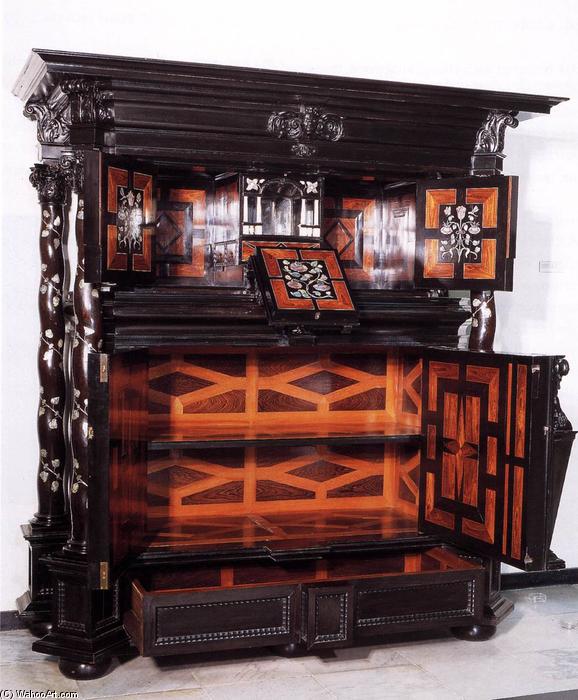
Herman Doomer’s “Cupboard (Interior),” a remarkable piece housed within the hallowed halls of the Rijksmuseum in Amsterdam, is more than just a display case; it's a meticulously crafted window into 17th-century Dutch artistry and the lavish tastes of its wealthy patrons. Completed around 1640, this cupboard offers a breathtaking immersion into a world of intricate detail, vibrant color, and masterful craftsmanship – a testament to Doomer’s exceptional skill as a cabinetmaker and his profound understanding of materials and design.
The piece immediately captivates with its scale—measuring an impressive 218 x 196 cm. Constructed primarily from oak veneered with ebony, kingwood, and rosewood, the cupboard’s exterior speaks to a sophisticated appreciation for exotic woods, reflecting the burgeoning trade routes that connected Europe with distant lands. However, it is the interior that truly commands attention. The use of contrasting materials—the dark, rich tones of ebony juxtaposed against the warmer hues of rosewood and the shimmering accents of mother-of-pearl—creates a dramatic visual interplay, drawing the eye deeper into its depths.
A Symphony of Materials: Technique and Craftsmanship
Doomer’s mastery lies not only in his selection of materials but also in the techniques he employed to transform them. The intricate marquetry, painstakingly inlaid with mother-of-pearl and ivory, is a marvel of precision. Each tiny piece is carefully positioned to create delicate floral patterns and geometric designs—a testament to the artist's patience and skill. The use of baleen, a material derived from whalebone, adds another layer of textural complexity, demonstrating Doomer’s innovative approach to ornamentation. The cabinetmaker skillfully combined these materials, creating a harmonious blend of textures and colors that elevates the piece beyond mere functionality.
Furthermore, the cupboard's construction reveals a deep understanding of woodworking principles. The use of dovetail joints—a hallmark of fine craftsmanship—ensures structural integrity while allowing for seamless assembly. The subtle curves and flowing lines of the design contribute to its overall elegance and grace, reflecting the prevailing aesthetic sensibilities of the period.
Symbolism and Context: A Reflection of Status
To fully appreciate “Cupboard (Interior),” it’s crucial to understand the historical context in which it was created. The Dutch Golden Age—the 17th century—witnessed an unprecedented flourishing of art, commerce, and culture. Wealthy merchants and aristocrats sought to demonstrate their status through opulent furnishings like this cupboard, a symbol of prosperity and refined taste. The use of exotic woods and precious materials underscored the owner’s connections to global trade networks and his ability to afford luxury goods.
The cabinet itself served as more than just storage; it was a statement piece—a focal point within a grand interior, designed to impress guests and reflect the homeowner's position in society. The intricate details and lavish ornamentation were intended to evoke admiration and convey a sense of wealth and sophistication.
A Legacy Enduring: Doomer’s Influence
Herman Doomer’s work profoundly influenced the development of Dutch furniture making, establishing him as one of the era's most celebrated cabinetmakers. His innovative use of materials, combined with his impeccable craftsmanship and artistic vision, set a new standard for quality and design. The portrait by Rembrandt, painted around the same time, further cemented Doomer’s place in art history, capturing not only the artist’s likeness but also the essence of his character and creative spirit.
Today, “Cupboard (Interior)” stands as a remarkable example of 17th-century Dutch artistry—a captivating blend of technical skill, aesthetic beauty, and historical significance. It offers a rare glimpse into the world of wealthy merchants and aristocrats, revealing their aspirations, tastes, and values.
الأسئلة والأجوبة
ما مدى التناغم بين ألوان "Cupboard (interior)"؟
تُظهر لوحة "Cupboard (interior)" للفنان Herman Doomer تناغماً لونياً Balanced Harmony.
هل "Cupboard (interior)" للفنان Herman Doomer لوحة زيتية، أم رسم، أم مطبوعة؟
" Cupboard (interior) " هي قطعة من نوع WallArt.
ما هو شكل وأبعاد "Cupboard (interior)" للفنان Herman Doomer؟
تأتي لوحة "Cupboard (interior)" للفنان Herman Doomer بتنسيق Portrait وبمقاس 218 x 196 cm.


 معاينة الحجم الواقعي
 التبديل إلى المطبوعات
 إرسال
إرسال مشاركة
 عرض التفاصيل
 دليل الأعمال الفنية للطلاب

 تحميل
تحميل
 قطع مشابهة
 الأشعة السينية
 عرض شرائح متتابع
 الإحصائيات


 اقرأ المزيد


