A Symphony of Blue and White: Exploring Henri Matisse’s Untitled (5953)
Henri Matisse's “Untitled (5953)” stands as a testament to the transformative power of color within the framework of Fauvist aesthetics. Painted in 1953, shortly before his passing, this gouache découpée – meaning "cut-out" – is more than just a visual spectacle; it’s an embodiment of Matisse's artistic philosophy and a reflection of the evolving landscape of modern art.
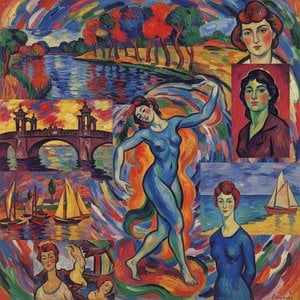
The painting immediately captivates with its dominant palette: shades of serene blue intertwine with crisp whites, creating a tranquil yet dynamic composition. Figures—primarily men and women—are positioned around a pool area, their postures relaxed and inviting. The inclusion of two bowls adds an element of domesticity and contemplation, while the vase subtly directs the viewer’s gaze towards the left side of the canvas.
The Fauvist Breakthrough: Simplifying Form Through Color
Matisse's approach to painting revolutionized artistic expression in the early 20th century. He championed what became known as Fauvism (“wild beast”), rejecting academic conventions and prioritizing color above all else. Unlike Impressionists who sought to capture fleeting moments of light, Matisse deliberately flattened perspective and reduced forms to their essential outlines—a technique designed to amplify the emotional impact of hue.
"Untitled (5953)" exemplifies this principle perfectly. The simplified shapes of the chairs and bowls are rendered in bold blues and whites, allowing color to dominate the visual experience. This deliberate distortion isn’t merely stylistic; it serves as a conduit for conveying mood and atmosphere—a feeling of serenity and social connection.
Symbolism Within Harmony: Echoes of Nature
Beyond its formal innovations, “Untitled (5953)” resonates with symbolic undertones. The spiral pattern inherent in the snail’s shell – as Matisse himself recounted – is mirrored in the concentric arrangement of colored shapes at the center of the painting. This deliberate echo of natural forms speaks to Matisse's fascination with organic beauty and his desire to capture its essence.
The use of complementary colors—red juxtaposed against green, orange against blue—further enhances the painting’s visual richness and contributes to its emotional depth. These hues aren’t merely decorative; they engage in a dynamic interplay that stimulates the viewer's senses and evokes feelings of warmth and vibrancy.
A Legacy of Color: Matisse’s Influence on Contemporary Art
"Untitled (5953)" represents a culmination of Matisse’s lifelong pursuit of artistic truth—a belief that color could communicate emotion more effectively than representation. His groundbreaking approach paved the way for subsequent generations of artists, influencing movements like Abstract Expressionism and inspiring countless creatives to embrace bold chromatic palettes.
Reproductions of this iconic artwork offer a captivating glimpse into Matisse’s visionary aesthetic and provide an opportunity to experience the enduring beauty of Fauvist art firsthand. Its tranquil composition and masterful use of color continue to resonate with audiences today, cementing its place as one of Matisse's most celebrated creations.



 معاينة الحجم الحقيقي
 التحويل إلى المطبوعات
 مشاركة
 مشاركة
 التفاصيل

 تحميل الملف
 قطع مشابهة
 الأشعة السينية
 عرض شرائح
 الإحصائيات

 عرض المزيد






































 خيار الزجاج متاح فقط للمقاسات التي تقل عن 110 سم