لوحة زيتية مرسومة يدوياً على الكانفاس بالمقاس والإطار الذي تفضله، تُنفذ حسب الطلب على أيدي فنانينا. ( اشترِ نسخة مطبوعة
اشترِ الصورة)
اختر من بين أحجامنا المُعدّة مسبقًا والتي تتطابق مع النسب الأصلية للعمل الفني.
يمكنك إدخال أبعادك الخاصة لتناسب إطارًا معينًا أو مساحة محددة. وإذا لم يتطابق الحجم الذي اخترته مع نسب الصورة الأصلية، فسنقوم إما بقص العمل الفني أو توسيع اللوحة بإضافة عناصر مرسومة يدويًا. سيتم إرسال نموذج رقمي إليك للموافقة عليه قبل بدء الإنتاج.
يرجى ملاحظة أن المعاينة على الشاشة لا تعكس عملية القص أو التوسيع الفعلية؛ حيث إن النموذج الرقمي وحده هو الذي سيوضح التكوين النهائي بدقة.
وعلى الرغم من توفر أحجام مخصصة، إلا أننا نوصي باختيار أبعاد من القائمة المحددة مسبقًا للحفاظ على النسب الأصلية للعمل الفني.
توصيل عالمي إلى خلال 3 إلى 4 أسابيع بدلاً من المدة المعتادة البالغة 5 أسابيع. (6 سبتمبر). جودة لا تهاون فيها.
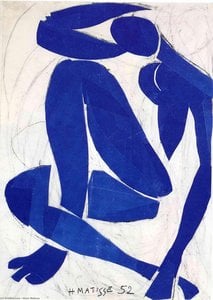
Nude
مقاس النسخة المطبوعة
In the pantheon of modern art, few works capture the raw essence of human presence as poignantly as Henri Matisse’s “Nude.” Executed during the transformative years between 1928 and 1930, this masterpiece serves as a profound testament to the Fauvist spirit—a movement that dared to shatter the constraints of Impressionism to embrace a more visceral, emotional reality. Rather than striving for the photographic precision of academic realism, Matisse invites us into a world where color functions as a language of its own. The painting is not merely a depiction of a human figure; it is an exploration of the delicate balance between strength and fragility, rendered through a palette that vibrates with life.
The composition centers on a seated woman, her legs crossed in a posture that suggests a quiet moment of repose layered with a subtle, underlying tension. Her gaze, direct and unblinking, confronts the viewer with an assertive intimacy. This is not a passive subject to be observed from a distance; she is a participant in a silent dialogue, drawing the observer into her private sanctuary. The surrounding environment—a glimpse of beds and a couch—adds a layer of domestic intimacy, suggesting a space of profound privacy where the boundaries between the external world and the internal self begin to blur.
To behold this work is to witness Matisse at the height of his expressive powers. The technique is characterized by an unrestrained use of pigment, where thick, textured strokes create a palpable physicality on the canvas. Unlike the soft, atmospheric blending favored by the Impressionists, Matisse utilizes bold, saturated hues of red, yellow, and blue to sculpt form and evoke mood. This approach priorits the expressive gesture over anatomical perfection, allowing the energy of the brushwork to communicate the subject's emotional state.
Influenced by the geometric simplifications of Cézanne, Matisse distills complex shapes into their most fundamental components. This stylistic choice lends the painting a modern, structural integrity that remains timeless. For the discerning collector or interior designer, this piece offers a sophisticated interplay of texture and tone. The way the vibrant colors interact with the simplified forms creates a visual rhythm that can serve as a commanding focal point in any curated space, bringing both warmth and intellectual depth to a room.
The historical significance of “Nude” cannot be overstated. Emerging from the revolutionary era of early 20th-century modernism, the work reflects Matisse’s departure from traditional academic constraints. Following the groundbreaking Cubist experiments of his contemporary, Pablo Picasso, Matisse sought a different kind of liberation—one found in the liberation of color and the celebration of the classical tradition through a modern lens. He transformed the canvas into a space where light is replaced by emotion, and shadow is replaced by shade.
Ultimately, the enduring appeal of this painting lies in its profound emotional impact. It captures a sense of vulnerability that is both haunting and beautiful. For those seeking to adorn their homes with art that inspires contemplation, a high-quality reproduction of this work offers more than just decoration; it provides an entry point into the soul of Matisse’s philosophy. It is a piece that speaks of the beauty found in simplicity, the power of color to move the spirit, and the eternal allure of the human form in its most honest state.
1869 - 1954 , فرنسا