A Moment of Coastal Serenity: An Exploration of Matisse's Vision
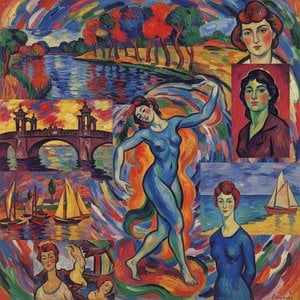
This captivating artwork, though untitled, embodies the very essence of Henri Matisse’s revolutionary approach to painting – a bold celebration of color and form that redefined modern art. The scene unfolds as a quintessential coastal landscape, rendered with an almost dreamlike quality. A winding road snakes its way along a rocky beach, punctuated by parked automobiles that seem frozen in time, inviting the viewer into this idyllic tableau. The presence of a boat gently bobbing in the water adds to the sense of tranquility and invites contemplation of the relationship between humanity and nature.
- Subject Matter: The painting’s subject is deceptively simple – a beach scene – yet Matisse elevates it through his masterful manipulation of color and composition. It's not merely a depiction of a coastal view; it’s an exploration of light, atmosphere, and the emotional resonance of a sunny day by the sea.
- Style & Technique: This work exemplifies Matisse’s signature “Fauvist” style, characterized by flattened forms, simplified shapes, and intensely vibrant colors. The brushstrokes are loose and expressive, contributing to the painting's dynamic energy. Notice how he avoids precise representation, prioritizing the emotional impact of color over photographic realism.
The Rise of Fauvism: A Rejection of Academic Tradition
Created during a pivotal moment in art history – the early 20th century – this piece reflects the burgeoning movement known as Fauvism (French for “wild beasts”). Emerging in the late 1890s, Fauvism represented a radical departure from the established academic traditions of the time. Artists like Matisse, André Derain, and Maurice de Vlaminck sought to liberate color from its descriptive function, using it instead as an independent expressive element. They were influenced by Post-Impressionist painters such as Paul Gauguin and Vincent van Gogh, but pushed their experimentation with color even further.
- Historical Context: The late 19th and early 20th centuries witnessed significant social and technological changes – industrialization, urbanization, and the rise of modernism. Artists responded to these shifts by challenging conventional artistic norms and exploring new ways of seeing and representing the world.
- Influence of Gauguin & Van Gogh: Matisse’s use of bold color can be traced back to the work of Paul Gauguin, who emphasized symbolic meaning in his paintings, and Vincent van Gogh, whose expressive brushwork paved the way for Fauvist techniques.
Decoding the Palette: Symbolism and Emotional Resonance
The painting’s palette is a key element of its emotional impact. The dominant blues and greens evoke the vastness of the sea and sky, while warmer tones – yellows and oranges – suggest sunlight and warmth. These colors aren't simply descriptive; they are imbued with symbolic meaning. Blue often represents tranquility and spirituality, while yellow symbolizes optimism and joy. The juxtaposition of these hues creates a dynamic tension that draws the viewer’s eye across the canvas.
- Color as Emotion: Matisse believed that color had an inherent emotional power. He sought to tap into this power by using color not to represent objects, but to evoke feelings and sensations in the viewer.
- Compositional Elements: The placement of the cars and boat further contributes to the sense of movement and dynamism within the scene. These elements are not merely decorative; they serve to guide the viewer’s eye and reinforce the painting's overall composition.
A Legacy of Color: Matisse's Enduring Influence
Henri Matisse’s work, including this evocative coastal scene, had a profound impact on the course of modern art. His emphasis on color as an expressive element paved the way for subsequent movements such as Abstract Expressionism. Today, his paintings continue to inspire artists and captivate audiences with their beauty, boldness, and emotional power. This reproduction offers a unique opportunity to experience Matisse’s genius firsthand, bringing a touch of vibrant color and timeless serenity into your home or office.



 معاينة الحجم الواقعي
 اطلب نسخة مرسومة يدويًا
 إرسال
إرسال مشاركة
 عرض التفاصيل
 دليل الأعمال الفنية للطلاب

 تحميل
تحميل
 قطع مشابهة
 الأشعة السينية
 عرض شرائح متتابع
 الإحصائيات

 اقرأ المزيد






































 خيار الزجاج متاح فقط للمقاسات التي تقل عن 110 سم