Gustave Moreau’s Salome: A Dream of Myth and Mystery
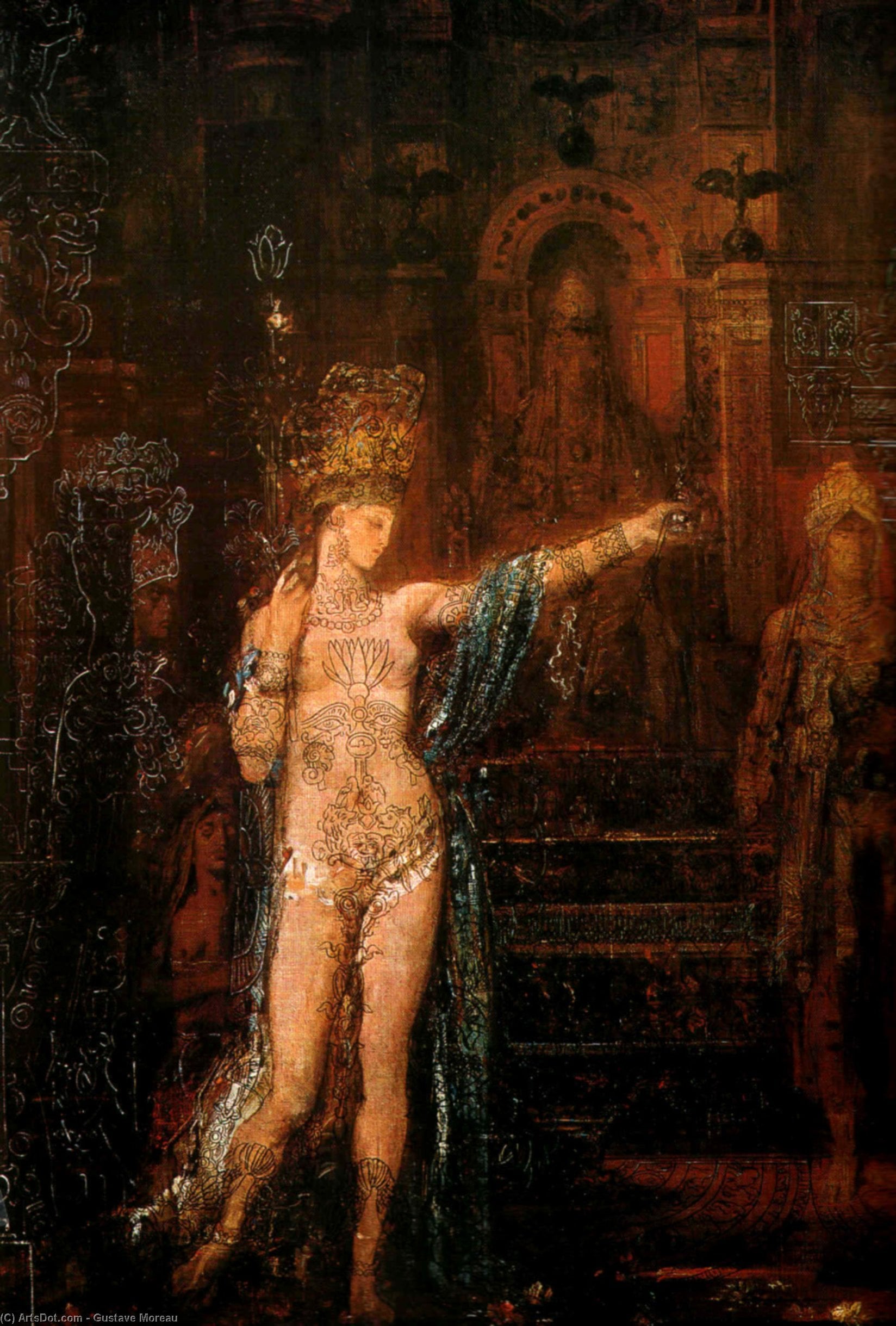
Gustave Moreau's "Salome," painted in 1875 and now residing within the Musée Gustave Moreau in Paris, isn’t merely a depiction of a biblical tale; it’s an immersive journey into the artist’s intensely personal and profoundly symbolic world. More than just a portrait, it’s a carefully constructed tableau vivant—a staged scene brimming with ancient references, psychological depth, and a haunting beauty that continues to captivate viewers over a century later. Moreau, a key figure in the Symbolist movement, rejected the prevailing trends of his time, eschewing objective representation for an exploration of inner landscapes, myths, and the very essence of human emotion. “Salome” exemplifies this approach perfectly, transforming a single dramatic event into a richly layered meditation on power, desire, and the unsettling nature of beauty.
The painting immediately draws the eye to its central figure: Salome herself, presented as a woman of arresting presence. She stands within a lavishly decorated chamber—a space that feels both opulent and subtly menacing. The room’s design is crucial; it's not simply a backdrop but an active participant in the narrative. Ornate columns, intricate ceiling patterns, and richly colored fabrics contribute to an atmosphere of decadent excess, hinting at the corrupting influence of power and the seductive allure of forbidden desires. Moreau masterfully employs color—deep reds, blues, and golds—to create a sense of drama and heighten the emotional intensity of the scene. The use of light is particularly noteworthy; it’s diffused and atmospheric, casting long shadows that obscure details and contribute to the painting's overall air of mystery.
Symbolism Woven into the Fabric of the Scene
Moreau’s genius lies in his ability to infuse even seemingly straightforward subjects with layers of symbolic meaning. The bird perched at the top left corner, for instance, is a potent symbol of prophecy and foreboding—a subtle reminder of the tragic fate that awaits Salome and her stepfather, Herod. The staircase, a recurring motif in Moreau’s work, represents ascent and descent, life and death, and the precarious balance between virtue and vice. The woman on the right, partially obscured, is often interpreted as representing the consequences of Salome's actions—a ghostly reminder of the severed head she carries. Even the arrangement of objects within the room – a small table with a single candle, a draped chair – contributes to the painting’s complex symbolic vocabulary.
Crucially, Moreau draws heavily on his knowledge of classical mythology and religious iconography. The setting itself evokes images of ancient Rome, while Salome's attire and bearing are reminiscent of figures from Greek tragedy. This deliberate juxtaposition of historical and mythological references creates a sense of timelessness—as if the events depicted in the painting are echoing through the ages. Moreau wasn’t simply retelling a story; he was engaging in a dialogue with the past, using it to illuminate the present.
A Legacy of Dreamlike Vision
Gustave Moreau's artistic journey began within the confines of traditional academic training at the École des Beaux-Arts in Paris. However, his encounter with Théodore Chassériau and his travels to Italy—where he studied the works of old masters—proved transformative. These experiences ignited a passion for symbolism and inspired him to develop his own unique visual language. Despite facing criticism during his lifetime, Moreau’s work gained recognition through exhibitions at the Paris Salon, particularly his depiction of Oedipus and the Sphinx. His reclusive nature led him to reject numerous prestigious offers, but he ultimately found fulfillment in teaching at the École des Beaux-Arts after the death of his friend Élie Delaunay, mentoring artists like Henri Matisse and Georges Rouault.
“Salome” stands as a testament to Moreau’s innovative approach to symbolism and his ability to evoke profound emotional responses through carefully crafted imagery. It's a painting that invites contemplation—a reminder of the enduring power of myth, the complexities of human nature, and the haunting beauty of dreams. A reproduction of this captivating artwork offers a unique opportunity to bring this extraordinary vision into your home, allowing you to experience the depth and mystery of Moreau’s artistic world.



 معاينة الحجم الحقيقي
 اشترِ لوحة مرسومة يدويًا
 مشاركة
 مشاركة
 التفاصيل

 تحميل الملف
 قطع مشابهة
 الأشعة السينية
 عرض شرائح


 عرض المزيد






































 خيار الزجاج متاح فقط للمقاسات التي تقل عن 110 سم








