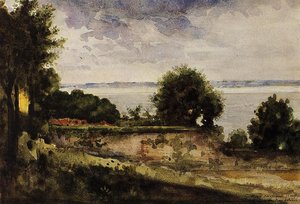
A Titan’s Defiance: Unveiling Gustave Moreau's "Prométhée"
Gustave Moreau’s “Prométhée” (Prometheus) is not merely a painting; it’s an immersion into the heart of Romantic rebellion and Symbolist introspection. The canvas pulsates with the weight of myth, depicting the chained Titan in a moment of profound sacrifice. Moreau doesn't present us with a triumphant hero, but rather a figure burdened by his act of defiance – a solitary beacon against a desolate landscape, extending the fragile flame of knowledge towards a shadowy humanity. This work, completed in 1868, stands as a cornerstone of Symbolist art, rejecting the literalism of Realism and instead delving into the realm of subjective emotion and philosophical inquiry.
The Language of Suffering and Light
Moreau’s technique is immediately striking. Visible brushstrokes define Prometheus' muscular form and the jagged rocks that imprison him, while softer lines evoke swirling clouds and distant mountains, creating a sense of vastness and isolation. The palette is dominated by muted browns, blues, and grays – colors that amplify the somber mood and emphasize the painting’s melancholic core. He masterfully uses light to draw our attention; a single source illuminates Prometheus' face and torso, casting dramatic shadows that heighten the sense of suffering and struggle. This isn’t about precise realism; it’s about capturing an atmosphere – a feeling of monumental scale and timelessness achieved through a flattened perspective. The texture itself feels rough and uneven, mirroring the harshness of Prometheus’ fate.
Decoding the Symbols: A Gift and Its Cost
The symbolism woven into “Prométhée” is rich and layered. Prometheus himself embodies resilience, sacrifice, and the enduring human spirit in the face of oppression. The flame he offers isn't simply fire; it represents knowledge, enlightenment, progress – but also carries within it the potential for destruction. The chains are a potent symbol of constraints imposed by authority, both divine and societal, while the mortal figure below represents humanity receiving this gift, with all its attendant joys and sorrows. A recurring motif in Moreau’s work, the bird appears here as well, often suggesting freedom, spirituality, or a connection to the divine realm – a poignant counterpoint to Prometheus' earthly imprisonment. The painting invites us to contemplate fundamental questions about our place in the universe and the price of liberation.
Moreau and His Legacy: A Bridge Between Worlds
Gustave Moreau (1826-1898) was a pivotal figure in the Symbolist movement, rejecting the prevailing artistic trends of his time to explore subjective emotions and mythological themes. Heavily influenced by literary giants like Shakespeare and Byron, he transformed familiar myths into deeply personal statements. “Prométhée” exemplifies this approach, demonstrating Moreau’s fascination with classical narratives and his ability to imbue them with a uniquely emotional charge. His work profoundly impacted later artists such as Henri Matisse and Georges Rouault, paving the way for modern art's exploration of inner worlds and symbolic language. Today, the Musée Gustave Moreau in Paris stands as a testament to his enduring legacy, preserving his studio and an extensive collection of his works. “Prométhée” is more than just a historical artwork; it’s a timeless meditation on the human condition, capable of resonating with audiences for generations to come.
An Evocative Presence in Your Space
“Prométhée” evokes a sense of awe, melancholy, and profound contemplation. Its dramatic composition and muted color palette make it a striking focal point for a study, library, or living room. The artwork pairs beautifully with dark wood furnishings, antique accents, and textured fabrics to enhance its Romantic atmosphere. A high-quality reproduction would add a touch of intellectual sophistication and artistic depth to any interior space – a constant reminder of the power of knowledge, the burden of freedom, and the enduring spirit of rebellion.
الأسئلة والأجوبة
ما هي الغرفة التي يُنصح بوضع "Prometheus" للفنان غوستاف مورو فيها؟
تتناسب نسخة من "Prometheus" بشكل رائع مع Living Room.
ما نوع العمل الفني "Prometheus" للفنان غوستاف مورو؟
" Prometheus " هي قطعة من نوع WallArt.
ما هي الاستخدامات الموصى بها لنسخة مطبوعة من "Prometheus"؟
يُنصح باستخدام نسخة مُعاد إنتاجها من "Prometheus" للفنان غوستاف مورو لغرض Statement؛ حيث يأتي هذا الاقتراح تماشياً مع موضوع العمل الفني وأجوائه وألوانه.



 معاينة الحجم الواقعي
 اطلب نسخة مرسومة يدويًا
 إرسال
إرسال مشاركة
 عرض التفاصيل
 دليل الأعمال الفنية للطلاب

 تحميل
تحميل
 قطع مشابهة
 الأشعة السينية
 عرض شرائح متتابع
 الإحصائيات

 اقرأ المزيد






































 خيار الزجاج متاح فقط للمقاسات التي تقل عن 110 سم