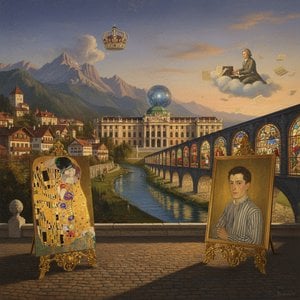
Beethoven Frieze: A Symphony of Texture and Emotion
Gustav Klimt’s “Beethoven Frieze,” completed in 1901, stands as a monumental testament to the Austrian Symbolist movement's fascination with mythology and psychological depth. More than just a depiction of musical genius—though Beethoven undeniably serves as an inspirational focal point—the frieze embodies Klimt’s masterful manipulation of gold leaf and intricate ornamentation, transforming it into an immersive experience for the viewer.
- Subject Matter: The artwork portrays a woman lying in bed, bathed in soft light. Her posture exudes tranquility, suggesting repose rather than active dreaming. Alongside her is a man, positioned on the left, gazing intently at her. A third figure, subtly integrated into the background, adds to the composition’s complexity and invites contemplation.
- Style: Klimt's signature style—characterized by opulent decoration and flattened perspectives—is powerfully evident here. He eschews traditional realism in favor of a stylized representation that prioritizes emotional resonance over accurate depiction. The frieze leans heavily into decorative abstraction, prioritizing visual impact over narrative clarity.
- Technique: Klimt’s technique is revolutionary for its time. He employs gold leaf extensively—a technique borrowed from Byzantine mosaics—creating shimmering surfaces that capture and refract light with breathtaking brilliance. Beneath the gold leaf lies a meticulously crafted oil paint surface, layered with meticulous detail to achieve remarkable textural richness. The artist skillfully blends geometric patterns with organic forms, resulting in an arresting visual harmony.
Historical Context: Created during Klimt’s prolific period of artistic experimentation, “Beethoven Frieze” reflects the broader Symbolist preoccupation with exploring inner states and confronting existential anxieties. The frieze draws inspiration from Nietzschean philosophy—specifically Nietzsche's concept of Dionysian ecstasy—seeking to capture the transformative power of art and its ability to transcend rational thought. Klimt’s work aligns with a wider artistic dialogue concerning spirituality, mythology, and the role of the artist in shaping human consciousness.
Symbolism: The woman represents feminine receptivity and nurturing, while the man embodies intellect and contemplation. Their intertwined figures symbolize the harmonious union between mind and body—a cornerstone of Symbolist ideals. The gold leaf itself symbolizes divinity and spiritual illumination, elevating the artwork beyond mere visual pleasure into a profound meditation on human experience. Furthermore, Klimt’s use of geometric patterns – spirals and squares – speaks to opposing forces: order versus chaos, masculine versus feminine, representing the duality inherent in human existence.
Emotional Impact: “Beethoven Frieze” evokes a palpable sense of serenity and introspection. The shimmering gold leaf captivates the eye, inviting viewers into a realm of ethereal beauty. Yet, beneath the surface splendor lies an underlying current of melancholy—a recognition of mortality and the elusive nature of truth. Klimt’s masterpiece compels us to confront profound questions about life, art, and the human condition, leaving an indelible mark on anyone who encounters its mesmerizing allure.



 معاينة الحجم الحقيقي
 اشترِ لوحة مرسومة يدويًا
 مشاركة
 مشاركة
 التفاصيل

 تحميل الملف
 قطع مشابهة
 الأشعة السينية
 عرض شرائح
 الإحصائيات


 عرض المزيد






































 خيار الزجاج متاح فقط للمقاسات التي تقل عن 110 سم