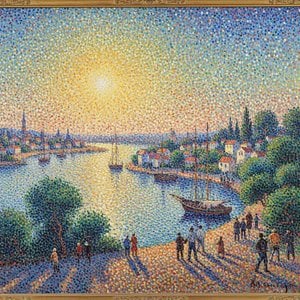
A Symphony of Light and Precision
In the delicate dance of Georges Seurat’s "Couple Dancing," we find more than just a depiction of Parisian leisure; we encounter a profound revolution in the way light is captured on canvas. Created in 1887, this masterpiece serves as a bridge between the fleeting impressions of the late nineteenth century and the structured rigor of modern art. The painting invites the viewer into a richly ornamented salon, where the air seems to vibrate with the energy of the Belle Époque. At its heart, the work captures an intimate moment between two figures, yet they are part of a larger, breathing social tapestry. Through Seurat’s lens, a simple dance becomes a study in human connection and the rhythmic pulse of urban life.
The true magic of this piece lies in its groundbreaking technique, known as Pointillism. Moving away from the spontaneous, blended brushstrokes of his predecessors, Seurat employed a scientific approach to color. He applied tiny, meticulous dots of pure pigment, relying on the viewer's eye to optically mix these colors into a luminous whole. This method, grounded in the optical theories of the era, creates a shimmering effect that mimics the way light actually hits the retina. When standing before a reproduction of this work, one can almost feel the warmth of the salon’s glow and the subtle movement of the dancers, as if the very atmosphere is composed of dancing particles of light.
The Elegance of the Belle Époque
To understand "Couple Dancing" is to understand the cultural heartbeat of Paris during a period of immense optimism. The scene is a window into a world of sophisticated social rituals, where every gesture and glance carries weight. Seurat meticulously arranges his figures to create a sense of balanced harmony, mirroring the structured elegance of the era's high society. While the central couple provides an emotional anchor, the surrounding figures—absorbed in quiet conversation or observing the scene—add layers of depth and narrative complexity. This careful composition ensures that the painting is not merely a snapshot, but a carefully constructed monument to a vanishing way of life.
For the discerning collector or interior designer, this artwork offers an unparalleled sense of timelessness and intellectual depth. The soft, rhythmic texture of the Pointillist technique provides a sophisticated visual interest that complements both classical and contemporary decor. It is a piece that demands contemplation, offering a serene yet dynamic presence in any room. Whether placed in a grand gallery or a private study, "Couple Dancing" brings with it an aura of historical prestige and a quiet, enduring beauty that continues to inspire awe more than a century after its creation.



 معاينة الحجم الحقيقي
 اشترِ لوحة مرسومة يدويًا
 مشاركة
 مشاركة
 التفاصيل

 تحميل الملف
 قطع مشابهة
 الأشعة السينية
 عرض شرائح

 عرض المزيد






































 خيار الزجاج متاح فقط للمقاسات التي تقل عن 110 سم