A Fragmented Harbor: Exploring Braque’s Cubist Vision
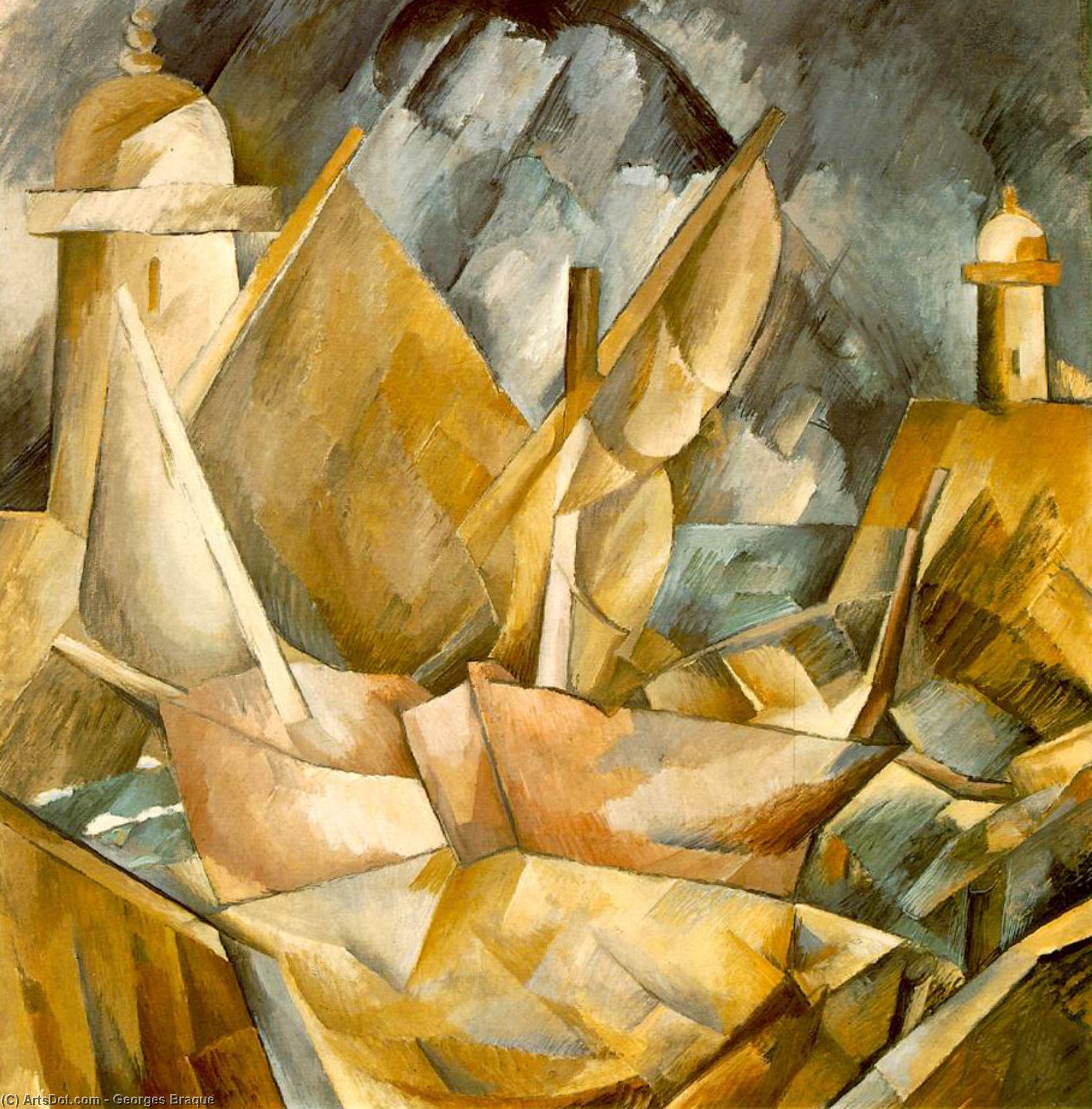
This untitled work by Georges Braque is a compelling example of his pivotal role in the development of Cubism. Created during a period of radical artistic experimentation, it presents a harbor scene – boats and a lighthouse – not as realistically depicted, but *deconstructed* into geometric forms. The painting invites viewers to reconsider how we perceive space and representation itself.
Deconstructing Reality: Style & Technique
Braque, alongside Pablo Picasso, pioneered Cubism, moving away from traditional perspective and embracing a fragmented visual language. Here, the harbor is rendered through an interplay of angular planes and overlapping shapes – primarily rectangles and triangles – creating a dynamic yet somewhat chaotic composition. This isn’t about *showing* what a harbor looks like; it's about presenting multiple viewpoints simultaneously, capturing its essence in a new way.
- Cubist Principles: The artwork embodies core Cubist tenets: the rejection of single-point perspective, the breakdown of objects into geometric components, and the exploration of form over realistic representation.
- Color Palette: A warm palette dominates – shades of yellow, brown, and gray – lending a sense of earthy solidity to the fractured forms. The limited color range focuses attention on the interplay of shapes and textures.
- Technique: Braque employed thin washes of oil paint, building up layers to create a slightly grainy surface. This technique contributes to the flattened appearance of the image, further emphasizing its two-dimensionality.
Historical Context: The Birth of Modernism
Braque’s artistic journey began with Fauvism, but his collaboration with Picasso around 1907 led to the birth of Cubism. This movement was a revolutionary response to the changing world – the rise of industrialization, new scientific discoveries (like Einstein's theory of relativity), and a desire to break free from academic traditions. Braque’s work represents a crucial step in the transition from representational art to abstraction, profoundly influencing 20th-century painting.
Symbolism & Emotional Resonance
While largely non-representational in its approach, the subject matter – a bustling harbor – hints at themes of industrial activity and movement. The fragmentation itself can be interpreted as reflecting the disruption and dynamism of modern life. The absence of strong shadows and the diffused lighting contribute to a sense of ambiguity and detachment.
It’s not necessarily about evoking a specific emotion, but rather prompting contemplation on the nature of perception and reality.
Interior Design & Collectible Appeal
This artwork's sophisticated aesthetic makes it an excellent choice for modern or contemporary interiors. Its geometric forms and muted color palette complement minimalist spaces while adding depth and intellectual intrigue. As a key work by a foundational figure of Cubism, this piece holds significant collectible value, representing not just artistic beauty but also a pivotal moment in art history. A high-quality reproduction would serve as a striking focal point, sparking conversation and enriching any collection.
الأسئلة والأجوبة
ما هو الطابع الذي سيضفيه "untitled (8613)" على المكان؟
بأجوائه التي تتسم بـ Minimalist، يُقترح وضع لوحة "untitled (8613)" في Living Room.
هل يمكنني معاينة "untitled (8613)" للفنان جورج براك على جداري الخاص قبل الشراء؟
يمكنك معاينة "untitled (8613)" للفنان جورج براك على جدارك الخاص عبر صفحة معاينة الواقع المعزز الخاصة بالعمل الفني، وذلك باستخدام تقنية الواقع المعزز على جهاز متوافق.
أين تقع لوحة "untitled (8613)" ضمن الموضوعات المتكررة لدى جورج براك؟
يصور "untitled (8613)" موضوعات harbor scene, cubist landscape, geometric forms, abstracted boats, warm color palette, industrial motif, fragmented space، بينما تتمثل الثيمات المسجلة لـ جورج براك في picasso & braque's cubism, industrialized landscape", deconstructed space, early 20th century vision, geometric abstraction, modernist experimentation, exploring spatial ambiguity, key to analytical phase. وتُظهر المقارنة بينهما مدى ارتباط هذا العمل بالموضوعات المعتادة للفنان.
ما مدى قوة ألوان "untitled (8613)"؟
تتميز لوحة "untitled (8613)" للفنان جورج براك بدرجة تشبع تبلغ Clear Color Presence وكثافة لونية تصل إلى Vivid.
What other names is جورج براك known by?
جورج براك is also known as إيروج بروك، بروك.
ما هي الموضوعات التي تظهر في "untitled (8613)" للفنان جورج براك؟
تشمل الموضوعات المتضمنة في "untitled (8613)" للفنان جورج براك كلاً من harbor scene, cubist landscape, geometric forms, abstracted boats, warm color palette, industrial motif, fragmented space، وهي مجتمعةً تلخص فحوى العمل الفني.
هل تُعدّ "untitled (8613)" للفنان جورج براك لوحةً فاتحة الألوان أم داكنة؟
القيم المسجلة لـ "untitled (8613)" للفنان جورج براك هي: سطوع بمقدار brilliant، وإضاءة بمقدار Gentle Luminance.
كيف يلتقي الأسلوب الفني مع العصر في "untitled (8613)" للفنان جورج براك؟
تنتمي لوحة "untitled (8613)" إلى حركة Cubism، وقد أبدعها فنان عاش في عصر العصر الحديث.


 معاينة الحجم الواقعي
 اطلب نسخة مرسومة يدويًا
 إرسال
إرسال مشاركة
 عرض التفاصيل
 دليل الأعمال الفنية للطلاب

 تحميل
تحميل
 قطع مشابهة
 الأشعة السينية
 عرض شرائح متتابع
 الإحصائيات

 اقرأ المزيد






































 خيار الزجاج متاح فقط للمقاسات التي تقل عن 110 سم


