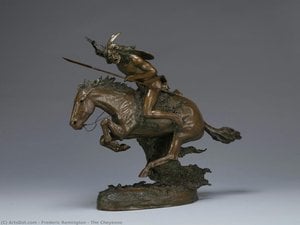
A Wild Encounter Frozen in Bronze: Frederic Remington’s “The Wicked Pony”
Frederic Remington's "The Wicked Pony," completed in 1898, isn’t merely a depiction of a cowboy and his bucking bronco; it’s a visceral embodiment of the American West at a pivotal moment – a collision between untamed wilderness and the burgeoning ambition of a nation. This bronze sculpture, now housed within The Metropolitan Museum of Art, transcends simple illustration, offering a complex narrative layered with symbolism and rendered with remarkable technical skill. It's a piece that speaks to both the romance and the brutal realities of frontier life, capturing a fleeting moment of chaotic energy and primal struggle.
Remington’s artistic journey was deeply intertwined with his own experiences. Born in Canton, New York, he wasn’t destined for the dusty trails he so vividly portrayed; instead, he inherited a lineage steeped in industry and military tradition – a fascinating juxtaposition that fueled his fascination with the West. His family's connection to Remington Arms, America’s oldest gunmaker, provided an early exposure to themes of action and weaponry, while his father’s service as a Civil War colonel instilled a respect for storytelling and the dramatic. This unique background shaped his artistic vision, allowing him to capture not just the landscape but also the spirit of its inhabitants – cowboys, Native Americans, and the cavalrymen who sought to tame it.
A Masterclass in Lost-Wax Casting: Technique and Texture
The sculpture’s power lies significantly in Remington's masterful use of lost-wax casting, a technique that allowed for an astonishing level of detail. The bronze itself is not simply molded; it’s meticulously built up layer by layer, capturing the musculature of the horse with breathtaking accuracy and the desperate struggle of the rider. Notice the subtle shifts in texture – the rough, uneven surface mirroring the ruggedness of the scene, the sleek sheen on the horse's flanks contrasting with the weathered leather of the rider’s saddle. The artist skillfully employed shading to create a sense of volume and depth, emphasizing the dynamic movement and conveying the raw power of the animal.
The choice of bronze is crucial to the sculpture’s impact. Its dark, rich color lends an air of gravitas and permanence to the scene, anchoring it within the historical record. The material's inherent weight and solidity further contribute to the feeling of drama and intensity – a tangible representation of the forces at play.
Symbolism of Control and Chaos
“The Wicked Pony” is far more than a simple depiction of a cowboy losing his grip; it’s a potent allegory for the ongoing struggle between humanity and nature. The rider, thrown from the horse, represents the ambition and control that humans attempt to exert over the wild. The horse, in turn, embodies the untamed spirit of the West – a force both beautiful and dangerous. The composition itself—a dramatic diagonal line sweeping across the sculpture—underscores this tension, conveying speed, chaos, and the inevitable consequences of attempting to dominate something inherently unpredictable.
Interestingly, Remington deliberately reversed the dynamic established in his earlier, more celebrated work, “Broncho Buster.” In "The Wicked Pony," it’s not the cowboy who is triumphant; instead, he's vulnerable and defeated. This subtle shift in perspective highlights a critical aspect of the Western narrative – the recognition that nature ultimately holds sway.
A Legacy of Romanticism: The American West Immortalized
Remington’s work firmly places “The Wicked Pony” within the broader context of the American Romantic movement. Like other artists of the era, he sought to capture intense emotions and dramatic narratives, often drawing inspiration from folklore and legend. His depiction of the West—a land of adventure, hardship, and untamed beauty—resonated deeply with a nation grappling with its identity and forging a new frontier. “The Wicked Pony” stands as a testament to Remington’s ability to translate these complex themes into a visually arresting and emotionally resonant sculpture, ensuring his place as one of the most iconic figures in American art history.



 التحويل إلى المطبوعات
 مشاركة
 مشاركة
 التفاصيل

 تحميل الملف
 قطع مشابهة
 عرض شرائح
 الإحصائيات


 عرض المزيد