لوحة زيتية مرسومة يدوياً على الكانفاس بالمقاس والإطار الذي تفضله، تُنفذ حسب الطلب على أيدي فنانينا. ( التحويل إلى المطبوعات
الانتقال إلى الصورة الرقمية)
اختر من بين أحجامنا المُعدّة مسبقًا والتي تتطابق مع النسب الأصلية للعمل الفني.
يمكنك إدخال أبعادك الخاصة لتناسب إطارًا معينًا أو مساحة محددة. وإذا لم يتطابق الحجم الذي اخترته مع نسب الصورة الأصلية، فسنقوم إما بقص العمل الفني أو توسيع اللوحة بإضافة عناصر مرسومة يدويًا. سيتم إرسال نموذج رقمي إليك للموافقة عليه قبل بدء الإنتاج.
يرجى ملاحظة أن المعاينة على الشاشة لا تعكس عملية القص أو التوسيع الفعلية؛ حيث إن النموذج الرقمي وحده هو الذي سيوضح التكوين النهائي بدقة.
وعلى الرغم من توفر أحجام مخصصة، إلا أننا نوصي باختيار أبعاد من القائمة المحددة مسبقًا للحفاظ على النسب الأصلية للعمل الفني.
توصيل عالمي إلى خلال 3 إلى 4 أسابيع بدلاً من المدة المعتادة البالغة 5 أسابيع. (22 سبتمبر). جودة لا تهاون فيها.
The Serenade
مقاس النسخة المطبوعة
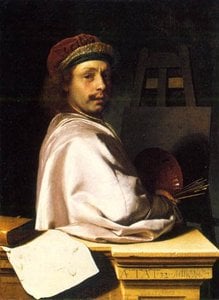
In the quietude of a 17th-century Dutch evening, Frans van Mieris the Elder invites us into a world of whispered secrets and melodic intimacy. His masterpiece, The Serenade, is far more than a mere depiction of musical performance; it is a profound exploration of the human connection, captured through the lens of the legendary fijnschilder technique. As the eye wanders across the canvas, one is immediately struck by the dramatic interplay of light and darkness—a masterful use of chiaroscuro that pulls the viewer into a private, candlelit moment. The scene unfolds with a palpable sense of tension and tenderness, where the soft glow of a single flame illuminates the focused faces of musicians, casting long, evocative shadows that suggest a world existing just beyond the reach of the light.
The narrative heart of the painting beats within the delicate interaction of its three figures. In the foreground, the meticulous detail of the lute player’s hands and the flickering warmth of the candle held by his companion create a sense of profound devotion. This is not just music being played; it is an offering. The presence of a third figure, observing from the periphery, adds a layer of quiet grandeur and voyeuristic intrigue, transforming the musical act into a clandestine romantic gesture. For the collector or interior designer, this piece offers a window into the Baroque soul, providing a focal point that commands attention through its emotional depth and historical resonance.
To understand the brilliance of The Serenade, one must appreciate the technical lineage of Frans van Mieris. Trained under the great Gerrit Dou, Mieris inherited the mantle of the Leiden fijnschilders—the "fine painters" who sought to push the boundaries of realism to their absolute limits. Every inch of this work reflects a painstaking devotion to texture and luminosity. Through the application of incredibly thin, translucent glazes over carefully prepared underpaintings, Mieris achieved a surface so smooth that brushstrokes all but vanish, leaving behind only the breathtaking illusion of silk, skin, and polished wood.
This technical virtuosity serves a higher symbolic purpose. The way the candlelight catches the edge of a sleeve or reflects off the curve of the lute is not merely a display of skill; it is an attempt to capture the ephemeral nature of time and emotion. In the context of the Dutch Golden Age, such precision was a way of honoring the beauty of the everyday. For those seeking to adorn a space with art that inspires contemplation, this reproduction offers the exquisite tactile quality of the original, bringing the sophisticated elegance of 1678 into the modern home.
Beyond its technical merits, The Serenade possesses an atmospheric quality that transcends centuries. It evokes a sense of nostalgia for an era of craftsmanship and slow, deliberate beauty. The painting’s composition—an intimate tableau set against a void-like dark background—makes it an exceptionally versatile piece for high-end interior curation. Whether placed in a study filled with leather-bound books or as a sophisticated accent in a contemporary gallery-style living room, its ability to anchor a space with warmth and mystery is unparalleled.
Owning a reproduction of such a significant work allows one to participate in the preservation of Dutch heritage. It is an invitation to experience the quiet drama of the Baroque period every day—to feel the pulse of the music and the flicker of the flame. For the art lover, it is a piece of history; for the designer, it is a tool of atmosphere; and for the collector, it is a timeless investment in the enduring power of visual storytelling.
1635 - 1681 , هولندا