The Epinal Master of Napoleonic Printmaking
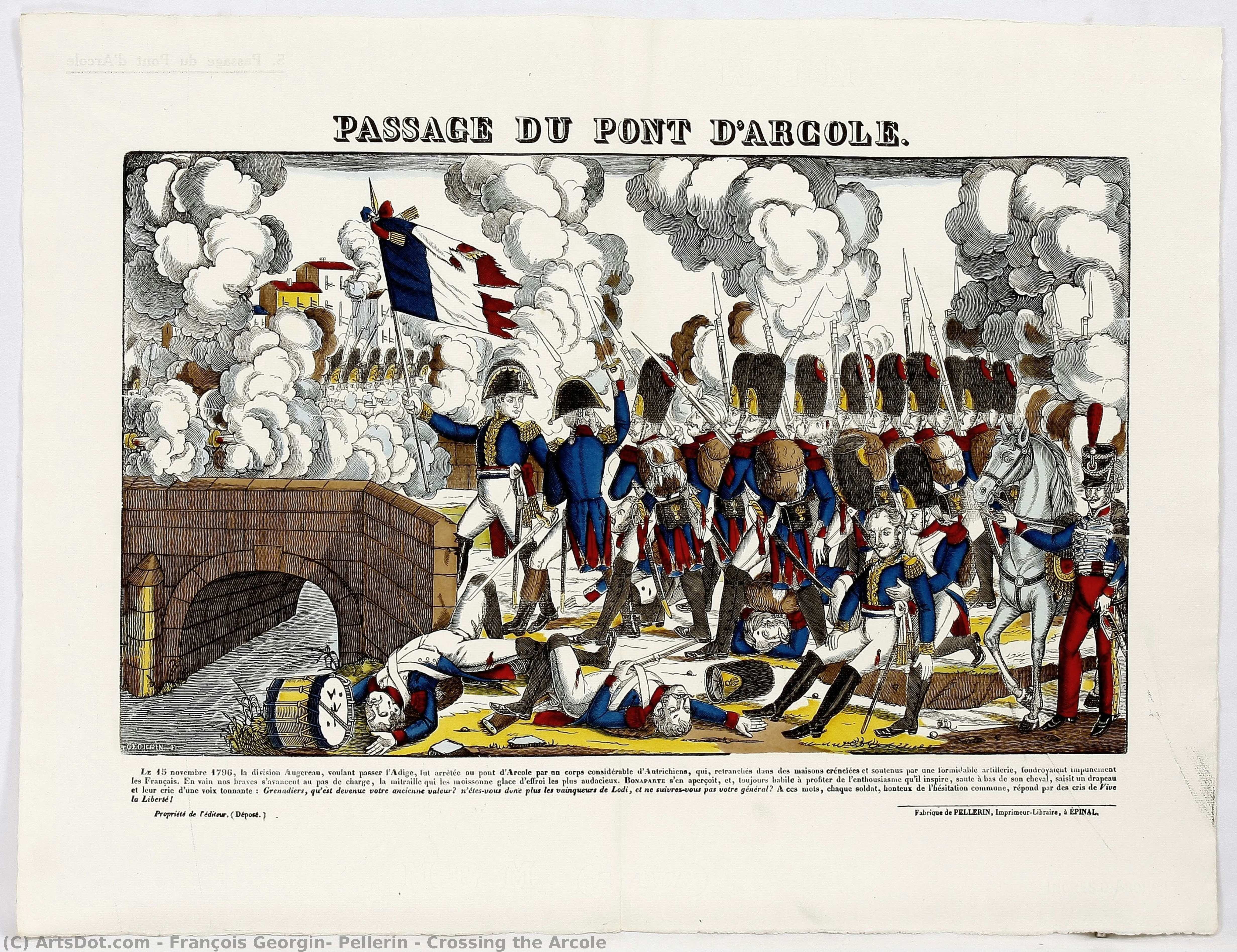
In the heart of nineteenth-century France, a period defined by the sweeping shadows of empire and the romantic fervor of revolution, the name François Georgin emerged as a vital chronicler of history. Born in 1801 in Épinay-sur-Seine, Georgin did not merely observe the tumultuous era of Napoleon Bonaparte; he translated its grandeur, its violence, and its triumphs into a visual language accessible to the masses. His journey into the soul of French printmaking began in the storied town of Epinal, a place where the air was thick with the scent of ink and the rhythmic tapping of woodcut artisans. Under the tutelage of Jean-Charles Pellerin, a master manufacturer of images, Georgin mastered the delicate alchemy of transforming simple woodblocks into vibrant, narrative windows onto the world.
The apprenticeship within Pellerin’s workshop was far more than a technical education; it was an immersion into a tradition of storytelling that blended folk art with historical documentation. Georgin learned to manipulate the medium of woodcut and linoleum, discovering how bold lines could command attention and how a carefully applied palette of crimson, gold, and black could evoke the heat of battle or the solemnity of a monument. This technical foundation allowed him to participate in the creation of the famous Epinal prints, which became a cultural phenomenon across Europe. His work was characterized by an almost theatrical intensity, where every carved groove served to heighten the drama of the Napoleonic epoch.
A Visual Chronicle of Empire and Emotion
Georgin’s oeuvre is inextricably linked to the legend of Napoleon. He possessed a unique ability to capture the epic scale of military campaigns while maintaining a poignant focus on the human element within the chaos. His prints, such as the evocative Napoleon Injured at Regensburg, do not merely record historical facts; they breathe life into the vulnerability and heroism of the Emperor. Through his hands, the triumphs at Austerlitz, Marengo, and Jena were rendered with a vividness that stirred national pride and shaped the collective memory of a generation. His style was one of striking contrasts, utilizing deep blacks to ground the composition and brilliant primary colors to illuminate the movement of cavalry and the glint of bayonets.
Beyond the battlefield, Georgin’s artistry touched upon the spiritual and the allegorical, demonstrating a versatility that transcended mere reportage. His ability to navigate between the gritty reality of war and the ethereal beauty of religious or symbolic subjects—such as his depictions of Notre Dame or complex allegorical maps—reveals an artist deeply attuned to the cultural zeitgeist of the Romantic era. This breadth of subject matter ensured that his prints were not only collected by those interested in military history but also cherished by a public enamored with the era's deep emotional and spiritual explorations.
Legacy and Historical Significance
The significance of François Georgin lies in his role as a bridge between high art and popular culture. While the fine arts of the academy often catered to the elite, Georgin’s work through the Pellerin tradition brought the majesty of history into the homes of the common people. He was a master of the "popular print," a medium that functioned as both news and art, providing a visual heartbeat for a nation navigating the complexities of the post-Napoleonic world.
Today, the works of Georgin remain vital pieces of historical evidence and artistic achievement. His contributions can be seen in several key areas:
- Technical Mastery: The refinement of woodcut and engraving techniques that allowed for mass production without sacrificing aesthetic impact.
- Cultural Impact: The creation of a shared visual vocabulary that helped define the Napoleonic legend for the French populace.
- Artistic Versatility: The seamless transition between historical documentation, religious iconography, and allegorical storytelling.
As we look back upon his life, from the workshops of Epinal to the enduring legacy of his prints, François Georgin stands as a testament to the power of the image to capture the fleeting spirit of an age. His work remains a vibrant, colorful window into a time when history was carved in wood and painted in the bold colors of glory and loss.


 معاينة الحجم الواقعي
 التبديل إلى المطبوعات
 إرسال
إرسال مشاركة
 عرض التفاصيل
 دليل الأعمال الفنية للطلاب

 تحميل
تحميل
 قطع مشابهة
 الأشعة السينية
 عرض شرائح متتابع
 الإحصائيات
 اقرأ المزيد


