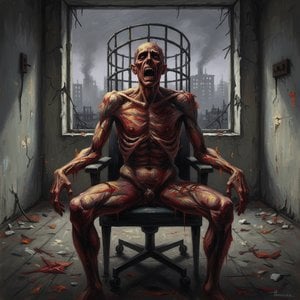
A Window into Grief: Exploring Francis Bacon’s *Triptych, 1971 (Right Panel)*
This powerful panel is a cornerstone of Francis Bacon's emotionally charged oeuvre, born from profound personal tragedy. Created in the wake of his lover George Dyer’s death, it forms part of a larger triptych – a format Bacon increasingly favored for its capacity to explore multifaceted perspectives on a single subject. This work, and its companions, represent a raw and unflinching exploration of grief, isolation, and the fragmented nature of human existence, marking a pivotal shift towards his haunting “Black Triptychs.”
Subject & Composition: The Weight of Reflection
The right panel presents a solitary male figure seated before a mirror. Dressed in the conventional attire of a suit and tie – symbols of societal constraint and perhaps, in this context, the trappings of a life now irrevocably altered – the man’s head is deliberately turned away from our direct gaze. Instead, we are confronted with his reflection. This positioning isn't accidental; it creates an unsettling dynamic, denying us immediate access to his emotions while simultaneously forcing us to confront their distorted manifestation. The figure’s expression remains ambiguous, hinting at a complex inner turmoil – despair, resignation, or perhaps a detached self-observation born of trauma. Two subtly rendered figures in the background amplify the sense of claustrophobia and alienation. A chair and dining table anchor the scene within a domestic setting, yet render it profoundly unsettling.
Style & Technique: Brutal Honesty and Existential Anguish
Bacon’s signature style is immediately recognizable: brutally honest figuration pushed to the brink of abstraction. He employs loose, gestural brushstrokes and a deliberately limited color palette – dominated by blacks, greys, and fleshy tones – to create an atmosphere of raw emotional intensity. Anatomical accuracy is sacrificed in favor of distortion and fragmentation, reflecting Bacon’s belief in the inherent vulnerability and decay of the human form. The blurred lines and flattened perspective contribute to the painting's claustrophobic feel, trapping the figure within its own psychological space. This isn’t a portrait aiming for likeness; it’s an excavation of inner torment.
Historical Context & Symbolism: A Post-War Lament
Francis Bacon (1909-1992) emerged as a leading voice in the post-war era, a period defined by existential questioning and disillusionment. His work grapples with themes of violence, mortality, and the absurdity of life – reflecting a broader cultural anxiety. The triptych format itself was crucial to Bacon’s process; he described seeing images “in series,” believing that three panels allowed for a more complete exploration of a subject without imposing a fixed narrative. The 1971 triptychs are particularly poignant, directly addressing his personal grief following Dyer's suicide and transforming private anguish into universal statements about loss. The mirror isn’t merely a reflective surface; it symbolizes self-confrontation, the fractured identity born of trauma, and the inescapable nature of mortality.
Emotional Impact & Interior Considerations
*Triptych, 1971 (Right Panel)* is not an easy painting to encounter. It evokes feelings of unease, isolation, and profound sadness. The distorted figure and oppressive atmosphere compel viewers to confront uncomfortable truths about the human condition. However, within this darkness lies a strange beauty – a testament to Bacon’s ability to find poetry in pain and capture the raw essence of experience.
- Space: Allow ample negative space around the artwork to emphasize its power and prevent visual clutter. This piece demands room to breathe.
- Lighting: Subdued, directional lighting will enhance the painting’s somber mood and highlight the nuances of Bacon's brushwork. Avoid harsh glare.
- Context: Consider pairing this work with pieces that explore similar themes – existentialism, alienation, or psychological turmoil – to create a thought-provoking dialogue.
- Setting: A minimalist setting will best showcase the painting’s raw power. A gallery space or a room dedicated to contemplation would be ideal. Avoid busy patterns or overly bright colors in the surrounding décor.
This panel is more than just a painting; it's a visceral experience that challenges viewers to confront their own mortality and the complexities of the human psyche – a powerful statement piece for those who appreciate art with depth and emotional resonance.
الأسئلة والأجوبة
ما مدى تشبع وكثافة الألوان في "triptych, 1971 right" للفنان فرانسيس بيكون؟
تُظهر ألوان "triptych, 1971 right" للفنان فرانسيس بيكون تشبعاً بمستوى Subtle Color مع حدة بلغت Balanced.
هل يوجد عرض شرائح لـ "triptych, 1971 right" للفنان فرانسيس بيكون؟
يمكن عرض "triptych, 1971 right" للفنان فرانسيس بيكون كعرض شرائح في صفحة عرض متتابع الخاصة بالعمل الفني.
هل تُعد "triptych, 1971 right" نموذجاً لما اعتاد فرانسيس بيكون على إبداعه عادةً؟
تتضمن الثيمات المتكررة لدى فرانسيس بيكون موضوع existential angst, distorted reality, psychological depth, surrealist echoes, dark introspection, fragmented figures, mirror's gaze, human condition؛ بينما يركز عمل "triptych, 1971 right" على distorted figure, mirror image, existentialism, psychological art, abstract portrait, dark palette, triptych composition.



 معاينة الحجم الواقعي
 التبديل إلى المطبوعات
 إرسال
إرسال مشاركة
 عرض التفاصيل
 دليل الأعمال الفنية للطلاب

 تحميل
تحميل
 قطع مشابهة
 الأشعة السينية
 عرض شرائح متتابع
 Q&A
Q&A الإحصائيات

 اقرأ المزيد






































 خيار الزجاج متاح فقط للمقاسات التي تقل عن 110 سم