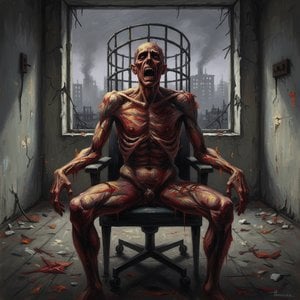
A Descent into Anguish: Unpacking Francis Bacon’s ‘Seated Figure’
Francis Bacon's “Seated Figure,” painted in 1961, isn’t merely a portrait; it’s an excavation of the human psyche, a raw and unsettling glimpse into the depths of isolation and existential dread. This work, residing within the intimate confines of Bacon’s London studio at 7 Reece Mews, immediately confronts the viewer with a figure rendered in agonizing distortion – a slumped man seemingly trapped within the claustrophobic space defined by a worn couch and shadowed curtains. It's a painting that lingers long after viewing, prompting reflection on themes of loneliness, anxiety, and the inherent vulnerability of the human condition.
Bacon’s signature style is powerfully evident here: brushstrokes are not carefully blended but aggressively applied, creating a palpable sense of movement and instability. The muted palette – dominated by browns, greys, blacks, and punctuated by flashes of orange and blue – contributes to this feeling of unease. These colors aren't used descriptively; instead, they’re deployed with gestural abandon, mirroring the emotional turmoil at the heart of the piece. The blurred forms, particularly in the figure’s face and body, further amplify this sense of disorientation, as if reality itself is fracturing before our eyes.
Deconstructing Distortion: Form, Technique, and Symbolism
The composition itself is deceptively simple – a central figure occupying almost all of the frame. However, this apparent simplicity belies a carefully constructed tension. The couch, chairs, and curtains aren’t merely background elements; they actively contribute to the painting's claustrophobic atmosphere, suggesting a confinement that mirrors the subject’s internal state. Bacon deliberately flattened perspective, eliminating any sense of spatial recession, forcing the viewer into an uncomfortable proximity with the figure’s suffering. This flattening is not accidental; it’s a deliberate tactic to heighten the emotional impact and create a feeling of being trapped within the painting's unsettling space.
Technically, “Seated Figure” exemplifies Bacon’s expressionistic approach. He employed oil paint on canvas with visible brushstrokes – layers built up with a rough texture that speaks to the urgency and physicality of his process. The layering is not smooth or polished; it's deliberately uneven, reflecting the chaotic nature of the subject’s emotional state. Notably, the crimson and blue staining of the background and furniture are exceptionally vivid, hinting at a potential symbolic significance – perhaps representing blood and sorrow, or the overwhelming intensity of the figure’s experience.
A Portrait of Isolation: Context and Interpretation
Painted in 1961, “Seated Figure” is considered part of a series created during a pivotal period in Bacon's career. Following the death of his lover, George Dyer, in 1971, many of his works became increasingly introspective and focused on themes of mortality and loss. Research suggests that this particular painting was intended as one of the major pieces for a 1962 Tate Gallery retrospective, initially titled “Seated Man with Turkey Rug.” The inclusion of the turkey rug itself is intriguing – it’s a recurring motif in Bacon's work, often associated with themes of decay and vulnerability.
The figure’s slumped posture, anguished expression, and distorted features powerfully convey a sense of profound isolation and psychological distress. While the exact identity of the subject remains ambiguous, many art historians believe it represents Peter Lacy, a close friend and companion to Bacon who tragically died in 1964. The open-necked shirt, a recurring cipher for Lacy, further solidifies this interpretation. “Seated Figure” isn’t simply a depiction of a man; it's an embodiment of the anxieties and uncertainties that plagued the human condition during the mid-20th century – a timeless meditation on loneliness, despair, and the fragility of existence.
Bringing ‘Seated Figure’ Home: Reproduction & Artistic Impact
WahooArt offers meticulously hand-painted reproductions of Francis Bacon's “Seated Figure,” capturing the raw emotion and visceral intensity of this iconic work. Our skilled artists replicate Bacon’s distinctive brushwork, color palette, and textural approach with remarkable accuracy, ensuring that your reproduction faithfully embodies the painting’s original power. Whether displayed in a contemporary art space or incorporated into a sophisticated interior design scheme, “Seated Figure” – now rendered in exquisite detail – serves as a potent reminder of Bacon's enduring legacy and his profound exploration of the human psyche.
الأسئلة والأجوبة
ما هو الموضوع والأجواء التي يجمع بينها "Seated Figure" للفنان فرانسيس بيكون؟
تُظهر لوحة "Seated Figure" موضوعات isolation, anxiety, distortion, figure, couch, tension, psychological, human condition، وتتجلى فيها حالة من Dramatic.
كيف يوازن "Seated Figure" بين الضوء والظلال؟
سُجلت درجة سطوع "Seated Figure" للفنان فرانسيس بيكون عند deep_shadow، مع مستوى لمعان يبلغ Dark.
ما هي الغرفة التي يُنصح بوضع "Seated Figure" للفنان فرانسيس بيكون فيها؟
تتناسب نسخة من "Seated Figure" بشكل رائع مع Living Room.



 معاينة الحجم الواقعي
 اطلب نسخة مرسومة يدويًا
 إرسال
إرسال مشاركة
 عرض التفاصيل
 دليل الأعمال الفنية للطلاب

 تحميل
تحميل
 قطع مشابهة
 الأشعة السينية
 عرض شرائح متتابع
 الإحصائيات

 اقرأ المزيد






































 خيار الزجاج متاح فقط للمقاسات التي تقل عن 110 سم