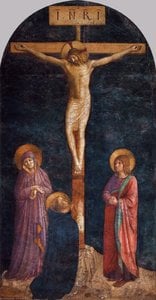
Lamentation Over Christ (Cell 2) – Fra Angelico’s Serene Vision of Grief
Fra Angelico’s *Lamentation over Christ*, housed in the Museo Nazionale di San Marco, Florence, stands as a cornerstone of Early Italian Renaissance art—a testament to both artistic innovation and profound spiritual devotion. Created in 1440 during his tenure at the convent, this fresco transcends mere depiction; it embodies an emotional landscape meticulously crafted to convey the agonizing sorrow experienced by those witnessing Jesus’s crucifixion. Examining its composition, technique, and historical significance unveils layers of meaning that continue to resonate with audiences today.
Composition and Spatial Arrangement
The scene unfolds within a claustrophobic cave setting—a deliberate choice reflecting the biblical narrative itself. Dominating the canvas is Christ’s lifeless body, borne aloft by Mary Magdalene and Nicodemus, figures positioned centrally to emphasize their grief. Surrounding them are additional mourners – John the Evangelist, Joseph of Arimathea, Mary Cleopas, and Simon Peter—each rendered with expressive gestures and postures that communicate palpable sorrow. The artist skillfully employs linear perspective to create a convincing illusion of depth, drawing viewers into the emotional core of the composition. Notice how the figures are arranged in pyramidal groupings, reinforcing stability while simultaneously conveying the overwhelming weight of grief.
Technique – Fresco Secco: A Delicate Dance of Color and Texture
Fra Angelico’s mastery lies primarily in his masterful execution of *fresco secco*, a technique wherein pigment is applied to dry plaster—a method that demanded exceptional precision and patience. Unlike its wetter counterpart (*fresco*) which involves applying pigment to wet plaster, *fresco secco* relies on meticulous layering of thin glazes over prepared surfaces. This painstaking process allowed for subtle gradations of color and texture, capturing the ethereal quality characteristic of angelic depictions. The artist’s palette is dominated by muted hues—primarily blues, reds, and yellows—chosen not merely for aesthetic appeal but also to convey symbolic significance. The deep ultramarine blue represents divine majesty, while the crimson red symbolizes Christ’s sacrificial blood—a visual reminder of his suffering and redemption.
Historical Context – San Marco and the Florentine Renaissance
The convent of San Marco served as a crucible for artistic experimentation during the Florentine Renaissance—a period marked by humanist ideals and an renewed interest in classical art forms. Fra Angelico's frescoes were commissioned to adorn the cells of the monks, transforming them into spaces imbued with spiritual contemplation. The convent’s patronage reflects the broader cultural climate of Florence at the time, where artists sought to elevate religious experience through visual representation. Furthermore, Fra Angelico’s work engages directly with theological concepts prevalent in medieval Christianity—particularly the Passion of Christ and the Virgin Mary's sorrowful mourning—themes that continue to inspire artistic interpretation centuries later.
Symbolism – Grief, Compassion, and Divine Mercy
Beyond its formal composition and technical prowess, *Lamentation* is replete with symbolic imagery designed to evoke profound emotional responses. The figures’ anguished expressions convey universal themes of grief, compassion, and divine mercy—reflecting the human condition confronted by suffering and loss. Mary Magdalene's posture embodies maternal sorrow—a poignant depiction of a mother mourning her son. Similarly, Nicodemus expresses solemn reverence as he contemplates Christ’s lifeless body. The artist’s deliberate use of color contributes to the overall symbolic narrative—underscoring the gravity of the event and conveying the spiritual significance of Christian faith.
Legacy – An Enduring Influence on Art History
Fra Angelico's *Lamentation* remains an influential masterpiece within art history, serving as a model for subsequent artists seeking to express emotion through visual representation. Its serene beauty—coupled with its masterful technique—continues to captivate audiences worldwide. The fresco’s enduring appeal testifies to the power of art to transcend temporal boundaries and communicate timeless truths about human experience—solidifying Fra Angelico's place among the most revered figures of the Early Renaissance.



 معاينة الحجم الحقيقي
 التحويل إلى المطبوعات
 مشاركة
 مشاركة
 التفاصيل
 الدليل

 تحميل الملف
 قطع مشابهة
 الأشعة السينية
 عرض شرائح
 الإحصائيات


 عرض المزيد






































 خيار الزجاج متاح فقط للمقاسات التي تقل عن 110 سم