A Glimpse into Domesticity: Unveiling Paul Gauguin’s *Party Wall* (1881)
Paul Gauguin's *Party Wall*, painted in 1881, offers a captivating window into the artist’s evolving style and his early explorations of color and composition. This oil on canvas is a significant example of Post-Impressionism – a movement that boldly stepped away from the purely optical concerns of Impressionism to embrace subjective vision and symbolic content. While often overshadowed by his later Tahitian works, *Party Wall* reveals crucial foundations for Gauguin’s artistic trajectory.
Subject & Composition: A Quiet Moment in Suburban Life
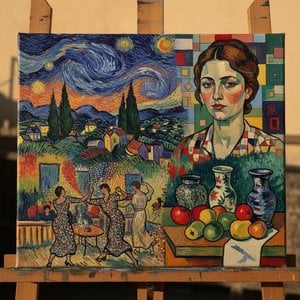
The painting depicts a seemingly ordinary scene: a house with a distinctive red roof nestled amongst trees and foliage. Several figures are scattered throughout the composition, suggesting everyday life unfolding within this domestic setting. The “party wall” itself – likely referring to a shared wall between neighboring properties – becomes a structural element that subtly defines space and hints at the interconnectedness of lives. Gauguin doesn’t present a grand narrative; instead, he focuses on capturing a fleeting moment of tranquility and the harmonious blend of natural and man-made elements. The composition is deliberately flattened, prioritizing an overall impression over strict perspective—a hallmark of his developing style.
Style & Technique: Embracing Boldness and Synthetism
*Party Wall* showcases Gauguin’s increasing departure from the Impressionistic emphasis on capturing light's fleeting effects. He employs
bold, unmixed colors and simplified forms, moving towards what would become known as *Synthetism*. This approach involved constructing images from abstract elements rather than faithfully reproducing observed reality. Notice how the red roof immediately draws the eye, a deliberate choice to emphasize color’s expressive power. The brushstrokes are visible and contribute to the painting's textured surface, adding depth and vitality. Gauguin isn’t merely *representing* a scene; he is
constructing it with intentionality.
Historical Context: Bridging Impressionism & Modern Art
Painted during a period of artistic transition, *Party Wall* reflects the growing dissatisfaction with Impressionism's limitations. Artists like Gauguin sought to imbue their work with deeper meaning and emotional resonance. This painting predates his famous travels to Tahiti and Brittany, but it already demonstrates his rejection of academic conventions and his pursuit of a more personal and expressive style. It’s a pivotal piece that bridges the gap between the observational realism of Impressionism and the symbolic explorations of early Modern art.
Symbolism & Emotional Impact: A Sense of Serenity
While not overtly symbolic, *Party Wall* evokes a sense of peacefulness and quiet contemplation. The harmonious relationship between the house and its surroundings suggests a comfortable coexistence with nature. The figures, though indistinct, contribute to the feeling of everyday life unfolding organically. Gauguin’s use of color—particularly the vibrant red—adds an emotional intensity that elevates the scene beyond mere representation. It's a painting that invites viewers to pause, reflect, and appreciate the beauty in simple moments.
Collecting & Interior Design: A Versatile Masterpiece
A high-quality reproduction of *Party Wall* would be a stunning addition to any art collection or interior space. Its muted yet vibrant color palette complements a variety of décor styles—from traditional to contemporary. The painting’s serene atmosphere makes it ideal for bedrooms, living rooms, or studies. Its relatively modest scale also allows for flexible placement within different room sizes.
- Style Suitability: Post-Impressionism, Early Modern, Eclectic
- Color Palette: Earth tones, reds, greens, blues – versatile and calming.
- Emotional Impact: Serenity, tranquility, contemplation.
*Party Wall* is more than just a painting; it’s a testament to Gauguin's artistic evolution and his enduring ability to capture the essence of human experience.



 معاينة الحجم الحقيقي
 التحويل إلى المطبوعات
 مشاركة
 مشاركة
 التفاصيل

 تحميل الملف
 قطع مشابهة
 الأشعة السينية
 عرض شرائح
 الإحصائيات

 عرض المزيد






































 خيار الزجاج متاح فقط للمقاسات التي تقل عن 110 سم