A Haunting Glimpse of a Vanishing Era
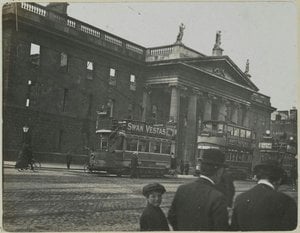
In the quiet, silvered depths of Eugène Atget’s “Eclipse, 1911,” we encounter more than just a photograph; we step into a spectral window looking back upon a Paris that no longer exists. Though this specific print was brought to light in 1956 from an original glass negative captured decades earlier, the soul of the image remains anchored in the twilight of the Belle Époque. The scene captures a profound moment of stillness, where a group of figures stands gathered before the monumental presence of what is believed to be Notre Dame Cathedral. There is an inherent tension in the composition—a delicate balance between the enduring weight of stone architecture and the fleeting, ephemeral nature of the human beings passing through its shadow. For the discerning collector, this piece offers a rare opportunity to possess a fragment of history, a visual poem about the inevitable passage of time.
The technical mastery behind Atget’s work lends the image an almost tactile quality that is deeply captivating for those who appreciate fine art photography. Utilizing the wet collodion process, Atget achieved a level of clarity and tonal richness that modern digital captures often struggle to replicate. This laborious method required meticulous hand-processing, resulting in a gelatin silver print characterized by exquisite sharpness and subtle gradations of light and shadow. The way the light falls across the faces of the onlookers—rendered in muted, atmospheric tones—creates an unsettling yet beautiful stillness. This approach aligns with the Pictorialism movement, where the photographer’s goal was not merely to document reality, but to elevate the medium to a fine art through texture, mood, and emotional depth.
Symbolism and the Melancholy of Modernity
Beyond its striking visual composition, “Eclipse” serves as a profound symbolic meditation on change. The monumental structure, standing resolute against the sky, represents the pillars of faith, tradition, and the historical identity of France. Yet, the title itself suggests an obscuring—a moment where light is blocked, much like how the rapid industrialization and urbanization of the early 20th century threatened to eclipse the charming, ancient streets of "Old Paris." The figures in the frame, appearing as small, vulnerable witnesses to the grandeur above them, embody a sense of collective awe mingled with a quiet melancholy. They are tourists in their own history, gazing upward at a landmark that is simultaneously permanent and subject to the erosions of time.
For interior designers and art enthusiasts looking to curate a space of reflection and sophistication, this reproduction provides an unparalleled emotional anchor. The monochromatic palette and the somber, evocative atmosphere make it a versatile masterpiece for high-end residential or gallery settings. It does not merely decorate a wall; it invites conversation, prompting viewers to contemplate their own place within the grand continuum of history. To display “Eclipse” is to celebrate the beauty found in decay and the enduring power of memory, making it an essential acquisition for anyone moved by the intersection of documentary truth and poetic artistry.
الأسئلة والأجوبة
ما هو الطابع العاطفي لـ "Eclipse, 1911" للفنان أوجين أتجي؟
يرتبط العمل "Eclipse, 1911" بشعور Reflective. ويصف هذا الطابع العاطفي الانطباع الذي يتركه العمل.
من أين يأتي زوار "Eclipse, 1911" للفنان أوجين أتجي؟
توجد صفحة الإحصائيات خاصة بـ "Eclipse, 1911"، حيث تعرض مخططاً للزيارات الشهرية لهذا العمل الفني ولأعمال الفنان الأخرى، مع تفصيل حسب الدولة واللغة.
كيف تم بناء التكوين اللوني لـ "Eclipse, 1911" للفنان أوجين أتجي؟
تجمع التكوينات اللونية في "Eclipse, 1911" للفنان أوجين أتجي بين تباين Statement وتناغم Strong Color Unity.



 اطلب نسخة مرسومة يدويًا
 إرسال
إرسال مشاركة
 عرض التفاصيل
 دليل الأعمال الفنية للطلاب

 تحميل
تحميل
 قطع مشابهة
 عرض شرائح متتابع
 الإحصائيات


 اقرأ المزيد






































 خيار الزجاج متاح فقط للمقاسات التي تقل عن 110 سم