Self Portrait as St. Sebastian – A Study in Suffering and Resilience
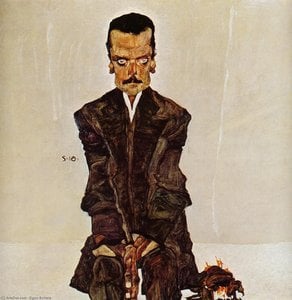
Egon Schiele’s “Self Portrait as St. Sebastian,” rendered in 1914, is not merely a depiction of martyrdom; it's a profoundly intimate exploration of pain, vulnerability, and the enduring spirit within. This arresting black-and-white drawing, measuring a modest 32 x 48 cm, immediately commands attention with its raw emotional intensity. The subject, posed in the agonizing posture of St. Sebastian – bound to a post and riddled with arrows – is unmistakably Schiele himself, his face etched with a palpable agony that transcends religious iconography. The artist masterfully employs stark contrasts of light and shadow, a technique characteristic of Expressionism, to amplify the sense of suffering and isolation. The meticulous linework, revealing an incredible command of shading, doesn’t shy away from depicting the brutal reality of the scene; instead, it emphasizes the texture of skin, muscle, and the rough wood of the cross, grounding the viewer in the physicality of the ordeal.
Schiele's choice to portray himself as St. Sebastian is deeply layered with personal significance. Created during a period marked by intense emotional turmoil – his father’s death from syphilis casting a long shadow over his life – the self-portrait becomes a visual manifestation of his own struggles with mortality and illness. The image resonates with themes prevalent in Schiele's oeuvre: the fragility of human existence, the confrontation with death, and the exploration of psychological states. The drawing’s stark simplicity—a single figure against a desolate backdrop—heightens its impact, forcing the viewer to confront the uncomfortable truths about suffering and resilience.
Expressionist Techniques and Schiele's Signature Style
“Self Portrait as St. Sebastian” is a quintessential example of Schiele’s distinctive artistic style. He was a pioneer in Expressionism, moving beyond traditional representational techniques to prioritize emotional impact over realistic depiction. Notice the elongated limbs, the distorted perspective, and the almost skeletal quality of the figure – these are hallmarks of his approach. The drawing isn't concerned with creating an idealized image; instead, it seeks to capture the raw, unfiltered experience of pain. Schiele’s use of line is particularly noteworthy. He employs a dynamic, restless energy in his lines, mirroring the subject’s torment and conveying a sense of urgency and instability. This deliberate distortion of form and space contributes significantly to the drawing's unsettling yet compelling power.
Furthermore, Schiele’s technique demonstrates an exceptional understanding of tonal values. The careful manipulation of light and shadow creates a dramatic effect, emphasizing the contours of the body and intensifying the sense of suffering. The stark contrast between the dark shadows enveloping the figure and the patches of exposed skin draws attention to the wounds and highlights the vulnerability of the subject. This masterful control over tone is crucial to the drawing’s overall impact, transforming it from a simple portrait into a powerful meditation on pain and endurance.
Symbolism and Historical Context
The iconography of St. Sebastian—a Roman soldier martyred for his Christian faith—provides a rich framework for interpreting Schiele's self-portrait. Traditionally, the saint is depicted as a symbol of suffering, sacrifice, and unwavering devotion. However, Schiele subverts this traditional representation by presenting himself not as a heroic martyr but as a figure consumed by pain and anguish. This deliberate inversion adds another layer of complexity to the image, suggesting that Schiele was grappling with his own personal demons and confronting the inevitability of death.
Created in 1914, during a period of immense social and political upheaval—the eve of World War I—the drawing reflects the anxieties and uncertainties of the time. The looming threat of war cast a pall over Europe, and Schiele’s work often explored themes of mortality and psychological distress. The image can be seen as an allegory for the broader sense of unease and disillusionment that permeated European society at the beginning of the 20th century.
A Timeless Exploration of Human Experience
“Self Portrait as St. Sebastian” remains a profoundly moving and unsettling work of art. It’s not simply a depiction of suffering; it's an invitation to contemplate the complexities of human existence, the inevitability of death, and the enduring capacity for resilience. Schiele’s masterful technique—his innovative use of line, shading, and composition—combined with his deeply personal subject matter, creates an image that continues to resonate with viewers today. A hand-painted reproduction offers a remarkable opportunity to experience this powerful work of art in exquisite detail, capturing the artist's raw emotion and technical brilliance.



 معاينة الحجم الحقيقي
 اشترِ نسخة مطبوعة
 مشاركة
 مشاركة
 التفاصيل

 تحميل الملف
 قطع مشابهة
 الأشعة السينية
 عرض شرائح


 عرض المزيد






































 خيار الزجاج متاح فقط للمقاسات التي تقل عن 110 سم