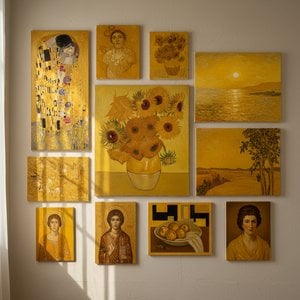
A Tender Moment Enveloped in Shadow
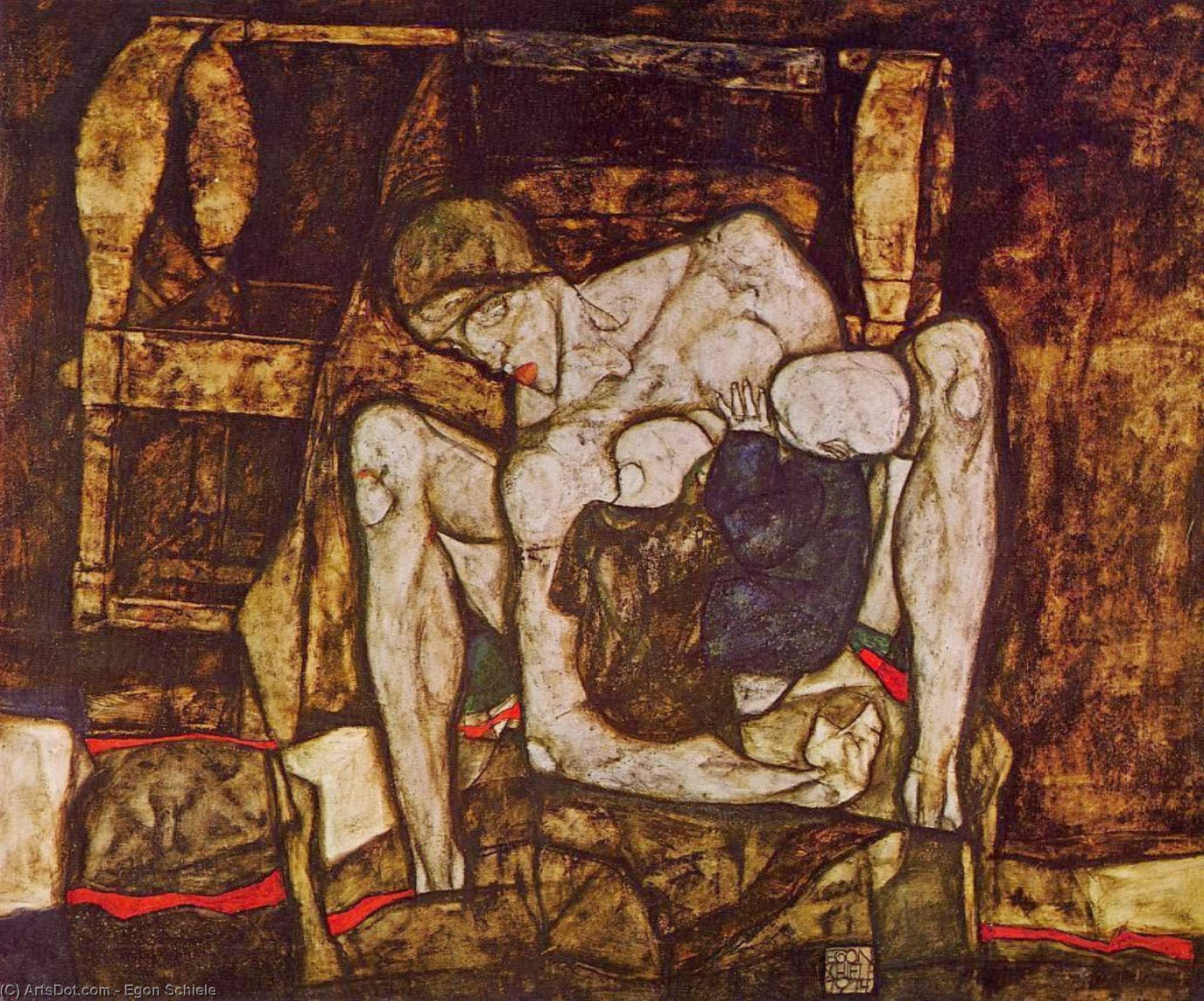
Egon Schiele's "Blind Mother," painted in 1914, is far more than a mere depiction of maternal care; it is a hauntingly beautiful testament to the anxieties and passions simmering beneath the surface of early 20th-century Vienna. The painting immediately draws the eye with its stark simplicity: a woman seated on a chair, cradling her child, enveloped in soft light against a backdrop of muted tones. Yet, for those who look closer, there is an unsettling dynamism conveyed through Schiele’s masterful use of line and color. This piece serves as a profound emblem of
Expressionism—a movement that prioritized emotional truth over photographic realism—and delves into the deep-seated themes of vulnerability, loss, and the inescapable awareness of mortality.
The Language of Distortion and Line
Schiele's technique is characterized by bold, angular lines that sculpt the figures with a palpable sense of tension. Unlike traditional portraiture which strives for an idealized beauty, Schiele deliberately distorts proportions—employing elongated limbs and flattened faces to create a visual language that reflects inner psychological states. This distortion is not merely a stylistic choice; it is a crucial mechanism for conveying the weight of existence. The chair itself is rendered with enough detail to ground the scene, yet its presence simultaneously emphasizes the woman's confinement, perhaps hinting at an unspoken burden. Through a palette dominated by
earthy browns and ochres, Schiele evokes a sense of warmth that is perpetually shadowed by solemnity, mirroring the quiet desperation inherent in the depicted relationship.
A Timeless Addition to the Modern Collection
Emerging during the seismic cultural shifts of early Modernism, "Blind Mother" captures a world wrestling with secularization and the burgeoning influence of scientific thought. For the discerning collector or interior designer, this work offers an unparalleled depth of character. It is a piece that demands attention, not through loudness, but through its ability to provoke reflection and conversation.
When selecting a reproduction for a curated space, one considers how the artwork interacts with the surrounding atmosphere. This painting provides:
- Emotional Resonance: A profound connection to the human condition that invites quiet contemplation.
- Visual Texture: The interplay of stark lines and muted tones that complements both contemporary and classical interiors.
- Historical Gravity: A direct link to the transformative era of Austrian Expressionism.
Incorporating a high-quality reproduction of such a masterpiece into a sophisticated space brings with it a sense of historical weight and emotional depth. Whether placed in a quiet study or as a focal point in a modern gallery, Schiele’s work invites the viewer to stand before a mirror reflecting our own deepest vulnerabilities and desires, making it an enduring treasure for any serious art lover.



 معاينة الحجم الحقيقي
 اشترِ لوحة مرسومة يدويًا
 مشاركة
 مشاركة
 التفاصيل

 تحميل الملف
 قطع مشابهة
 الأشعة السينية
 عرض شرائح

 عرض المزيد






































 خيار الزجاج متاح فقط للمقاسات التي تقل عن 110 سم