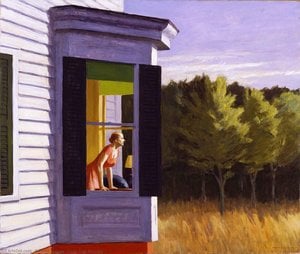
إدوارد هوبر: شاعر الوحدة في المشهد الأمريكي
إدوارد هوبر، اسم يتردد صداه بقوة مع الهدوء والغموض الدقيق الذي ساد الحياة الأمريكية في القرن العشرين، لم يكن مجرد رسام للمشاهد؛ بل كان شاعراً للضوء والظل، ومؤرخاً للعزلة الحديثة. ولد في نيكاك، نيويورك، عام 1882 لعائلة من الطبقة المتوسطة ذات أصول هولندية، زودته سنواته الأولى بتربية مستقرة غذت ميوله الفنية. منذ الرسومات الطفولية المؤرخة والموقعة بدقة، بدا واضحاً أن الملاحظة الدقيقة والموهبة الفطرية في الرسم كانت جوهر وجوده. على الرغم من أنه شُجع في البداية على العمل في مجال الرسوم التوضيحية التجارية - اقتراح عملي من والديه - اتجهت طموحات هوبر نحو الفن الرفيع، مما دفعه إلى مدرسة نيويورك للفنون حيث درس تحت إشراف ويليام ميريت تشيس وروبرت هنري. زرعت هذه السنوات التكوينية ليس فقط المهارات التقنية، ولكن أيضاً تقديره للواقعية والتزامه بتصوير العالم كما يراه - دون تجميل وصادقاً. أثرت كتابات رالف والدو إمرسون بعمق في هوبر، وعززت إحساسه بالفردية والملاحظة الدقيقة - وهي صفات ستصبح علامات مميزة لرؤيته الفنية. عرّضه السفر المبكر إلى باريس لـ Impressionism، لكن هوبر سرعان ما انحرف عن ضرباته الفرشاة العابرة، محفوراً طريقه الخاص الذي يميزه.
إيجاد صوته: الواقعية والمشهد الأمريكي
لم تكن رحلة هوبر الفنية فورية أو سهلة. لقد كافح لاكتشاف صوته المميز، وتجربة أنماط مختلفة قبل الاستقرار على الواقعية التي ستعرف مسيرته المهنية. لم يكن هذا مجرد تكرار للواقع؛ بل كان تقطيراً لجوهرها، وإزالة التفاصيل غير الضرورية للكشف عن الحقائق العاطفية الكامنة. بدأت لوحاته في التركيز على مشاهد الحياة اليومية - المنازل والمقاهي والمكاتب وغرف الفنادق - مشحونة بإحساس بالهدوء وغالباً ما تكون الوحدة. كان لديه قدرة استثنائية على التقاط الحالات النفسية لموضوعاته، والإشارة إلى الروايات دون ذكرها بشكل صريح. أصبحت الدقة في تصوير الضوء والظل أمراً بالغ الأهمية، ليس كعناصر وصفية فحسب، بل كإشارات عاطفية، مما يخلق أجواءً آسرة ومقلقة في آن واحد.
بيت بالقرب من السكة الحديدية (1925)، مثال رئيسي على هذا النهج - تكوين يبدو بسيطاً يشع بإحساس عميق بالعزلة والغموض. أظهرت أعمال هوبر في مجال الطباعة، والتي غالباً ما يتم تجاهلها، مواضيع وأنماط مماثلة لرسوماته، مما يدل على إتقانه عبر الوسائط المختلفة. لم يكن مهتماً بالروايات التاريخية الكبرى أو الرمزية المجردة؛ لقد ركز على الأمور العادية، ورفعها من خلال الملاحظة الدقيقة والرنين العاطفي.
رؤى رمزية: نايتهوكس وخارجها
على الرغم من أن مسيرة هوبر المهنية تطورت تدريجياً، إلا أن بعض الأعمال قفزت به إلى اعتراف واسع النطاق.
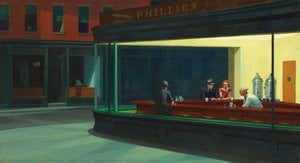
نايت هوكس (1942)، ربما لوحته الأكثر شهرة، أصبحت رمزاً فورياً للثقافة الأمريكية. مشهد المطعم الليلي، المغمور بضوء فلورسنت صارخ، يجسد بشكل مثالي الانفصال واللامبالاة في الحياة الحضرية الحديثة. يبدو أن الشخصيات الموجودة داخلها غارقة في أفكارها الخاصة، منفصلة عن بعضها البعض على الرغم من قربهم - وهو تعليق مؤثر على الحالة الإنسانية.
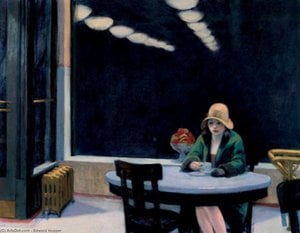
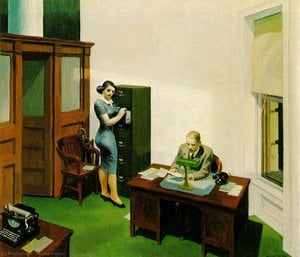
محطة وقود (1940)، بتصويره المذهل لمحطة وقود على جانب الطريق، يوضح اهتمام هوبر بالمناظر الطبيعية الأمريكية وثقافة السيارات الناشئة. تشمل الأعمال البارزة الأخرى مثل *أوتومات* و *مكتب في مدينة صغيرة* و *الصيف* كل منها يقدم رؤى فريدة حول تعقيدات المجتمع الأمريكي في القرن العشرين. لم تكن هذه اللوحات مجرد تصوير للأماكن؛ بل كانت استكشافاً للمزاج وعلم النفس والمشاهد الدرامية الدقيقة التي تتكشف في الإعدادات العادية. لعبت زوجته،
جوزفين نيڤيسون هوبر، دوراً حيوياً ليس فقط كرفيقة مدى الحياة له، ولكن أيضاً كنموذج متكرر، مما ساهم بشكل كبير في تصوير شخصياته النسائية.
المواضيع والإرث: تأثير دائم
تنتشر عدة مواضيع متكررة في أعمال هوبر. العزلة الحضرية هي الأكثر بروزاً - إحساس بالوحدة التي يعيشها الأفراد وسط الحشود. استكشف المناظر الطبيعية الأمريكية، سواء كانت ريفية أو حضرية، وغالباً ما يؤكد على خلوها وقسوتها. يتعمق عمله في الواقعية النفسية، ويستكشف حياة موضوعاته الداخلية بحساسية تتجاوز مجرد التمثيل. هناك أيضاً تيار من الحنين إلى الماضي الأبسط، جنبًا إلى جنب مع الاعتراف بتعقيدات وقلق الحياة الحديثة. لا يمكن إنكار تأثير هوبر على الفنانين اللاحقين. ألهم أسلوبه الفريد عدد لا يحصى من الرسامين، بما في ذلك بيير سانفورد روس، ويستمر في صدى الفنانين المعاصرين الباحثين عن التقاط جوهر التجربة الإنسانية. تظل لوحاته مرغوبة للغاية من قبل جامعي التحف وتُعرض في المتاحف الكبرى حول العالم، مما يرسخ مكانته كشخصية محورية في تاريخ الفن الأمريكي. أكثر من مجرد فنان، كان إدوارد هوبر فيلسوفاً بصرياً، وقدم رؤى عميقة حول الحالة الإنسانية من خلال استخدامه البارع للضوء والظل والتكوين.
- يكمن إرثه ليس فقط في جمال لوحاته ولكن أيضاً في قدرتها الدائمة على إثارة الأفكار وإثارة المشاعر وتذكيرنا بالعزلة الهادئة التي غالباً ما تحدد حياتنا.
- تستمر أعمال هوبر في جذب الجماهير لأنها تتحدث إلى موضوعات عالمية من الوحدة والعزلة والبحث عن المعنى في عالم يتغير بسرعة.
- أصبحت لوحاته تمثيلات أيقونية للثقافة الأمريكية، وغالباً ما تستخدم لتمثيل القلق والطموح في القرن العشرين - وما بعده.
- لقد أثر جمال هوبر بعمق على صانعي الأفلام (مثل ألفريد هيتشكوك) والكتاب، مما ألهم العديد من الأعمال التي تستكشف موضوعات مماثلة للانفصال والتوتر النفسي.
إن قدرة إدوارد هوبر على التقاط جوهر الحياة الأمريكية بصراحة وحساسية ورؤية فنية مميزة يضمن مكانته كواحد من أهم الفنانين في القرن العشرين.



 معاينة الحجم الحقيقي
 اشترِ لوحة مرسومة يدويًا
 مشاركة
 مشاركة
 التفاصيل

 تحميل الملف
 قطع مشابهة
 الأشعة السينية
 عرض شرائح


 عرض المزيد






































 خيار الزجاج متاح فقط للمقاسات التي تقل عن 110 سم