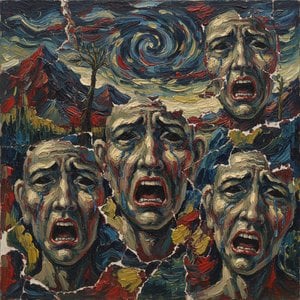
Moon Light: A Symphony of Serenity and Symbolism by Edvard Munch
Edvard Munch’s “Moon Light,” painted in 1895, isn't merely a depiction of a coastal scene; it’s an immersive experience—a carefully constructed meditation on light, emotion, and the human condition. This oil-on-canvas masterpiece, firmly rooted within the Symbolist movement, invites us into a realm where tranquility dances with underlying currents of melancholy and introspection. More than just a pretty picture, “Moon Light” is a profound exploration of the psychological landscape, rendered with Munch’s signature blend of raw emotion and meticulous technique.
The painting immediately establishes a sense of quietude—a serene beach bathed in the ethereal glow of the moon. The composition unfolds gently: a dark foreground dominated by silhouetted trees anchors the eye while receding into the distance, where a body of water reflects the luminous disc overhead. Two figures, subtly placed near the left and center of the scene, introduce a poignant element of human connection to this otherwise solitary vista. They aren’t dramatic or imposing; rather, they seem absorbed in their own thoughts, adding a layer of quiet contemplation to the overall atmosphere. The strategic placement of these figures suggests a shared experience of the moon's calming influence, a silent acknowledgment of beauty and perhaps even a touch of wistful longing.
The Language of Light: Symbolism and Emotional Resonance
At the heart of “Moon Light” lies Munch’s masterful manipulation of light. It’s not simply illumination; it's a potent symbol, imbued with layers of meaning. The moon itself—a dominant presence in the composition—represents serenity, peace, and perhaps even a veiled melancholy. Its gentle radiance washes over the scene, creating an almost dreamlike ambiance, as if time has slowed to a standstill. Munch deliberately employs subdued colors – predominantly blues and greens – which further enhance this sense of tranquility, evoking the cool stillness of a night sea. However, the vertical pillar of moonlight piercing through the darkness introduces a subtle element of mystery and perhaps even foreboding, hinting at the complexities beneath the surface of apparent serenity.
Munch’s Technique: A Dance of Color and Composition
Examining Munch's technique reveals his profound understanding of capturing fleeting moments and conveying raw emotion through visual means. The painting is characterized by a delicate balance between realism and abstraction. While the landscape is recognizable, it’s rendered with an expressive brushstroke—a deliberate departure from photographic accuracy. Notice how he uses short, broken strokes to depict the trees, creating a sense of movement and suggesting the rustling of leaves in the night breeze. The subtle gradations of color – particularly in the water reflecting the moonlight – demonstrate his mastery of blending hues to create depth and atmosphere. The careful positioning of the figures, coupled with the strategic use of shadow, draws the viewer’s eye through the scene, guiding them on a journey of contemplation.
Contextualizing “Moon Light”: Munch's Exploration of Human Experience
“Moon Light” is part of a larger body of work by Munch that grapples with universal themes—mortality, anxiety, love, and loss. His exploration of these subjects often involved a deep engagement with Symbolism, which sought to express profound truths through symbolic imagery rather than literal representation. Works like “Despair,” also exploring the depths of human emotion, demonstrate this thematic continuity. Munch’s work was profoundly influenced by the Modernist movement, emphasizing subjective experience and experimentation—a shift away from traditional artistic conventions. The painting's evocative power stems not just from its aesthetic qualities but also from its reflection of Munch’s own personal struggles and his profound understanding of the human psyche. It stands as a testament to his ability to translate inner turmoil into a visually arresting and emotionally resonant work of art.
For those seeking a high-quality reproduction of this iconic painting, WahooArt offers meticulously hand-painted reproductions that capture the essence of Munch’s vision with stunning accuracy and detail. Explore our collection today and bring the serenity and symbolism of “Moon Light” into your home or office.
الأسئلة والأجوبة
ما هي الزاوية الأنسب في المنزل لوضع نسخة من "Moon Light"؟
المساحة الموصى بها لـ "Moon Light" للفنان إدفارد مونش هي Living Room. وبالطبع، يمكن تكييف هذا الاقتراح بما يتناسب مع ديكور منزلك.
ما هو الشعور الذي يرتبط بـ "Moon Light"؟
ينقل عمل "Moon Light" للفنان إدفارد مونش نبرة عاطفية Melancholic.
ما هي الاستخدامات المقترحة لـ "Moon Light" للفنان إدفارد مونش؟
الاستخدام المقترح لـ "Moon Light" للفنان إدفارد مونش هو Statement، كما يمكن استخدامه لأغراض أخرى أيضاً.
كيف يمكنني الحصول على نسخة رقمية من "Moon Light" للفنان إدفارد مونش؟
يمكن شراء نسخة رقمية من "Moon Light" للفنان إدفارد مونش عبر هذه الصفحة: تحميل صورة رقمية عالية الدقة.
ما نوع العمل الفني "Moon Light"؟
تُصنف "Moon Light" للفنان إدفارد مونش ضمن فئة WallArt. ويصف هذا التصنيف نوع العمل الفني الأصلي.
أين يمكنني تحميل "Moon Light" للفنان إدفارد مونش؟
يتوفر خيار التنزيل لـ "Moon Light": حيث توفر صفحة تحميل الخاصة بالعمل الفني تحميل صورة رقمية عالية الدقة.
عن ماذا يتحدث "Moon Light"؟
تتمثل موضوعات "Moon Light" في moonlight, night, beach, figures, serenity, symbolism, munch.
هل تشكل "Moon Light" للفنان إدفارد مونش لوحة شخصية، أم طبيعية، أم ذات تكوين مربع؟
تأتي لوحة "Moon Light" بتنسيق Landscape، وهو أمر مفيد عند التخطيط لمكان وضع النسخة المطبعة.



 معاينة الحجم الواقعي
 اطلب نسخة مرسومة يدويًا
 إرسال
إرسال مشاركة
 عرض التفاصيل
 دليل الأعمال الفنية للطلاب

 تحميل
تحميل
 قطع مشابهة
 الأشعة السينية
 عرض شرائح متتابع
 الإحصائيات

 اقرأ المزيد






































 خيار الزجاج متاح فقط للمقاسات التي تقل عن 110 سم