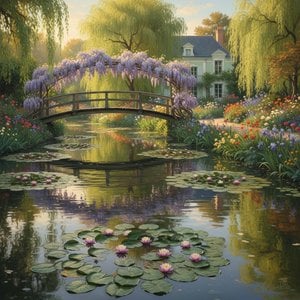
Water Lilies (52) by Claude Monet
Claude Monet’s “Water Lilies” (52), painted in 1914, stands as an emblem of Impressionism's quest to capture the ephemeral beauty of nature—specifically, the tranquil serenity of Monet’s famed Giverny garden. More than just a depiction of flowers; it embodies a profound exploration of light and color, reflecting Monet’s unwavering dedication to portraying fleeting moments with unprecedented accuracy. This monumental oil on canvas exemplifies his signature style: soft, feathery brushstrokes meticulously layered to create an illusion of shimmering surface textures that seem to vibrate with life. The painting's composition centers around a vast pond populated by numerous water lilies—a deliberate homage to Monet’s personal sanctuary and a visual manifestation of his artistic vision.
The Painting's Composition: A Symphony of Light
The canvas unfolds as an expansive horizontal plane dominated by the luminous expanse of water, punctuated by clusters of lily pads adorned with delicate blossoms. Monet skillfully employs complementary colors—primarily blues and yellows—to heighten the vibrancy of the scene and to simulate the way sunlight dances across the pond’s surface. Notice how Monet uses broken brushstrokes to diffuse light, creating an atmospheric haze that envelops the lilies and contributes to the overall feeling of tranquility. The subtle gradations of color convey a sense of depth and dimensionality, inviting viewers into Monet's immersive experience of Giverny.
Monet's Inspiration: Giverny’s Enchanting Landscape
Monet’s artistic inspiration stemmed directly from his beloved garden at Giverny—a meticulously cultivated oasis where he experimented tirelessly with color palettes and compositional techniques. The Musée de l'Orangerie in Paris houses a remarkable collection of Monet’s water lily paintings, including “Water Lilies” (25) and “Water Lilies” (13), offering visitors an unparalleled opportunity to contemplate the artist’s groundbreaking approach to landscape painting. These canvases are considered masterpieces of Impressionism, demonstrating Monet's mastery in capturing the essence of natural beauty and conveying a profound emotional resonance.
Notable Works Alongside "Water Lilies"
Beyond “Water Lilies” (52), Monet produced several other iconic paintings that further solidified his reputation as one of the most influential artists of the late nineteenth century. “Water Lilies” (10), housed at the Portland Art Museum, exemplifies Monet’s early explorations of Impressionistic principles—characterized by loose brushstrokes and a focus on capturing atmospheric conditions. Similarly, "Water Lilies" (54) resides in Tokyo's National Museum of Western Art, showcasing Monet's continued refinement of his technique as he approached the twilight years of his life. These artworks underscore Monet’s unwavering commitment to portraying nature with honesty and sensitivity—a legacy that continues to inspire artists and captivate audiences worldwide.
- “Water Lilies” (10) by Claude Monet
- “Water Lilies” (54) by Claude Monet
Handmade oil painting reproductions of Monet’s works, including “Water Lilies” (52), can be found on WahooArt.com. These reproductions are created by skilled artists who use high-quality materials to ensure that the final product is a faithful representation of the original painting. For more information on Monet's life and work, visit Wikipedia.
The beauty and serenity of Monet’s “Water Lilies” (52) make it a must-see for art lovers and nature enthusiasts alike. Whether you’re interested in purchasing a handmade oil painting reproduction or simply learning more about this incredible artist, WahooArt.com is the perfect resource.



 معاينة الحجم الحقيقي
 اشترِ لوحة مرسومة يدويًا
 مشاركة
 مشاركة
 التفاصيل

 تحميل الملف
 قطع مشابهة
 الأشعة السينية
 عرض شرائح

 عرض المزيد






































 خيار الزجاج متاح فقط للمقاسات التي تقل عن 110 سم