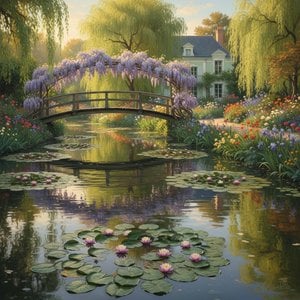
A Symphony of Violet and Gold: Monet’s Wisteria in 1917
Claude Monet's *Wisteria (Left Half)*, painted in 1917, is more than just a floral depiction; it’s an immersive experience into the heart of Impressionism. This segment, part of a larger diptych, transports viewers to Giverny, Monet’s beloved garden and lifelong source of inspiration, during a period of both personal solace and global upheaval. The painting exemplifies Monet's enduring fascination with capturing the ephemeral qualities of light and atmosphere, transforming a simple garden scene into a breathtaking spectacle.
Impressionistic Technique & Artistic Style
Executed in oil on canvas, *Wisteria (Left Half)* showcases the hallmarks of Impressionism. Monet abandons precise detail in favor of broken brushstrokes and vibrant color juxtapositions. The wisteria blossoms aren’t rendered with botanical accuracy but rather as shimmering masses of purple, lavender, and white, punctuated by touches of golden yellow where sunlight filters through the foliage. This technique creates a sense of movement and vibrancy, mimicking the way light dances across the flowers in a gentle breeze.
The lack of hard outlines contributes to the dreamlike quality of the scene, inviting the eye to wander and complete the forms intuitively.
Historical Context & Late Monet
Painted during the final years of his life, and amidst the backdrop of World War I, *Wisteria* represents a turning point in Monet’s artistic journey. Though physically challenged by cataracts, his commitment to painting remained unwavering. He increasingly focused on his garden at Giverny as a sanctuary – a space for beauty and contemplation removed from the horrors unfolding across Europe. The wisteria series, along with his continued work on the water lilies, became an exploration of color, light, and form, pushing the boundaries of Impressionism towards abstraction.
Symbolism & Emotional Resonance
Wisteria itself carries symbolic weight. Traditionally associated with longevity, love, and good fortune in Japanese culture (a significant influence on Monet’s garden design), the cascading blooms can also represent a sense of wistful beauty and fleeting time. The inclusion of a small boat in the background adds a subtle narrative element – perhaps hinting at journeys taken or dreams harbored.
More profoundly, the painting evokes feelings of tranquility, peace, and an appreciation for the simple joys of nature. It’s a testament to Monet's ability to find beauty even amidst adversity.
Collecting & Interior Design Considerations
*Wisteria (Left Half)*, or a high-quality reproduction thereof, lends itself beautifully to a variety of interior design schemes. Its predominantly cool palette – the purples and greens – creates a calming atmosphere, ideal for bedrooms, living rooms, or studies. The painting’s impressionistic style adds a touch of sophistication and artistic flair without being overly imposing.
- Pairs well with neutral color palettes (grays, creams, whites).
- Complements furniture in natural materials like wood and linen.
- Creates a focal point in smaller spaces due to its vibrant yet harmonious composition.
Owning a piece of Monet’s legacy – whether original or reproduction – is an investment in beauty, history, and the enduring power of art.



 معاينة الحجم الحقيقي
 اشترِ نسخة مطبوعة
 مشاركة
 مشاركة
 التفاصيل

 تحميل الملف
 قطع مشابهة
 الأشعة السينية
 عرض شرائح

 عرض المزيد






































 خيار الزجاج متاح فقط للمقاسات التي تقل عن 110 سم