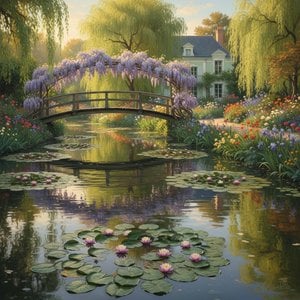
A Symphony of Light and Reflection: Claude Monet’s “Water Lilies, Evening Effect”
Claude Monet's "Water Lilies, Evening Effect" isn’t merely a depiction of a pond; it’s an immersion into the very essence of Impressionism – a fleeting moment captured in light, color, and atmosphere. Painted in 1899 during his prolific period at Giverny, this work embodies Monet's lifelong obsession with capturing the ephemeral qualities of nature, particularly the shifting moods of water and sky. The painting’s power lies not just in its subject matter but in Monet’s revolutionary technique, which sought to represent visual sensation rather than photographic realism. He abandoned traditional brushwork, opting instead for loose, broken strokes of color applied directly to the canvas – a method he perfected through his years of *en plein air* painting, working outdoors and observing light's constant transformation.
The scene itself is deceptively simple: a tranquil pond reflecting the twilight sky. However, within this apparent stillness lies a dynamic interplay of color and texture. Monet masterfully utilizes complementary hues – the cool blues and violets of the approaching evening contrasted with the warm yellows and oranges of the remaining sunlight – to create a sense of depth and luminosity. Notice how he doesn’t meticulously render each lily or ripple; instead, he suggests them through dabs and dashes of paint, allowing the viewer's eye to complete the image, creating an intimate connection with the scene.
The Giverny Garden: A Personal Universe
To fully appreciate “Water Lilies, Evening Effect,” it’s crucial to understand Monet’s relationship with his garden at Giverny. This wasn't just a decorative space; it was a laboratory for artistic experimentation – a carefully curated environment designed to stimulate his senses and inspire his paintings. The pond, filled with water lilies he painstakingly cultivated, became the central focus of his work during these later years. He built arched footbridges, Japanese structures, and strategically placed trees to frame the scene and create a sense of depth and perspective. Monet’s garden was, in essence, his personal universe, a space where he could relentlessly pursue his artistic vision.
The painting reflects this intimate connection with nature. It's not a grand, sweeping landscape but rather a quiet, contemplative moment within a familiar setting. The inclusion of the Japanese bridge and its reflection adds an element of serenity and harmony, echoing Monet’s admiration for Japanese art and design. This deliberate juxtaposition of Western and Eastern aesthetics is characteristic of his later work – a testament to his open-mindedness and willingness to incorporate diverse influences into his artistic practice.
Symbolism and the Poetics of Light
Beyond its visual beauty, “Water Lilies, Evening Effect” is rich in symbolism. The water lilies themselves represent purity, rebirth, and the cyclical nature of life – themes frequently explored by Impressionist artists. The reflection of the sky in the pond mirrors the heavens, suggesting a connection between the earthly realm and the divine. More profoundly, Monet was deeply interested in capturing the *impression* of light—the way it changes throughout the day and affects our perception of color and form.
The “Evening Effect,” as the title suggests, captures this fleeting moment of transition – the last vestiges of daylight fading into darkness. The hazy atmosphere, softened colors, and diffused light evoke a sense of melancholy and nostalgia, inviting the viewer to contemplate the beauty of impermanence. Monet wasn’t simply painting what he *saw*; he was conveying how he *felt* about what he saw—a deeply personal response to the world around him.
Bringing the Impression into Your Space
A hand-painted reproduction of “Water Lilies, Evening Effect” offers a remarkable opportunity to bring this iconic masterpiece into your home. WahooArt meticulously recreates Monet’s delicate brushstrokes and luminous colors using traditional oil painting techniques, ensuring that every detail is faithfully reproduced. Whether you choose a large-scale canvas for a statement wall or a smaller print for a tranquil corner, this artwork will infuse your space with the serenity and beauty of Giverny. It's more than just decoration; it’s an invitation to slow down, appreciate the subtle nuances of light and color, and connect with the timeless poetry of Claude Monet.



 معاينة الحجم الحقيقي
 التحويل إلى المطبوعات
 مشاركة
 مشاركة
 التفاصيل
 الدليل

 تحميل الملف
 قطع مشابهة
 الأشعة السينية
 عرض شرائح
 الإحصائيات

 عرض المزيد






































 خيار الزجاج متاح فقط للمقاسات التي تقل عن 110 سم