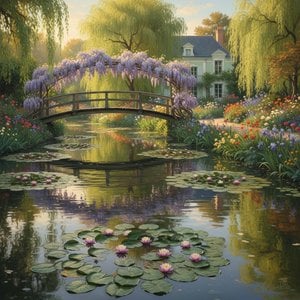
Water Lilies (37) by Claude Monet: A Symphony of Light and Reflection
Claude Monet's Water Lilies (37), painted in 1908, is more than just a depiction of nature; it’s an immersive experience capturing the fleeting beauty of light and reflection. This piece exemplifies Impressionism at its peak, showcasing Monet’s mastery of color and his dedication to portraying the ephemeral qualities of the natural world. The painting invites viewers into a tranquil pond scene, brimming with life and serenity.
Composition and Subject Matter
The artwork presents a captivating view of a lily pond, teeming with vibrant water lilies and scattered yellow flowers floating gracefully on the surface. Several birds are subtly integrated throughout the composition, adding movement and a sense of lively interaction within this serene environment. The arrangement of these elements—the lilies, flowers, and birds—creates a picturesque scene that is quintessential Monet, evoking feelings of peace and harmony.
Impressionistic Technique and Style
Monet’s signature Impressionist style shines through in Water Lilies (37). He employs soft, delicate brushstrokes and a rich palette of colors to create an ethereal effect. The painting's dreamlike quality is not accidental; it’s the result of Monet’s skill in capturing fleeting moments of natural beauty and translating them onto canvas. Rather than sharp lines or detailed rendering, Monet prioritizes the interplay of light and color, allowing the viewer to feel as though they are immersed within the scene itself.
Historical Context and Significance
This painting is part of a larger series known as Nymphéas (Water Lilies), created over two decades at Monet’s home in Giverny. The gardens, meticulously designed by Monet himself, became his primary source of inspiration during the later years of his career. The Musée de l'Orangerie in Paris houses a dedicated oval room displaying a monumental cycle of these water lily paintings, offering visitors an unparalleled opportunity to experience the immersive power of Monet’s vision. The series reflects a shift towards abstraction within Impressionism and anticipates later developments in modern art.
Emotional Impact and Symbolism
Water Lilies (37) evokes a profound sense of tranquility and contemplation. The gentle reflections on the water's surface, combined with the soft colors and diffused light, create an atmosphere of peace and serenity. Beyond its aesthetic appeal, the painting can be interpreted as symbolic of renewal and reflection – the lily pads representing resilience and beauty emerging from the depths of the pond. Monet’s work invites viewers to pause, observe, and appreciate the simple yet profound beauty of nature, offering a moment of respite in an increasingly complex world.



 معاينة الحجم الحقيقي
 اشترِ لوحة مرسومة يدويًا
 مشاركة
 مشاركة
 التفاصيل

 تحميل الملف
 قطع مشابهة
 الأشعة السينية
 عرض شرائح

 عرض المزيد






































 خيار الزجاج متاح فقط للمقاسات التي تقل عن 110 سم