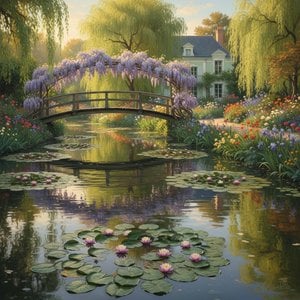
The Tuileries (Study): A Parisian Moment Captured in Light
Claude Monet’s “The Tuileries (study)” isn't merely a landscape; it’s a fleeting distillation of a Parisian afternoon, an intimate glimpse into the heart of 19th-century life. Painted in 1876, this oil on canvas offers a remarkably serene tableau within the famed Tuileries Garden – a space that pulsed with activity yet, in Monet's careful observation, held a quiet beauty. More than just a depiction of scenery, it’s a testament to Monet’s revolutionary approach to painting: capturing not just what he *saw*, but what he *felt* about seeing it, prioritizing the ephemeral effects of light and atmosphere above precise representation.
The composition is deceptively simple. A verdant expanse of grass stretches towards a backdrop of mature trees, their branches dappled with sunlight. Figures stroll leisurely along paths, adding a sense of scale and human presence to the scene without dominating it. Notice the subtle inclusion of modern elements – a few cars parked discreetly on the street outside – hinting at the encroaching modernity that was slowly transforming Paris while Monet sought to preserve the tranquility of this historic garden. The artist’s brushstrokes are loose, almost impressionistic in their immediacy, conveying movement and light with remarkable skill. He doesn't meticulously render every detail; instead, he uses broken color and suggestive forms to create a vibrant, luminous image.
Monet’s Impressionist Vision
As a founding figure of French Impressionism, Monet was driven by an intense desire to capture the subjective experience of light and color. “The Tuileries (study)” exemplifies this philosophy perfectly. He abandoned the academic tradition of detailed realism in favor of portraying the *impression* of a scene – the way it appeared at a particular moment in time. This is evident in his use of short, broken brushstrokes, applied with rapid succession, to build up layers of color and create a shimmering effect. The painting isn’t about photographic accuracy; it's about conveying the feeling of warmth, airiness, and tranquility that Monet perceived within the Tuileries Garden.
The choice of subject matter – a public park – was deliberate. Monet wasn’t interested in grand historical scenes or mythological narratives. He sought to paint everyday life, focusing on ordinary moments and subjects. This commitment to capturing the beauty of the commonplace is a hallmark of Impressionism and distinguishes it from earlier artistic movements. Furthermore, his decision to create this “study” suggests an exploratory process – a preliminary sketch intended to capture the essence of the scene before embarking on a more finished work.
Location, Context, and Legacy
“The Tuileries (study)” is currently housed at the Musée Marmottan Monet in Paris, a treasure trove dedicated to the artist’s life and oeuvre. This museum provides invaluable context for understanding Monet's artistic development and his enduring influence on subsequent generations of artists. It’s fascinating to consider how this painting relates to other works in Monet’s extensive series of paintings depicting the same subjects at different times of day and under varying weather conditions – a testament to his dedication to capturing the ever-changing qualities of light and atmosphere.
Monet's work profoundly impacted the course of art history, paving the way for modernism. Artists like Édouard Manet, who also explored themes of urban life and fleeting moments, were deeply influenced by Monet’s innovative techniques and his rejection of traditional artistic conventions. “The Tuileries (study)” stands as a powerful example of this transition – a bridge between Realism and the vibrant, subjective world of Impressionism. It invites us to slow down, observe carefully, and appreciate the beauty that surrounds us in even the most familiar settings.
Bringing Monet’s Vision Home
WahooArt offers meticulously crafted hand-painted reproductions of “The Tuileries (study),” allowing you to bring this iconic artwork into your own space. Our skilled artists faithfully recreate Monet's delicate brushwork and luminous color palette, ensuring that the essence of the original painting is preserved with stunning accuracy. Whether you’re an art enthusiast, a collector, or simply seeking to add a touch of Parisian charm to your home, our reproductions provide a beautiful and authentic way to experience the magic of Claude Monet’s vision. Explore similar works by Monet on WahooArt.com, including “Park Monceau, Paris,” for a deeper appreciation of his artistic journey.



 معاينة الحجم الحقيقي
 التحويل إلى المطبوعات
 مشاركة
 مشاركة
 التفاصيل

 تحميل الملف
 قطع مشابهة
 الأشعة السينية
 عرض شرائح
 الإحصائيات


 عرض المزيد






































 خيار الزجاج متاح فقط للمقاسات التي تقل عن 110 سم