Charles Marion Russell’s “In Without Knocking”: A Window into the Soul of the American West
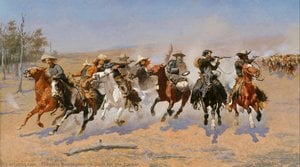
Charles Marion Russell's "In Without Knocking," painted in 1909, is more than just a depiction of cowboys and horses; it’s a visceral embodiment of the spirit of the American West. Created during a pivotal moment in the nation’s artistic exploration of its frontier heritage, this painting captures the essence of rugged individualism, untamed freedom, and perhaps even a touch of lawlessness that defined the era. Russell, deeply influenced by his decade-long experience as a working cowboy in Montana, didn't simply paint what he saw; he translated his lived reality onto canvas with remarkable skill and emotional depth.
- Subject Matter: The scene unfolds with a captivating immediacy – cowboys bursting into a frontier saloon or hotel, their entrance unannounced. This impulsive action, reflected in the title itself, speaks to the spirit of the West, where rules were often bent and consequences delayed.
- Style & Technique: Russell’s style is a masterful blend of representational accuracy and impressionistic looseness. He employs visible brushstrokes, layering paint with deliberate texture to create a sense of movement and energy that truly captures the dynamism of the scene. The impasto technique – thick application of paint – particularly evident in the horses' coats and saddles, adds a remarkable three-dimensionality to the artwork.
A Symphony of Earth Tones and Textured Detail
The painting’s color palette is dominated by warm earth tones—browns, tans, yellows, and oranges—reflecting the dusty environment and worn clothing of the cowboys. These hues are punctuated by brighter accents – blues in the sky, reds on saddles, and greens highlighting details – creating a visually rich composition. Russell's meticulous attention to detail is immediately apparent; the weathered wooden porch, the intricately tooled saddle with its rattlesnake skin cantle (a talisman believed to ward off saddle sores), and the individual expressions of the cowboys all contribute to the painting’s remarkable realism.
- Use of Lines & Shapes: Loose, expressive lines define the forms, creating a sense of movement and texture. Organic shapes – the flowing curves of the horses' bodies, the angularity of the building facade – are rendered with an intuitive understanding of form and space.
- Textures: Russell masterfully utilizes texture to evoke the tactile qualities of the scene. The brushwork creates a rough, almost sculptural effect, particularly on the horses’ coats and clothing, while the depiction of the weathered wood suggests age and exposure to the elements.
Decoding the Symbolism and Emotional Resonance
"In Without Knocking" resonates with powerful symbolic meaning. The cowboys' unannounced entry speaks to a rejection of societal constraints and an embrace of freedom – a core theme in Western art and literature. The painting’s composition, with its dynamic movement and sense of chaos, reflects the unpredictable nature of frontier life. Russell captures not just a moment in time but also a fundamental aspect of the American psyche: the allure of the wild, the pursuit of independence, and the enduring spirit of adventure.
- Perspective & Depth: The artist skillfully employs perspective techniques – size diminution and overlapping forms – to create a convincing sense of depth. Atmospheric perspective subtly softens colors in the background, further enhancing the illusion of distance.
- Historical Context: Painted in 1909, this work reflects the late 19th and early 20th-century fascination with the American West, fueled by westward expansion, romanticized narratives of cowboys, and a desire to define national identity.
A Timeless Masterpiece – Perfect for Display
This hand-painted reproduction captures the essence of Russell’s iconic work, offering an exceptional opportunity to bring a piece of Western Americana into your home or office. Its rich colors, dynamic composition, and masterful technique make it a captivating addition to any art collection. Whether you are drawn to its historical significance, its artistic merit, or simply its evocative portrayal of the American West, “In Without Knocking” is sure to be a conversation starter and a source of enduring inspiration.



 معاينة الحجم الحقيقي
 اشترِ لوحة مرسومة يدويًا
 مشاركة
 مشاركة
 التفاصيل

 تحميل الملف
 قطع مشابهة
 الأشعة السينية
 عرض شرائح


 عرض المزيد






































 خيار الزجاج متاح فقط للمقاسات التي تقل عن 110 سم