


 Oil On CanvasWallArtChicano
 1988Contemporary
 137.0 x 137.0 cm
لوحة زيتية مرسومة يدوياً على الكانفاس بالمقاس والإطار الذي تفضله، تُنفذ حسب الطلب على أيدي فنانينا. ( اشترِ نسخة مطبوعة اشترِ الصورة)





























اختر من بين أحجامنا المُعدّة مسبقًا والتي تتطابق مع النسب الأصلية للعمل الفني.

يمكنك إدخال أبعادك الخاصة لتناسب إطارًا معينًا أو مساحة محددة. وإذا لم يتطابق الحجم الذي اخترته مع نسب الصورة الأصلية، فسنقوم إما بقص العمل الفني أو توسيع اللوحة بإضافة عناصر مرسومة يدويًا. سيتم إرسال نموذج رقمي إليك للموافقة عليه قبل بدء الإنتاج.
يرجى ملاحظة أن المعاينة على الشاشة لا تعكس عملية القص أو التوسيع الفعلية؛ حيث إن النموذج الرقمي وحده هو الذي سيوضح التكوين النهائي بدقة.
وعلى الرغم من توفر أحجام مخصصة، إلا أننا نوصي باختيار أبعاد من القائمة المحددة مسبقًا للحفاظ على النسب الأصلية للعمل الفني.
توصيل عالمي إلى خلال 3 إلى 4 أسابيع بدلاً من المدة المعتادة البالغة 5 أسابيع. (7 سبتمبر). جودة لا تهاون فيها.


Night Magic (Blue Jester)
مقاس النسخة المطبوعة
Carlos Almaraz (1941-1989) stands as a monumental figure in the Chicano art movement, forever etching himself into the cultural landscape of Los Angeles and beyond. Born in Mexico City to Rudolph Almaraz and Roe Miller, his early life was defined by a profound duality. His family relocated to Chicago shortly after his birth, exposing him to the industrial grit of Gary steel mills alongside the vibrant pulse of Mexican American communities. This stark contrast between urban decay and rich familial heritage became a recurring motif throughout his artistic oeuvre, creating a visual language that spoke to both the struggle and the splendor of the human condition.
Almaraz’s formative years instilled in him an acute awareness of social disparities and cultural identity, themes that would profoundly shape his artistic vision. After pursuing formal training at the Art Institute of Chicago, where he honed his skills in painting and printmaking, he established himself as a resident artist in East Los Angeles during the late 1960s and early 1970s. This period coincided with the burgeoning Chicano movement—a powerful assertion of Mexican American pride and activism. Almaraz quickly became a central figure in this cultural awakening, recognizing the immense potential for art to serve as a catalyst for social change and community dialogue.
The evolution of Almaraz’s style was deeply informed by his engagement with international art movements. Surrealism and Expressionism served as crucial touchstones for his development, providing him with the tools to translate internal emotions onto the canvas. The dreamlike imagery of Salvador Dalí and the emotionally charged, jagged compositions of Ernst Ludwig Kirchner allowed him to move beyond mere representation. He learned to weave together the fantastic and the real, creating works that felt both deeply personal and broadly political.
His commitment to community was perhaps most tangibly expressed through his collaborative efforts. Alongside fellow artists such as Ursula Celada, Judith Baca, and Willie Villalpando, Almaraz co-founded the Centro de Arte Público (CAP) in Highland Park, Los Angeles. This institution aimed to foster Chicano artistic expression and engage local communities in vital conversations about identity and social justice. Through these collective endeavors, he helped bridge the gap between street art and the fine art establishment, ensuring that the voices of East Los Angeles were heard within the broader canon of American art.
Perhaps Almaraz’s most celebrated body of work is his Echo Park series—a collection of paintings depicting the urban sprawl of East Los Angeles with a haunting, luminous beauty. These canvases capture more than just physical landscapes; they are psychological portraits of a city in flux. Through vibrant colors and sweeping, energetic brushstrokes, he depicted the movement of traffic, the glow of streetlights, and the complex layers of urban life, transforming the mundane into something mythic and profound.
The historical significance of Carlos Almaraz lies in his ability to navigate multiple identities simultaneously. As a founder of the influential group Los Four, he was instrumental in bringing Chicano aesthetics to the forefront of the contemporary art world. His work remains a testament to the power of resilience and the beauty found within the struggle for recognition. Even today, his legacy continues to inspire artists who seek to use their craft as a tool for cultural reclamation and social transformation, ensuring that his vibrant vision of Los Angeles will never fade.

1941 - 1989

Immerse yourself in the captivating world of slate blue! Explore 10 iconic paintings by Monet, Van Gogh & Renoir. Discover their stories, techniques & find museum-quality art reproductions for your home at .
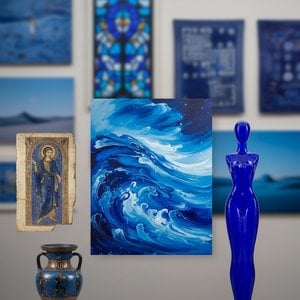
Explore the rich history of blue in art! Discover its symbolism, from ancient pigments to modern masterpieces by Kandinsky & Seurat. Uncover the psychological impact and cultural meanings behind this captivating hue.

Explore the rich history of the blue dress in Western art! Discover its symbolism, from Renaissance masterpieces to modern interpretations by artists like Martin & Schiele. Uncover cultural meanings and artistic techniques.

Explore the captivating world of Magic Realism! Discover its origins, key artists like García Márquez & Colunga Marín, and how it blends reality with the fantastical. Expert insights & high-quality art reproductions at WahooArt.
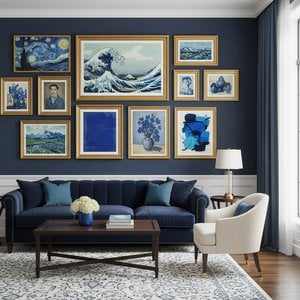
Dive into a world of captivating navy hues! Explore 10 iconic paintings – from Van Gogh's 'Starry Night' to Monet’s seascapes. Discover the stories behind these masterpieces & find museum-quality art reproductions for your home at .

 معاينة الحجم الحقيقي
 مشاركة
 مشاركة
 التفاصيل

 تحميل الملف
 قطع مشابهة
 الأشعة السينية
 عرض شرائح
 عرض المزيد







 خيار الزجاج متاح فقط للمقاسات التي تقل عن 110 سم


