The Divine Embrace: An Examination of Madonna and Child Enthroned
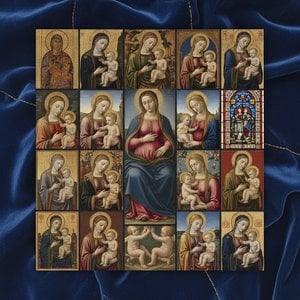
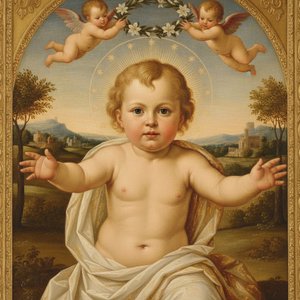
To gaze upon Carlo Crivelli's Madonna and Child Enthroned is to step directly into the luminous heart of the Italian Renaissance, yet to find echoes of a more delicate, almost dreamlike piety. This masterpiece, dating from 1477, immediately captivates the viewer with its rich tapestry of color and profound spiritual narrative. At its core rests the tender depiction of the Virgin Mary cradling the Christ Child upon an elaborate throne. The vibrant use of red clothing across both figures is not merely decorative; it speaks to themes of royalty, passion, and divine life force, bathing the entire scene in a warm, almost palpable glow.
Mastery of Detail and Luminous Technique
Crivelli’s technique here showcases his remarkable skill, blending the lingering elegance of the late Gothic style with burgeoning Renaissance naturalism. One notices an intense attention to detail that is characteristic of his hand. The composition is richly populated; beyond the central figures, several attendant saints and onlookers populate the background, lending a sense of grand occasion and sacred importance to the moment. His ability to incorporate what appears almost like trompe l'oeil elements gives the scene an incredible depth, making the gold frame seem less like an addition and more like an integral part of the divine setting itself. The overall effect is one of breathtaking ornamentation married to profound emotional connection.
Symbolism Woven into Sacred Form
The symbolism within this painting is layered, inviting contemplation from every corner. The enthronement itself speaks to Mary's role as Queen of Heaven, while the interaction between mother and child conveys both divine mystery and intimate human tenderness. Observe the small figure near the bottom left; such peripheral details often carry significant theological weight, guiding the viewer’s eye through layers of meaning. The presence of multiple figures suggests a heavenly court gathered to witness this sacred moment—a confluence of earthly devotion meeting eternal grace.
A Timeless Presence for Modern Spaces
For the collector or designer seeking an artwork that transcends mere decoration, this piece offers unparalleled depth. Reproducing the majesty and warmth of Madonna and Child Enthroned allows one to infuse a space with historical gravitas and spiritual richness. The dominant reds provide an immediate focal point, complementing deep jewel tones in interior design while the intricate detailing ensures that even at a manageable scale (such as the 106 x 55 cm reproduction), the viewer is rewarded with hours of appreciative study. It is not just art; it is a preserved moment of sublime devotion.



 معاينة الحجم الحقيقي
 التحويل إلى المطبوعات
 مشاركة
 مشاركة
 التفاصيل
 الدليل

 تحميل الملف
 قطع مشابهة
 الأشعة السينية
 عرض شرائح
 الإحصائيات


 عرض المزيد






































 خيار الزجاج متاح فقط للمقاسات التي تقل عن 110 سم