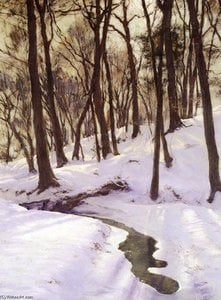
A Winter’s Embrace: Carl Blechen's "Alpine Pass in Winter with Monks"
Carl Blechen’s “Alpine Pass in Winter with Monks,” painted in 1833, is more than a landscape; it’s a poignant meditation on the sublime power of nature and the enduring spirit of faith. This watercolor masterpiece, now housed within the Staatliche Graphische Sammlung in Munich, captures a fleeting moment in the rugged beauty of the Alps, rendered with a delicate yet profoundly evocative quality that speaks to the Romantic era's fascination with both the grandeur and the vulnerability of the natural world.
The scene unfolds against a backdrop dominated by towering, jagged peaks – a classic representation of the Alpine wilderness. Blechen masterfully employs a restricted palette of browns, grays, and whites, mirroring the harsh realities of winter’s grip. Snow blankets the landscape in thick drifts, clinging to rocks and trees, creating an atmosphere of both serene stillness and formidable cold. The artist's skillful use of watercolor allows for subtle gradations of tone, lending the scene a remarkable sense of depth and luminosity – capturing the way light plays upon snow and stone with breathtaking realism.
The Human Element: Monks in a Frozen Landscape
Foregrounding this dramatic vista are two figures—monks traversing the snowy pass. Their presence introduces a vital human element into the otherwise purely naturalistic composition, prompting reflection on themes of pilgrimage, devotion, and the relationship between humanity and the divine. Dressed in traditional monastic attire, they appear small yet resolute against the immensity of the mountains, suggesting a journey undertaken with purpose and faith. The monks’ posture—a deliberate stride through the snow—conveys both perseverance and humility, inviting the viewer to contemplate their own spiritual paths.
Blechen's decision to include these figures is significant within the context of Romanticism. Rather than simply depicting nature as an object of aesthetic pleasure, he uses it as a vehicle for exploring deeper philosophical and emotional themes. The monks’ presence serves as a reminder of humanity’s place within the larger scheme of things—a small but enduring part of a vast and awe-inspiring universe.
Romanticism and Industrialization's Shadow
"Alpine Pass in Winter with Monks" is a pivotal work in Blechen’s oeuvre, reflecting his unique position as an artist grappling with the burgeoning industrial age. While many Romantic painters idealized pastoral landscapes untouched by modernity, Blechen turned his gaze towards the dramatic realities of the Alps—a region increasingly impacted by mining and transportation. This painting isn't simply a celebration of nature; it’s a subtle commentary on its vulnerability in the face of change.
Blechen’s technique – characterized by meticulous detail combined with an atmospheric, almost ethereal quality – anticipates later developments in landscape painting. His use of watercolor to create luminous effects and capture the textures of snow and rock is particularly noteworthy. The work demonstrates a keen observational skill, coupled with a deep understanding of color theory and composition.
A Timeless Resonance: Symbolism and Emotional Impact
Beyond its technical merits, “Alpine Pass in Winter with Monks” possesses a profound emotional resonance. The stark beauty of the winter landscape evokes feelings of solitude, contemplation, and perhaps even a touch of melancholy. The monks’ journey symbolizes resilience, faith, and the enduring human spirit—qualities that continue to resonate with viewers today.
This artwork invites us to pause, reflect, and consider our own relationship with nature and spirituality. It's a powerful reminder of the sublime beauty that can be found in even the harshest environments, and the quiet strength of those who seek solace within them. A hand-painted reproduction offers an exceptional opportunity to bring this evocative scene into your home or office, allowing you to experience its timeless appeal firsthand.



 معاينة الحجم الواقعي
 اطلب نسخة مرسومة يدويًا
 إرسال
إرسال مشاركة
 عرض التفاصيل
 دليل الأعمال الفنية للطلاب

 تحميل
تحميل
 قطع مشابهة
 الأشعة السينية
 عرض شرائح متتابع
 الإحصائيات


 اقرأ المزيد






































 خيار الزجاج متاح فقط للمقاسات التي تقل عن 110 سم