A Portrait of Vulnerability: Decoding Caravaggio’s ‘Sick Bacchus’
Michelangelo Merisi da Caravaggio, a name synonymous with the dramatic intensity of Baroque painting, was born in Milan in 1571, a period steeped in both artistic flourishing and societal upheaval. His early life was marked by loss; plague ravaged his hometown, claiming the lives of his father and grandfather when he was just six years old. Raised amidst relative poverty, young Michelangelo’s formative years instilled within him a keen awareness of human suffering and resilience—themes that would later become central to his artistic vision. He began his artistic training in Milan under Simone Peterzano, a former pupil of Titian, absorbing the fundamentals of Renaissance technique but already hinting at a rebellious spirit that would soon shatter conventional norms. This apprenticeship provided a solid foundation, yet it was in Rome, arriving around 1592, that Caravaggio truly found his voice, though not without initial struggle and hardship. The city, a vibrant hub of artistic patronage and intellectual debate, attracted artists from across Europe eager to explore new expressive possibilities—a crucible where Caravaggio’s revolutionary style would emerge.
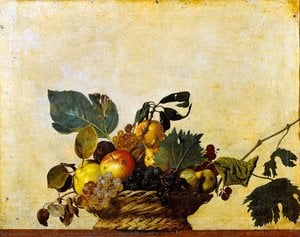
- Subject Matter: The painting depicts a young man reclining on a bedsheet, clutching bunches of grapes in his left hand. Alongside him rests an apple, symbolizing temptation and mortality – motifs frequently employed by Baroque artists to convey moral lessons.
- Style & Technique: Caravaggio’s signature technique—tenebrism—dominates the composition. This dramatic chiaroscuro effect utilizes stark contrasts between light and dark, plunging the scene into deep shadows while highlighting specific areas of illumination. The artist meticulously rendered skin tones with astonishing realism, capturing subtle nuances of flesh color that defied previous artistic conventions.
- Historical Context: Caravaggio’s work arose during a period marked by religious fervor and artistic experimentation following the Counter-Reformation. He sought to reinvigorate religious art by portraying biblical figures with unflinching honesty—often depicting them as ordinary men grappling with profound spiritual dilemmas. ‘Sick Bacchus,’ commissioned likely for Cardinal Scipione Borghese, exemplifies this commitment to psychological depth and emotional resonance.
Symbolism: Beyond the obvious depiction of fruit – representing abundance and fertility – the apple serves as a potent symbol of sin and decay, mirroring the biblical story of Adam and Eve. The man’s posture conveys vulnerability and illness, suggesting introspection and confronting mortality—themes that resonate powerfully with viewers even today. Caravaggio deliberately eschewed idealized beauty, favoring instead an unflinching portrayal of human imperfection.
- Emotional Impact: ‘Sick Bacchus’ transcends mere visual representation; it evokes a palpable sense of melancholy and contemplation. The artist's masterful use of light and shadow creates an atmosphere of intimacy and vulnerability, inviting the viewer to engage in a dialogue with the subject’s inner turmoil.
- Legacy: Caravaggio’s influence extended far beyond his lifetime, inspiring generations of artists who embraced tenebrism and sought to capture the complexities of human emotion. His uncompromising realism challenged artistic dogma and established him as one of the most transformative figures in Baroque art history.
Conclusion: Caravaggio's ‘Sick Bacchus’ remains a testament to his unparalleled ability to convey profound psychological truths through masterful technique and evocative imagery—a painting that continues to captivate audiences with its haunting beauty and enduring relevance. Its reproduction offers an opportunity to experience the emotional power of Baroque art firsthand, bringing Caravaggio’s vision into any interior space.
الأسئلة والأجوبة
إلى أي لون يميل "sick bacchus"؟
تطغى على "sick bacchus" للفنان كارافاجيو مسحة من اللون Ochre to Sepia.
كيف يربط عمل "sick bacchus" للفنان كارافاجيو بين Baroque والوطن الأم للفنان؟
أبدع كارافاجيو لوحة "sick bacchus"، وهو من مواليد إسبانيا، وذلك ضمن حركة Baroque. وتربط أصول الفنان هذا العمل بحركة Baroque كما يمارسها فنانون من إسبانيا.
هل تبدو ألوان "sick bacchus" قوية أم هادئة؟
تتميز شدة ألوان "sick bacchus" بأنها Monochromatic. وتصف الشدة مدى قوة ووضوح الألوان.



 معاينة الحجم الواقعي
 اطلب نسخة مرسومة يدويًا
 إرسال
إرسال مشاركة
 عرض التفاصيل
 دليل الأعمال الفنية للطلاب

 تحميل
تحميل
 قطع مشابهة
 الأشعة السينية
 عرض شرائح متتابع
 الإحصائيات
 اقرأ المزيد






































 خيار الزجاج متاح فقط للمقاسات التي تقل عن 110 سم