A Divine Vision in Three Acts
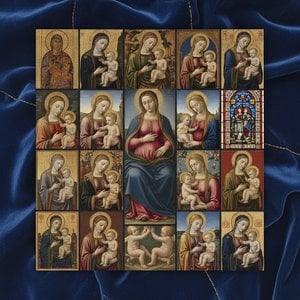
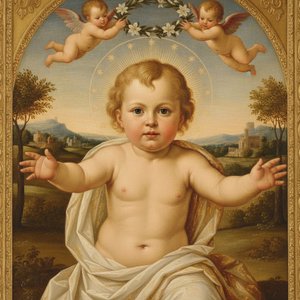
In the quiet, hallowed atmosphere of the mid-15th century, the Venetian master Antonio Vivarini breathed life into a sacred narrative that transcends the boundaries of mere paint and wood. His Triptych, dating to 1446, serves as a profound window into the devotional heart of the Renaissance. This monumental work is not merely a painting but a theatrical arrangement of faith, structured in three distinct panels that guide the viewer through a celestial journey. At its core, the central panel presents a tender, intimate moment: the Virgin Mary cradling the infant Jesus, surrounded by a community of faithful observers. The composition breathes with a sense of communal devotion, where every figure—from the closest attendants to the distant onlookers—seems caught in a shared moment of spiritual awe.
The artistry of Vivarini is characterized by an exquisite attention to detail that invites the eye to linger on the subtle textures of fabric and the soft, luminous glow of divine light. In the flanking panels, the narrative expands, offering glimpses of secondary scenes that deepen the theological complexity of the work. On the left, figures stand in contemplative observation, their presence grounding the heavenly scene in a human reality, while the right panel continues the unfolding story with a poignant focus on the continuity of the holy lineage. The technique employed here reflects the mastery of the Murano school, where vibrant pigments and precise linework create a sense of depth and architectural grandeur, making the figures appear as if they are emerging from a sacred space into our own.
Symbolism and the Renaissance Spirit
To behold this Triptych is to engage with the very essence of sacra conversazione—the holy conversation. Every element within the frame is imbued with symbolic weight; the positioning of the figures suggests a hierarchy of sanctity, while the architectural elements in the background hint at the enduring strength of the Church. The interplay of light and shadow does more than define form; it acts as a metaphor for divine enlightenment piercing through the earthly realm. For the collector or the designer, this piece offers more than just aesthetic beauty; it provides a profound emotional anchor. It captures a moment of stillness in an ever-changing world, evoking a sense of peace, reverence, and timelessness.
Integrating a high-quality reproduction of such a masterpiece into a contemporary interior allows for a sophisticated dialogue between history and modernity. Whether placed in a grand gallery or a curated study, the Triptych commands attention through its scale and narrative depth. It serves as a centerpiece that inspires contemplation, making it an ideal choice for those who seek to surround themselves with art that possesses both intellectual rigor and soulful resonance. This work remains a testament to Antonio Vivarini's ability to translate the intangible mysteries of faith into a visual language that continues to captivate the human spirit centuries later.
الأسئلة والأجوبة
ما هي المكانة التي تحتلها "Triptych" للفنان أنطونيو فيفاريني في تاريخ الفن؟
تنتمي "Triptych" للفنان أنطونيو فيفاريني إلى حركة Early Renaissance، ضمن حقبة Renaissance. ويمنح هذا المزيج العمل مكانته في تاريخ الفن.
أين يمكنني العثور على دليل لـ "Triptych"؟
تتوفر صفحة دليل تعليمي لعمل "Triptych" للفنان أنطونيو فيفاريني: وهي عبارة عن ورقة حقائق قابلة للطباعة حول العمل الفني، مُصممة خصيصاً للطلاب والاستخدام في الفصول الدراسية.
إلى أي تيار فني تنتمي "Triptych" للفنان أنطونيو فيفاريني؟
"Triptych" هو عمل ينتمي إلى مدرسة Early Renaissance. وتُشير هذه المدرسة إلى التقليد الفني الذي يندرج ضمنه هذا العمل.



 معاينة الحجم الواقعي
 التبديل إلى المطبوعات
 إرسال
إرسال مشاركة
 عرض التفاصيل
 دليل الأعمال الفنية للطلاب

 تحميل
تحميل
 قطع مشابهة
 الأشعة السينية
 عرض شرائح متتابع
 الإحصائيات


 اقرأ المزيد






































 خيار الزجاج متاح فقط للمقاسات التي تقل عن 110 سم