احصل على صورة رقمية عالية الدقة ومعزّنة، بجودة تفوق بكثير المعاينة عبر الإنترنت.
يتم إعداد كل ملف بعناية فائقة من قبل متخصصينا الداخليين باستخدام أدوات متقدمة ولمسات يدوية خبيرة. نضمن أن تتمتع كل صورة بوضوح استثنائي، ودقة لونية متناهية، وتفاصيل دقيقة.
يتم تسليم الملف النهائي عبر البريد الإلكتروني في غضون 72 ساعة، وهو مُحسَّن للاستخدام الفوري في المجالات المهنية والتحريرية ومجالات الطباعة. هذه هي ذات الجودة التي تعتمد عليها كبرى استوديوهات التصميم ودور النشر والمعارض الفنية المرموقة.
حمّل ملفاً عالي الدقة للعرض الشخصي، والطباعة، والمشاريع الإبداعية. ( التحويل إلى المطبوعات
اشترِ لوحة مرسومة يدويًا)
عندما تختار WahooArt.com، فأنت لا تحصل على مجرد صورة فحسب، بل ستحصل على عمل فني رقمي مُحسّن باحترافية، صُمم بدقة متناهية ومصحوب بضمان الرضا. إليك كل ما يتضمنه طلبك تلقائياً:
ستصلك ملفات صورك الرقمية عالية الدقة عبر البريد الإلكتروني في غضون 72 ساعة من إتمام الطلب - لتكون جاهزة للاستخدام الفوري.
يتم تحسين عملك الفني باحترافية باستخدام أدوات الذكاء الاصطناعي المتقدمة والتحرير اليدوي، لضمان أقصى درجات التفاصيل والوضوح ودقة الألوان.
هل حذفت ملفك أو فقدته عن طريق الخطأ؟ لا تقلق - سنعيد إرساله إليك في أي وقت، ومجاناً.
استمتع بأعمالك الفنية فوراً دون أي رسوم جمركية أو ضرائب أو مصاريف شحن - فالتحميلات الرقمية دائماً ما تكون معفاة من الضرائب.
نحن نضمن أن تعكس صورتك الرقمية الألوان الأصلية بأقصى قدر ممكن من الدقة، وذلك باستخدام أدوات احترافية وتقنيات إدارة الألوان.
إذا لم تكن راضياً عن صورتك الرقمية، فسنقوم بتعديلها أو استرداد 100% من قيمتها خلال 100 يوم - دون طرح أي أسئلة.
لم تكن راضياً؟ استرد كامل المبلغ خلال 100 يوم من استلام ملفك الرقمي - دون طرح أي أسئلة.
اشتري 3 صور، ووفر 10% - اشتري 5، ووفر 15% - اشتري +10، ووفر 20%. مثالية للمشاريع الإبداعية، والمعارض، والوكالات.
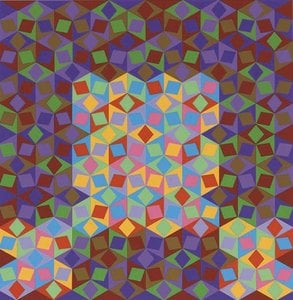
In the vibrant tapestry of mid-century textile design, few works capture the exuberant spirit of the era quite like Anna Borkowska’s Clothing Fabric. Created in 1973, this mesmerizing piece serves as a masterclass in color theory and geometric rhythm. At first glance, the eye is swept into a rhythmic dance of chromatic squares, arranged in a meticulous grid that evokes the precision of a mosaic. Each cell within this textile holds a fragment of the visible spectrum, transitioning seamlessly from fiery reds and sun-drenched yellows to deep indigos and soft violets. This deliberate arrangement does more than merely decorate; it creates a sense of perpetual motion, where the eye is never permitted to rest, but rather invited to wander through a luminous landscape of hue and light.
Interspersed among these bold color blocks are delicate floral motifs that soften the geometric rigor of the design. These botanical whispers add a layer of organic complexity, breaking the mathematical precision of the grid with the grace of nature. The interplay between the structured squares and the fluid, blossoming shapes creates a tension that is both visually stimulating and deeply harmonious. To touch this work—even through the medium of a high-quality reproduction—is to sense the phantom presence of the individual threads and yarns that compose its soul. The visible texture of the weave lends an artisanal depth to the piece, reminding the viewer of the meticulous craftsmanship required to marry such bold saturation with intricate detail.
To truly appreciate this textile, one must look through the lens of Anna Borkowska’s extraordinary life. A survivor of the profound displacements of the mid-20th century, Borkowska possessed a unique ability to weave resilience into her art. Having endured the hardships of Siberian resettlement, her work often transcends simple decoration to become a vessel for memory and continuity. In Clothing Fabric, we see this manifested as a celebration of vitality. The saturated colors and rhythmic patterns act as an emotional counterpoint to the turbulence of history, offering a sanctuary of brightness and order. It is as if the artist sought to reconstruct a sense of wholeness through the very threads she manipulated.
For the discerning collector or interior designer, this piece offers unparalleled versatility. Its bold, kaleidoscopic nature makes it a commanding focal point in a contemporary setting, yet its mid-century roots allow it to integrate seamlessly into more traditional or eclectic environments. Whether rendered as a large-scale wall hanging that breathes life into a minimalist room or used as an accent piece to introduce warmth to a sophisticated study, the artwork provides a profound emotional impact. It is not merely a pattern on fabric; it is an invitation to experience the enduring power of color and the beautiful, structured chaos of the natural world.
The life of Anna Borkowska (1916–2008) was a profound tapestry woven from the threads of displacement, survival, and an unyielding creative spirit. Born in Mykolaiv, her early years were defined by the seismic shifts of the twentieth century, as the shadows of World War II and the subsequent Soviet occupation of Poland reshaped her destiny. Forced into the harrowing reality of Siberian resettlement, Borkowska experienced firsthand the fragility of home and the weight of exile. It was within this crucible of hardship that her artistic identity began to coalesce, not merely as a means of aesthetic expression, and but as a vital vessel for preserving the memories that the tides of history sought to erase.
While many of her contemporaries sought refuge in the traditional realms of representational painting, Borkowska turned toward the tactile and intimate medium of textile art. For her, fabric was more than a surface; it was a repository for the intangible emotions of loss and nostalgia. Her work often bypassed literal imagery in favor of a sophisticated abstraction, utilizing color palettes that evoked the melancholic beauty of the Baltic Sea. These cool blues and shifting tones served as a visual metaphor for both the tranquility of memory and the turbulent currents of her own life’s journey. Through meticulous craftsmanship, she transformed cloth into a landscape of the subconscious, where every stitch and dye could represent the enduring strength found in the face of vulnerability.
Borkowska’s ability to convey deep human connection extended far beyond the loom and the watercolor brush. She possessed a rare, empathetic presence that allowed her to bridge the gap between visual art and dramatic performance. This unique sensitivity earned her international acclaim when she appeared in Jafar Panahi’s cinematic masterpiece, The White Balloon (1995). In portraying the benevolent elderly woman, she utilized her lived experience of resilience to breathe life into a character that resonated with audiences worldwide. This role served as a poignant intersection of her two worlds, where the same emotional depth found in her textile designs was mirrored in her ability to capture the essence of human connection on screen.
The significance of her oeuvre lies in its ability to turn personal trauma into universal themes of reclamation and healing. Her notable works, such as Clothing Fabric (1972), demonstrate a mastery of watercolor design that captures a sense of movement and fluidity. To study Borkowska’s art is to engage with the following elements of her legacy:
Ultimately, Anna Borkowska remains a vital figure in the history of twentieth-century art, representing a bridge between the personal struggles of the displaced and the universal language of abstraction. Her work stands as a testament to the idea that even when one's homeland is lost, the essence of identity can be rewoven, thread by thread, into something enduring and beautiful.

1916 - 2008 , روسيا