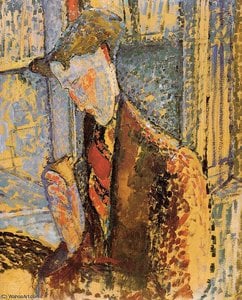
A Vision of Melancholy Beauty
In the quiet, evocative realm of Amedeo Clemente Modigliani’s 1915 masterpiece, “The Fat Child,” viewers are invited into a profound exploration of emotion and form. This portrait transcends mere representation, serving as a poignant window into the human psyche during an era of immense artistic transition. Painted amidst the shadows of World War I, the work captures a sense of vulnerability and quiet contemplation that has captivated collectors and art enthusiasts for over a century. The subject, rendered with a striking yet unsettling grace, gazes out with an intensity that suggests a deep, internal dialogue, offering an intimate glimpse into Modigliani’s unique ability to capture the soul behind the skin.
The painting is a quintessential example of Expressionism, a movement where the artist's subjective experience takes precedence over objective reality. Modigliani, deeply influenced by the philosophical provocations of Nietzsche, sought to reject traditional morality and meticulous realism in favor of a more visceral, emotional truth. In “The Fat Child,” this is achieved through his signature stylistic distortions: the subtle elongation of features, the stylized almond-shaped eyes, and simplified contours that lend the figure an almost sculptural presence. These deliberate aesthetic choices do not aim to deceive the eye but rather to amplify the emotional resonance of the subject, creating a tension between the physical form and the spiritual weight it carries.
Technical Mastery and Textural Depth
The technical execution of “The Fat Child” reveals Modigliani’s profound command over his medium. Utilizing oil on canvas, the artist achieved a delicate balance between dynamism and stillness. Through the meticulous application of layered pigments, he created a surface characterized by a velvety finish and nuanced tonal gradations. The brushstrokes, while bold and controlled, contribute to a rich textural landscape that invites close inspection. One can observe subtle variations in color and shading that hint at the artist's deep attunement to light and shadow, allowing the warmth of the subject's face to contrast beautifully with the more somber, atmospheric surroundings.
For the discerning interior designer or art collector, this piece offers an unparalleled opportunity to introduce a sense of historical depth and sophisticated emotion into a space. The painting’s palette—rich with earthy tones and striking highlights—provides a focal point that is both commanding and contemplative. Whether placed in a modern gallery setting or a classic, curated study, a high-quality reproduction of this work brings with it the haunting elegance of the École de Paris. It serves not just as decoration, but as a conversation piece that embodies the timeless allure of Modigliani’s vision: a world where beauty is found in the most profound moments of human longing and introspection.
الأسئلة والأجوبة
هل يمكنني معاينة "The Fat Child" للفنان أميديو موديجلياني على جداري الخاص قبل الشراء؟
يمكنك معاينة "The Fat Child" للفنان أميديو موديجلياني على جدارك الخاص عبر صفحة معاينة الواقع المعزز الخاصة بالعمل الفني، وذلك باستخدام تقنية الواقع المعزز على جهاز متوافق.
ما هي الزاوية الأنسب في المنزل لوضع نسخة من "The Fat Child"؟
المساحة الموصى بها لـ "The Fat Child" للفنان أميديو موديجلياني هي Living Room. وبالطبع، يمكن تكييف هذا الاقتراح بما يتناسب مع ديكور منزلك.
ما هي الاستخدامات المقترحة لـ "The Fat Child" للفنان أميديو موديجلياني؟
الاستخدام المقترح لـ "The Fat Child" للفنان أميديو موديجلياني هو Accent، كما يمكن استخدامه لأغراض أخرى أيضاً.



 معاينة الحجم الواقعي
 اطلب نسخة مرسومة يدويًا
 إرسال
إرسال مشاركة
 عرض التفاصيل
 دليل الأعمال الفنية للطلاب

 تحميل
تحميل
 قطع مشابهة
 الأشعة السينية
 عرض شرائح متتابع
 Q&A
Q&A الإحصائيات

 اقرأ المزيد






































 خيار الزجاج متاح فقط للمقاسات التي تقل عن 110 سم