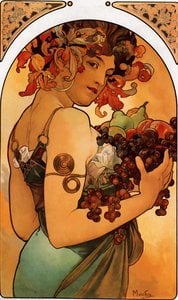
طباعة جيكلي أو كانفاس بجودة المتاحف، مع سرعة في التنفيذ وخيارات متنوعة للتشطيب. ( شراء لوحة مرسومة يدويًا الانتقال إلى الصورة الرقمية)





























اختر من بين أحجامنا المُعدّة مسبقاً والتي تتوافق مع النسب الأصلية للعمل الفني.

أدخل العرض والارتفاع المطلوبين ليتناسب المقاس مع إطارك أو جدارك. يرجى الملاحظة أن المطبوعة يمكن قصها فقط ولا يمكن تكبيرها لتتجاوز أبعاد الصورة الأصلية، لذا فإن اختيار مقاس بأبعاد مختلفة سيؤدي إلى فقدان جزء من الصورة. سنرسل لك نموذجاً رقمياً تجريبياً لاعتماده قبل البدء في عملية الطباعة. الصورة المعروضة في هذه الصفحة لا توضح شكل القص الفعلي — النموذج التجريبي فقط هو ما يظهر ذلك بدقة.
توصيل عالمي إلى خلال أسبوعين بدلاً من المدة القياسية البالغة 4/5 أسابيع. (16 نوفمبر)
Topaz
مقاس النسخة المطبوعة
Alphonse Maria Mucha (1860 – 1939), born in Ivanačice, Moravia, stands as a monumental figure within the Art Nouveau movement—a stylistic revolution that swept across Europe between 1890 and 1910. Rejecting the academic conventions of his time, Mucha forged an utterly original path, prioritizing fluidity, ornamentation, and a profound connection to nature’s rhythms.
His formative years were marked by a rebellious spirit; disillusioned with the rigid formalism of Prague’s Academy of Fine Arts, he abandoned traditional painting for illustration—a decision that proved pivotal in shaping his distinctive aesthetic. Paris beckoned in 1887, offering him not only artistic freedom but also exposure to influential avant-garde circles.
Mucha's style is instantly recognizable: a mesmerizing blend of organic forms and stylized lines reminiscent of flowing drapery and blossoming flowers. Heavily influenced by artists like Pierre-Auguste Renoir and Gustave Moreau, Mucha developed a technique characterized by meticulous watercolor washes layered upon textured paper—a process that captured the ethereal beauty he sought to convey.
His most celebrated works exemplify this approach. “The Slavonic Uprising,” for instance, brilliantly synthesizes Czech folklore with Art Nouveau’s decorative sensibilities. The painting depicts a woman warrior adorned in flowing robes and intricate floral motifs, embodying strength and grace simultaneously. Mucha's masterful use of color—particularly vibrant yellows and oranges—amplifies the emotional resonance of the scene.
Beyond mere decoration, Mucha imbued his images with symbolic meaning. Recurring motifs such as lilies, peacocks, and serpents represent purity, nobility, and primal forces respectively – elements carefully orchestrated to communicate complex narratives within a visually captivating framework. His illustrations for publications like “Salon des Cent” and “Young Farmers Breaking Flax” further cemented his reputation as a visionary artist who transcended stylistic boundaries.
The legacy of Alphonse Mucha extends far beyond the confines of Art Nouveau itself. His influence can be discerned in subsequent artistic endeavors, demonstrating the enduring power of his aesthetic principles. Today, reproductions of Mucha’s paintings continue to inspire interior designers and collectors alike—testament to the timeless beauty and intellectual depth of a singular artistic genius.
تتناغم الأجواء Elegant للوحة "Topaz" للفنان ألفونس دس موتشا مع المساحة المقترحة لها: Living Room.
ينتمي العمل "Topaz" إلى الفترة Mature Period من مسيرة ألفونس دس موتشا المهنية، مما يربط هذا العمل بمراحل تطور الفنان الفني.
تعتمد لوحة "Topaz" للفنان ألفونس دس موتشا مجموعة ألوان Earthy، وهي مجموعة تُجسد الطابع اللوني العام للعمل.

1860 - 1939 , جمهورية التشيك

Explore 25 iconic Modigliani masterpieces and their soulful stories. Discover the full collection online at WahooArt.com.

Explore the profound evolution of Early Modernism. From Post-Impressionist structure to the radical fragmentation of Cubism, discover how the avant-garde redefined perception through a masterclass in art history and aesthetic revolution.

Explore the profound transition from Cézanne’s structural Post-Impressionism to the revolutionary fractured forms of Cubism. A sophisticated journey through the evolution of modern art for the discerning collector and connoisseur of fine art history.

Discover the enchanting world of Art Nouveau. Explore the flowing lines of Alphonse Mucha and learn how to integrate these timeless, organic masterpieces into your collection with expert guidance on fine art appreciation and preservation.
 معاينة الحجم الواقعي

 مشاركة
 مشاركة
 التفاصيل
 دليل


 تحميل الملف
 قطع مشابهة
 الأشعة السينية
 عرض شرائح
 الأسئلة والأجوبة

 الإحصائيات


 عرض المزيد









 خيار الزجاج متاح فقط للمقاسات التي تقل عن 110 سم