1602 - 1644

基本信息

  • Top-ranked work: Transverse flute in D front
  • Art period: Early Modern
  • Works on APS: 5
  • Top 3 works: Transverse flute in D front
  • Color intensity: balanced
  • Lifespan: 42 years
  • Born: 1602, Cambrai, France

The Flemish Master of Light and Shadow: The Life of Vincent Malò I

In the grand tapestry of the seventeenth century, few threads are as vibrant yet elusive as that of Vincent Malò I. Born in the historic city of Cambrai around 1602, Malò emerged from the rich artistic tradition of Flanders to become a bridge between the structured elegance of Mannerism and the dramatic, emotive power of the Baroque. His journey was one of profound geographical and stylistic transformation, beginning in the bustling workshops of Antwerp and culminating in the sun-drenched, culturally opulent landscapes of Italy. To study Malò is to witness the evolution of an artist who absorbed the very essence of the Flemish masters and breathed new life into them through a Mediterranean lens.

The foundations of Malò’s genius were laid in the legendary studios of Antwerp, where he stood under the direct or indirect tutelage of titans such as Peter Paul Rubens and David Teniers the Elder. This early immersion provided him with an unparalleled technical vocabulary. From Rubens, he inherited a command over dynamic composition and a sophisticated use of color; from Teniers, he gained a meticulous eye for the nuances of genre painting and the delicate textures of everyday life. These formative years were not merely about learning technique, but about absorbing a way of seeing—a method of capturing the psychological depth of his subjects through the interplay of light and shadow, or chiaroscuro.

A Journey to the Italian Peninsula

Around 1634, Malò’s artistic trajectory took a decisive turn as he migrated toward Italy, a move that would redefine his identity. In Genoa, he became known by the more Italianate name Vincenzo Malò, a testament to how deeply he integrated into the Ligurian cultural fabric. This period of his life was marked by a fruitful collaboration with the Flemish artist Cornelis de Wael, creating a creative crossroads where Northern precision met Southern passion. The vibrant atmosphere of Genoa, with its magnificent churches and aristocratic palaces, provided the perfect stage for Malò to expand his repertoire.

His work during this Italian period began to reflect a fascinating stylistic synthesis. While his roots remained firmly planted in the Flemish tradition, his canvases started to pulse with the energy of the Italian Baroque. He moved effortlessly between diverse subject matters, demonstrating a versatility that few of his contemporaries could match:

  • Religious Narratives: His monumental commissions, such as the Cenacle in the Oratory of SS. Peter and Paul, showcased his ability to handle large-scale, spiritually profound compositions.
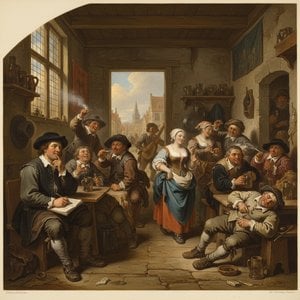
  • Genre Scenes: Carrying forward the legacy of Teniers, he captured the charm and intimacy of daily life with a painterly grace.
  • Mythological and Portrait Works: He utilized the dramatic lighting of the era to imbue mythological figures and individual portraits with a sense of living presence and psychological complexity.

Legacy and Artistic Significance

Though his life was relatively short, ending in Rome in 1644 at approximately forty-two years of age, Malò’s impact resonated far beyond his final breath. He did not merely replicate the styles of his masters; he synthesized them into a unique visual language that spoke to the changing tastes of a Europe transitioning into the height of the Baroque era. His ability to navigate the transition from the more rigid Mannerist traditions to the fluid, expressive movements of the mid-seventeenth century marks him as a pivotal figure in art history.

Beyond his individual canvases, Malò’s legacy lived on through his lineage and his studio. By mentoring Vincent Malò II, he ensured that the technical brilliance and stylistic innovations he championed would continue to influence subsequent generations of painters. Today, when we look upon the works attributed to this "Great Master," as described by the biographer Cornelis de Bie, we see more than just paint on canvas; we see the enduring spirit of an artist who successfully united the industrious heart of Flanders with the luminous soul of Italy.

问答详情

Vincent Malò I 出生于哪个国家?

Vincent Malò I 出生于 France。

Vincent Malò I 的作品传达了怎样的情绪?

艺术家的 心情空间 页面展示了 Vincent Malò I 按氛围分类排列的艺术作品。

我可以通过关键词来探索 Vincent Malò I 的作品吗?

若要按特定主题查找 Vincent Malò I 的作品,请访问艺术家的 按关键词检索 页面,该页面通过关键词对作品进行了分类整理。

Vincent Malò I 出生于哪个城市和国家?

Vincent Malò I 出生于 France 的 Cambrai。

如何查看 Vincent Malò I 的所有作品?

您可以在 Vincent Malò I 的 全部作品 页面上浏览其在 本网站 上的所有作品。

是否有关于 Vincent Malò I 的生平年表?

您可以在艺术家的 艺术编年史 页面上查阅 Vincent Malò I 作品的编年史,其作品按创作顺序分章节依次呈现。

Vincent Malò I 的出生地和出生年份是?

Vincent Malò I 于 1602 出生于 Cambrai。

艺术知识测评

每道题只有一个正确答案。

问题 1:
Where was Vincent Malò born?
问题 2:
Who did Vincent Malò initially train under in Antwerp?
问题 3:
What artistic style is characteristic of Vincent Malò's mature works?
问题 4:
With whom did Vincent Malò collaborate on painting projects in Genoa?
问题 5:
What is Vincent Malò known for portraying in his paintings?