Utashige:24 幅最著名的画作

Fifty-three parallel views of the Tōkaidō, station 55 (1845) 是 Utashige 最著名的画作,现由位于 布哈兰斯 的 Bujalance Collection 收藏。 Station 30, Hamamatsu (1841) 和 Vertical Tōkaidō, station 30 (1855) 是世界上知名度最高的两件作品。 在 Utashige 的 24 件作品中,我们为您精选了收藏家和博物馆观众最关注的 24 件作品,并附上创作年份、馆藏机构及每件作品背后的故事。

排名依据为我们的热度评分,该评分综合了每件作品的搜索量、访问量及订单量。更新于 October 2026。

Utashige 肖像
Utashige
流派
Ukiyo-e
目录中的作品
24
最知名
Fifty-three parallel views of the Tōkaidō, station 55 (1845)
馆藏作品最多于
布鲁克林博物馆

前10名:Utashige 最著名的画作

Fifty-three parallel views of the Tōkaidō, station 55 (1845) 由 Utashige
1

Fifty-three parallel views of the Tōkaidō, station 55

1845 · Woodblock Print · Bujalance Collection, 布哈兰斯

In the delicate interplay of line and color found within Fifty-three parallel views of the Tōkaidō, station 55, we are transported to a vanished era of Japanese history. This exquisite woodblock print, part of a collaborative masterpiece created in 1845, captures a moment of profound intimacy amidst the broader journey of the Tōkaidō road. The scene unfolds with two women locked in a tender, silent exchange; one gently cradles the…

Station 30, Hamamatsu (1841) 由 Utashige
2

Station 30, Hamamatsu

1841 · Woodblock Print · 印第安纳波利斯艺术博物馆, 印第安纳波利斯

The dust of the road rises softly beneath the hooves of a traveling party in Hamamatsu. Nine horses move through the landscape, their riders settled into the rhythm of a long trek across the Japanese countryside. There is a sense of purposeful motion here, as if the group is caught mid-stride on their way toward a distant village or town. Above this procession, a single bird cuts through the air,…

Vertical Tōkaidō, station 30 (1855) 由 Utashige
3

Vertical Tōkaidō, station 30

1855 · Woodblock Print · Bujalance Collection, 布哈兰斯

In the delicate interplay of ink and paper, Vertical Tōkaidō, station 30 emerges as a breathtaking window into the soul of nineteenth-century Japan. Created in 1855 by the legendary ukiyo-e master Utagawa Hiroshige, this woodblock print captures a moment of profound stillness along one of Japan's most iconic travel routes. The composition invites the viewer to wander through a coastal landscape where the rhythmic pulse of the sea meets the…

Vertical Tōkaidō, station 8 (1855) 由 Utashige
4

Vertical Tōkaidō, station 8

1855 · Woodblock Print · Bujalance Collection, 布哈兰斯

In the delicate strokes of Vertical Tōkaidō, station 8, we are invited to step into a moment frozen in time, captured by the legendary hand of Utagawa Hiroshige. This exquisite piece, dating from 1855, serves as more than just a landscape; it is a poetic window into the Edo period's soul. The composition unfolds with a breathtaking sense of depth, where lush, verdant mountains rise majestically against a sky that…

Station 31, Maisaka, Imagiri Ferry (1841) 由 Utashige
5

Station 31, Maisaka, Imagiri Ferry

1841 · Woodblock Print · 印第安纳波利斯艺术博物馆, 印第安纳波利斯

In the delicate dance of lines and colors that defines the Ukiyo-e tradition, few works capture the serene rhythm of Edo-period Japan as poignantly as Station 31, Maisaka, Imagiri Ferry. Created by the legendary master Utagawa Hiroshige in 1841, this woodblock print invites the viewer to step onto a vessel traveling through time. The composition is a masterful study of balance, where the vast, misty mountains of the background provide…

Fifty-three parallel views of the Tōkaidō, station 11 (1845) 由 Utashige
6

Fifty-three parallel views of the Tōkaidō, station 11

1845 · Woodblock Print · Bujalance Collection, 布哈兰斯

In the delicate interplay of line and color found within Fifty-three parallel views of the Tōkaidō, station 11, we encounter a profound moment of serenity captured from the golden age of Japanese ukiyo-e. Created in 1845, this exquisite woodblock print is part of a collaborative masterpiece that brought together the most formidable talents of the Utagawa school: Hiroshige, Kunisada, and Kuniyoshi. The artwork invites the viewer to step away from…

Fujieda - Changing Porters and Horses (1833) 由 Utashige
7

Fujieda - Changing Porters and Horses

1833 · Woodblock Print · 印第安纳波利斯艺术博物馆, 印第安纳波利斯

In this 1833 composition, we find ourselves at a bustling coastal intersection where the rhythm of travel dictates the movement of every living thing. The scene captures a specific, transient moment in Fujieda, where the heavy labor of transport is in a state of flux. Horses and carts are gathered near the water's edge, their presence suggesting the constant ebb and flow of goods and people along the coast. There…

Arai, watashi-bune no zu (Ferryboat) (1833) 由 Utashige
10

Arai, watashi-bune no zu (Ferryboat)

1833 · Woodblock Print · 印第安纳波利斯艺术博物馆, 印第安纳波利斯

The woodblock print depicts a ferryboat positioned upon a body of water. Within the vessel, nine individuals are visible in various states of repose or activity. Some passengers sit while others lie down, their forms arranged according to the contours of the boat. The water occupies the foreground and middle ground, while a mountainous landmass rises in the background. Several birds are captured in flight around the vessel, adding movement…

Utashige 排名其余部分,从 11 到 24

Fuchu 由 Utashige
#16

Fuchu

毕尔巴鄂美术馆
Kusatsu 由 Utashige
#19

Kusatsu

毕尔巴鄂美术馆

Utashige 最常描绘的主题

这些杰作中最常出现的四个主题,以及各主题的最佳代表作。

在哪里可以欣赏到 Utashige 的画作

收藏了本页中大部分画作的 6 家博物馆。

博物馆 城市 Utashige 的作品 此列表中的画作
布鲁克林博物馆, 布鲁克林布鲁克林博物馆 布鲁克林 8 Kasumigaseki, No. 2 in One Hundred Famous Views of Edo, Yatsumi Bridge, No. 45 from One Hundred Famous Views of Edo, Furukawa River, Hiroo, No. 22 in One Hundred Famous Views of Edo
印第安纳波利斯艺术博物馆, 印第安纳波利斯印第安纳波利斯艺术博物馆 印第安纳波利斯 6 Station 30, Hamamatsu, Station 31, Maisaka, Imagiri Ferry, Fujieda - Changing Porters and Horses
Bujalance Collection, 布哈兰斯Bujalance Collection 布哈兰斯 4 Fifty-three parallel views of the Tōkaidō, station 55, Vertical Tōkaidō, station 30, Vertical Tōkaidō, station 8
Museum of Far Eastern Antiquities, StockholmMuseum of Far Eastern Antiquities Stockholm 2 Woodcut, Woodcut
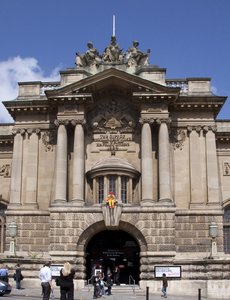
布里斯托博物馆与美术馆, 布里斯托布里斯托博物馆与美术馆 布里斯托 2 Rain at Azuma Bridge below Kinryūzan Temple in Asakusa, Sparrows and Camellia in Snow
毕尔巴鄂美术馆, 毕尔巴鄂毕尔巴鄂美术馆 毕尔巴鄂 2 Fuchu, Kusatsu

Utashige 的数十年历程:每一十年的一件杰作

  1. 1830s
    Fujieda - Changing Porters and Horses (1833) 由 Utashige
    第 7 / 共 24

    Fujieda - Changing Porters and Horses

    印第安纳波利斯艺术博物馆

    In this 1833 composition, we find ourselves at a bustling coastal intersection where the rhythm of travel dictates the movement of every living thing. The scene captures a…

  2. 1840s
  3. 1850s
    Vertical Tōkaidō, station 30 (1855) 由 Utashige
    第 3 / 共 24

    Vertical Tōkaidō, station 30

    Bujalance Collection

    In the delicate interplay of ink and paper, Vertical Tōkaidō, station 30 emerges as a breathtaking window into the soul of nineteenth-century Japan. Created in 1855 by the…

Utashige 的画作:常见问题

Utashige 最著名的画作是什么?显示答案

Fifty-three parallel views of the Tōkaidō, station 55 (1845),Bujalance Collection, 布哈兰斯。紧随其后的是Station 30, Hamamatsu (1841)和Vertical Tōkaidō, station 30 (1855)。

哪十幅是 Utashige 最著名的画作?显示答案

Fifty-three parallel views of the Tōkaidō, station 55, Station 30, Hamamatsu, Vertical Tōkaidō, station 30, Vertical Tōkaidō, station 8, Station 31, Maisaka, Imagiri Ferry, Fifty-three parallel views of the Tōkaidō, station 11, Fujieda - Changing Porters and Horses, Woodcut, Woodcut 及 Arai, watashi-bune no zu (Ferryboat)。上方排名列出了每件作品的创作年份及所属博物馆。

Utashige 有多少幅作品?显示答案

我们的目录收录了 Utashige 的 24 件作品,创作时间从 1833 年至 1858 年。

在哪里可以欣赏到最著名的 Utashige 作品?显示答案

其中大部分藏于 布鲁克林博物馆 (布鲁克林), 印第安纳波利斯艺术博物馆 (印第安纳波利斯) 及 Bujalance Collection (布哈兰斯)。上表逐一列出了这些博物馆。

Utashige 的代表作创作于哪个时期?显示答案

在 1840s 期间:本页 24 件作品中有 8 件创作于该时期,其中包含 Fifty-three parallel views of the Tōkaidō, station 55。

Utashige 最早的成名作与最新的作品分别是哪几件?显示答案

本页最早的作品创作于 Fujieda - Changing Porters and Horses (1833),最晚于 Woodcut (1858)。

Utashige 创作过哪些题材的作品?显示答案

在本文页面的 24 件作品中,共有 Landscape (5), Japanese landscape (3) 及 Mountains (3) 件 Landscape (5), Japanese landscape (3) 及 Mountains (3)

Utashige 使用了什么材质和颜料进行创作?显示答案

Woodblock Print:本页 24 件作品中的第 8 件

Utashige 的艺术属于哪种流派?显示答案

正如本页展示的画作所体现的那样,Ukiyo-e。

布鲁克林博物馆收藏了哪些Utashige的作品?显示答案

Kasumigaseki, No. 2 in One Hundred Famous Views of Edo, Yatsumi Bridge, No. 45 from One Hundred Famous Views of Edo 及 Furukawa River, Hiroo, No. 22 in One Hundred Famous Views of Edo 是该页面中由 布鲁克林博物馆, 布鲁克林 收藏的 8 件作品之一。

Utashige:简介

A Life Immersed in the Floating World: The Journey of Utagawa Hiroshige

Born Andō Tokutarō in 1797, within the bustling heart of Edo (modern Tokyo), Utagawa Hiroshige’s path to becoming Japan's last great ukiyo-e master was not one initially paved with artistic ambition. His lineage traced back to samurai roots, a background that afforded him a degree of leisure despite his eventual responsibilities as a fire warden—a position inherited from his father. This seemingly mundane duty, however, proved unexpectedly fertile ground for the blossoming artist. The time it allowed him to observe the world around him, coupled with an innate sensitivity, would become the cornerstone of his unique artistic vision. Early loss – the passing of both parents during his childhood – perhaps instilled a quiet introspection that later permeated his work. He initially pursued painting as a hobby, seeking instruction from Toyokuni of the Utagawa school but ultimately finding mentorship under Toyohiro, also of the same lineage. By 1812, he was granted permission to sign his works as Hiroshige, marking the formal beginning of his artistic journey.

From Genre Scenes to Landscapes: A Poetic Evolution

Hiroshige’s early work adhered more closely to the conventions of ukiyo-e – depictions of beautiful women, popular actors, and scenes from Edo's vibrant pleasure districts. However, he soon began to diverge from these established norms, drawn instead to the subtle beauty of landscapes. This shift was significantly influenced by Hokusai’s groundbreaking *Thirty-six Views of Mount Fuji*, a series that demonstrated the power of focusing on a single motif across multiple compositions. Yet, Hiroshige's approach differed markedly. Where Hokusai embraced boldness and formality, Hiroshige cultivated a poetic sensibility, prioritizing atmosphere, emotion, and nuanced color gradations. He wasn’t merely recording scenes; he was evoking feelings – the melancholy of rain, the warmth of sunlight, the quiet solitude of a rural path. This mastery of *bokashi*, a technique involving multiple impressions to create soft transitions in color, became a defining characteristic of his style, demanding considerable skill and patience from both artist and printer. His early landscape work often featured depictions of famous tea houses and other local scenes, gradually expanding into broader explorations of the Japanese countryside.

The Tōkaidō and Beyond: Defining Series and Lasting Impact

Hiroshige’s reputation solidified with his *Fifty-three Stations of the Tōkaidō* (1833–1834), a horizontal-format series depicting the journey along the main road connecting Edo to Kyoto. This work wasn't simply a travelogue; it was an intimate portrait of life in motion, capturing the bustling energy of post towns, the serene beauty of natural landscapes, and the everyday encounters of travelers. Each print functioned as both a standalone artwork and a piece within a larger narrative, offering glimpses into the social fabric of Edo-period Japan. Following this triumph, he embarked on *One Hundred Famous Views of Edo* (1856–1858), a vertical-format series that celebrated his hometown with an unprecedented level of detail and emotional depth. These series weren’t just commercially successful; they established Hiroshige as the foremost landscape artist of his time. He also produced numerous other notable works, including *Thirty-six Views of Mount Fuji* (a response to Hokusai's series) and various albums showcasing seasonal landscapes and historical scenes.

A Legacy Transcending Borders: Japonisme and Modern Influence

The impact of Hiroshige’s work extended far beyond the shores of Japan. In the late 19th century, as Japan opened its borders to the West, *ukiyo-e* prints flooded European markets, sparking a phenomenon known as *Japonisme*. Artists like Manet and Monet were captivated by Hiroshige's compositions, his use of color, and his unconventional perspectives. Vincent van Gogh, in particular, became an ardent admirer, meticulously copying several of Hiroshige’s prints – notably those from the *Fifty-three Stations of the Tōkaidō* – as a means of studying composition and technique. Van Gogh's own paintings bear striking evidence of this influence, demonstrating the profound impact Hiroshige had on the development of modern art. Hiroshige’s death in 1858 coincided with a period of rapid change in Japan, marked by the Meiji Restoration and increasing westernization. While *ukiyo-e* as a genre declined in popularity, his legacy endured, inspiring generations of artists both within Japan and abroad. He remains celebrated not only for his technical mastery but also for his ability to capture the essence of a fleeting moment, transforming ordinary scenes into enduring works of art that continue to resonate with audiences today.

A Quiet Revolution: Symbolism and Artistic Philosophy

Beyond the aesthetic beauty of his prints, Hiroshige’s work is imbued with subtle symbolism and a profound connection to nature. He often incorporated poetic verses – *haiku* – into his compositions, adding layers of meaning and inviting viewers to contemplate the deeper significance of the scenes depicted. Rain, for example, wasn't merely a meteorological phenomenon; it represented melancholy, transience, and the passage of time. The inclusion of travelers on the Tōkaidō road spoke to themes of pilgrimage, self-discovery, and the interconnectedness of human experience. His artistic philosophy was rooted in observation and empathy. He sought not to impose his own vision onto the landscape but rather to capture its inherent beauty and evoke a sense of emotional resonance within the viewer. This quiet revolution – a departure from the more flamboyant styles of his predecessors – established Hiroshige as a uniquely sensitive and poetic artist, whose work continues to inspire awe and contemplation centuries later. His influence on Impressionism is undeniable, but perhaps even more significant is his lasting contribution to our understanding of landscape as a vehicle for emotional expression and cultural reflection. Hiroshige’s prints are not simply images; they are windows into the soul of Japan.

Utashige 的全部 24 件作品 →